
Classroom lesson · Wildlife · 🇷🇸 Serbia

Brown bear - the big mountain neighbour

Around 100 brown bears live in Serbia's forests

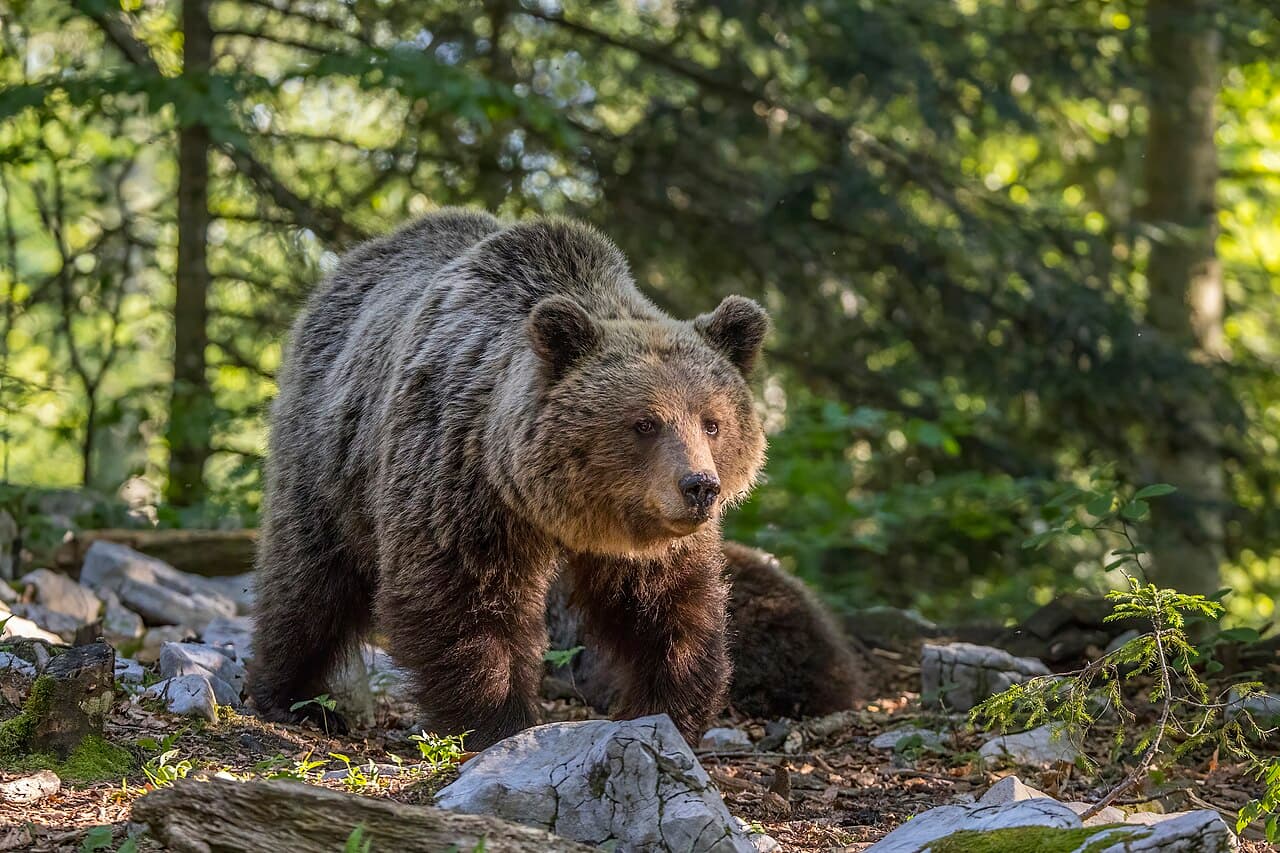
A European brown bear walking through a sunlit forest

Photo · Wikimedia Commons

What is it?

Brown bears are large furry mammals that live in the forests of mountains across Europe. Around 100 of them live in the wild in Serbia, especially in Tara and the eastern mountains. A male brown bear can weigh 300 kilograms - about as much as four adult people put together.

Tell me more

Brown bears are big but shy. They mostly stay deep in the forest and prefer to keep away from people. In Serbia, hikers in Tara might see a paw print in the mud, or a tree where a bear has scratched its back - but actually seeing a bear is very rare.

Bears are omnivores, which means they eat lots of different things. About three quarters of what they eat is plants - berries, nuts, mushrooms, roots, fresh grass. They also eat insects, fish from streams, and sometimes leftover food. They are clever at finding the next meal.

Each winter, brown bears sleep through the cold. They curl up in a den - usually a cave or a hole in a hillside - and slow their whole body down. They don't wee, eat or drink for months. Mother bears even give birth to tiny cubs during this long sleep, and the cubs feed and grow until spring.

When spring arrives, bears wake up thin and hungry. The first thing they do is look for fresh grass and roots. Cubs - now the size of a small dog - come out of the den blinking at the light for the very first time.

In the classroom

Walk your class through this in 15 minutes.

Talk together

Discussion prompts

  1. 01Bears mostly eat plants. Does that match the picture of a bear in your head?
  2. 02Sleeping all winter without eating sounds amazing. What problems would your body face if you tried that?
  3. 03Why might a big animal choose to live somewhere quiet, away from people?
Try this

Classroom activity

Draw the year of a brown bear as a circle, like a clock face: 12 months around the edge. Mark when it sleeps, when cubs are born, when it eats berries, when it scratches trees. Compare it with the year of your school.