
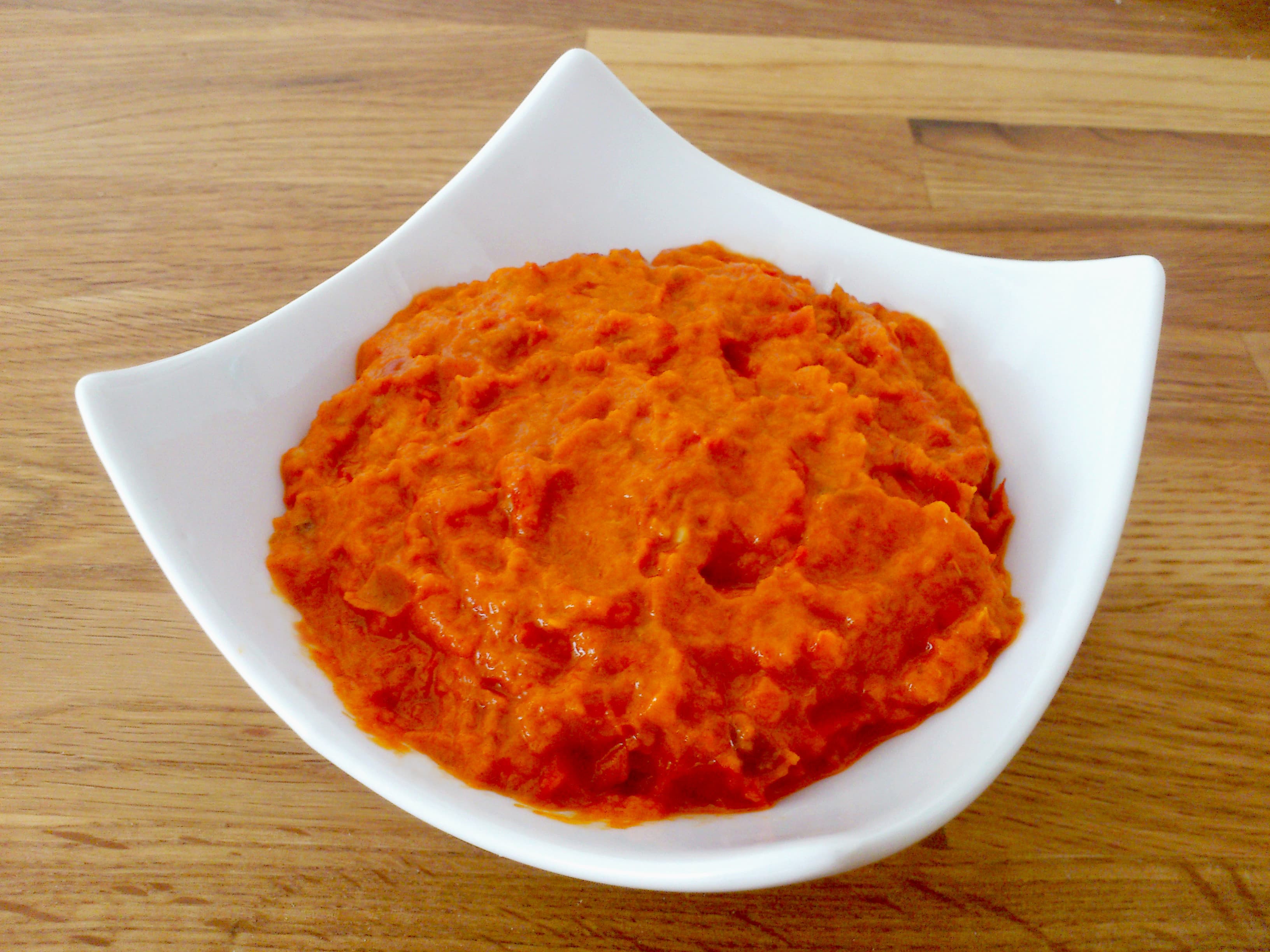
Ajvar season is September. Mountains of red peppers appear in markets across Serbia. Families buy 50 or even 100 of them in one go. The whole batch is roasted over open fires in the garden, until the skins blister and char.
Once roasted, the peppers go cool. Then everyone helps peel them - the burnt skin slides off easily once cold. The fragrant flesh inside is chopped, simmered with oil and garlic, and stirred for hours until it turns into a thick spread. The smell takes over the whole neighbourhood.
When it's ready, ajvar is spooned into clean glass jars. The jars are sealed and stored in a cool cellar to last all winter. Some families make thirty or forty jars in one weekend. By spring, they often still have a few left.
Some ajvar is sweet and mild - perfect for children. Some is 'ljuti' (spicy) - made with hot peppers as well as sweet ones. Many Serbian kitchens keep a jar of each, so everyone can choose how much fire they want with their bread.