
Classroom lesson · Food · 🇸🇳 Senegal

Yassa - the lemon-and-onion classic

Chicken or fish with a tangy lemon sauce piled with onions

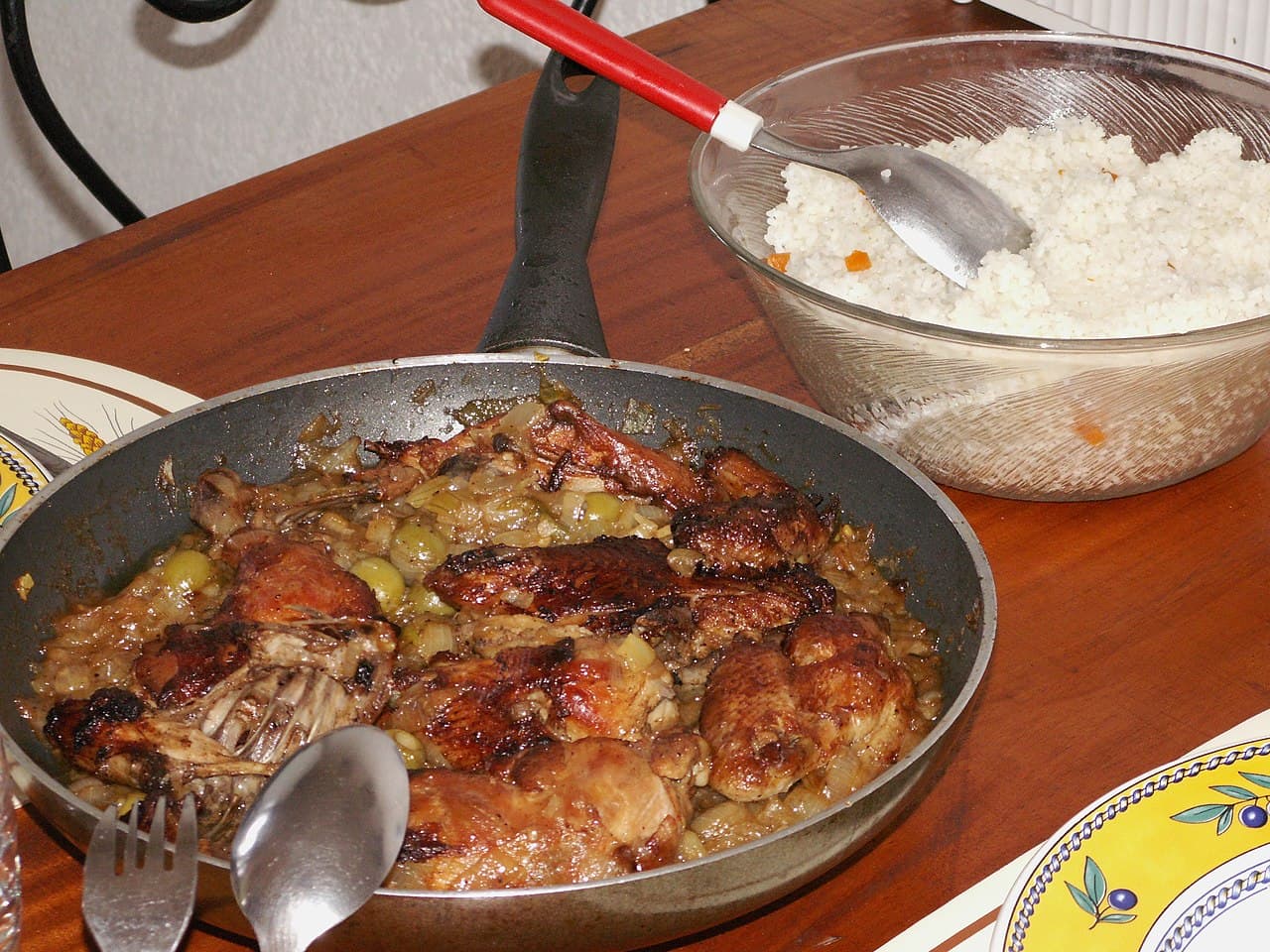
A plate of yassa chicken with caramelised onions over white rice

Photo · Wikimedia Commons

What is it?

Yassa is one of Senegal's most-loved dishes - chicken or fish marinated in lemon juice and mustard, then cooked with a mountain of soft, golden onions. It is usually served on a bed of plain white rice to soak up the tangy sauce. It comes from the Casamance region in the south of the country.

Tell me more

The marinade is the secret. The chicken (or fish) is soaked overnight in lemon juice, mustard, onions, garlic, oil and a little chilli. By the next morning, it has soaked up so much flavour that even before it is cooked, the kitchen smells amazing.

Then comes the onion mountain. Lots of onions - more than you'd think - are sliced thinly and cooked slowly until they go soft and sweet. The chicken is added back in, the sauce thickens, and it is poured over plain rice in a big shape that looks a bit like a snow-capped hill.

Yassa is sometimes called 'the national dish of welcome'. If a guest is coming to your house in Senegal, yassa is often what gets cooked. The slow cooking, the smell of lemon and onion - it tells the guest: 'we spent time on this, just for you.'

Different regions tweak the recipe. In coastal areas, fishermen often make yassa with the day's catch. Inland, chicken is more common. Some families add olives. Some add a little extra mustard. As with most beloved dishes, every grandmother has the 'real' version.

In the classroom

Walk your class through this in 15 minutes.

Talk together

Discussion prompts

  1. 01Why might marinating food overnight make it taste different?
  2. 02What is the dish your family cooks when guests come over? Why that one?
  3. 03Lots of family recipes have small differences. Are there foods in your family with a 'right' way to make them?
Try this

Classroom activity

Bring in (or write up) a family recipe from one person at home. As a class, compare them: how many ingredients? How long do they take? Are there any recipes that are basically the same but called different things?