
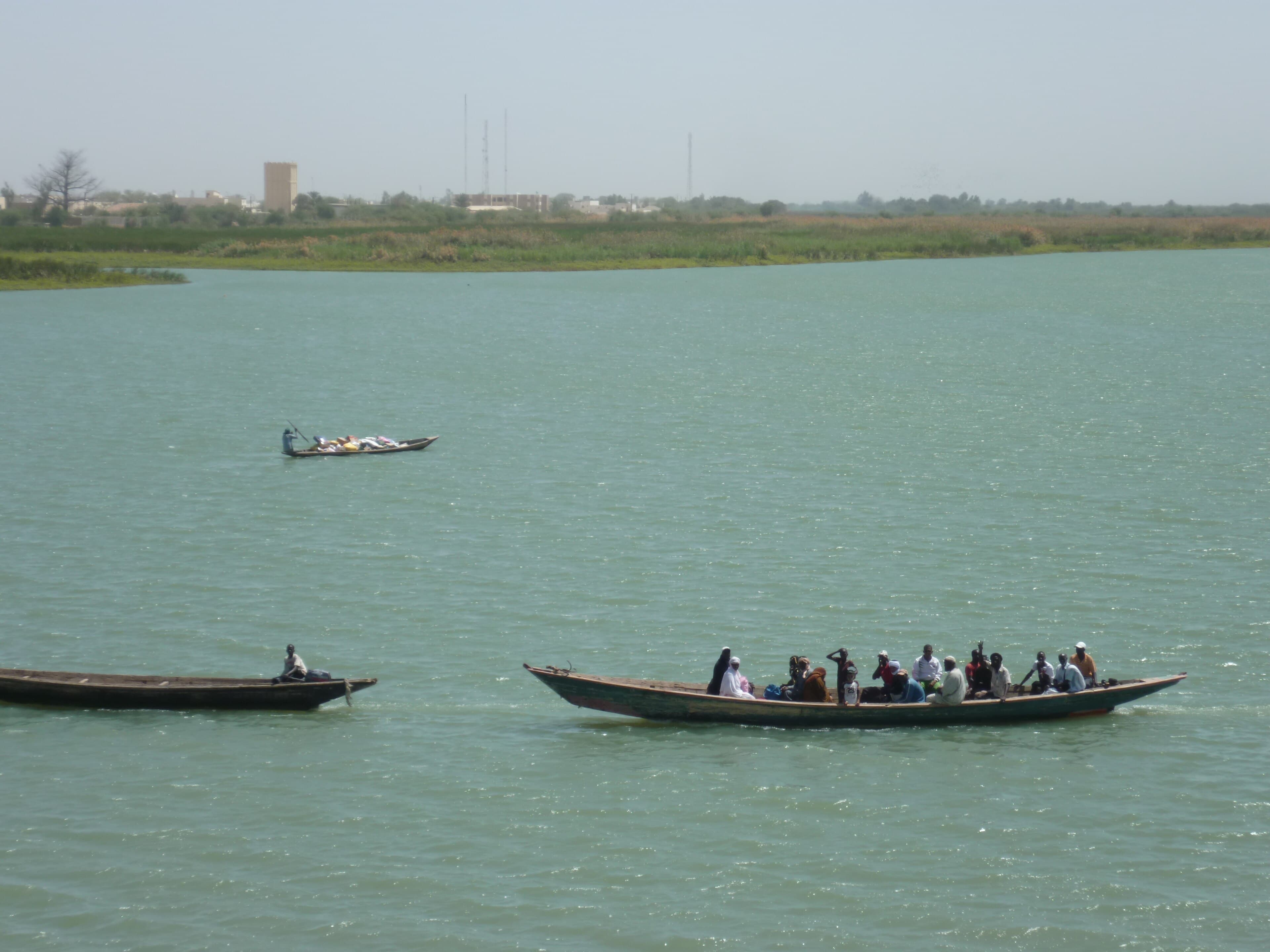
The river starts in the cool green mountains of Guinea, far from the sea. By the time it reaches Senegal, it has turned into a wide, lazy ribbon of water flowing through dry savannah. In places it is so wide you can hardly see the other side.
Four countries share the river - Guinea, Mali, Senegal and Mauritania. They have agreed to look after it together, because it is the main source of water for millions of people. Farmers use it to water rice fields and gardens, and fishermen catch tilapia and Nile perch in its slow waters.
Every year the river rises during the rainy season (June to October) and floods over its banks. This sounds bad, but it's actually a gift - the floodwater leaves a thin layer of rich black mud behind. Farmers plant their seeds in this mud and grow great crops without needing fertiliser.
Saint-Louis, near the mouth of the river, is one of the oldest cities in Senegal and was the country's capital until 1957. It sits on a thin sandy island in the middle of the river, with bridges connecting it to the mainland. Children there grow up surrounded by water on every side.