
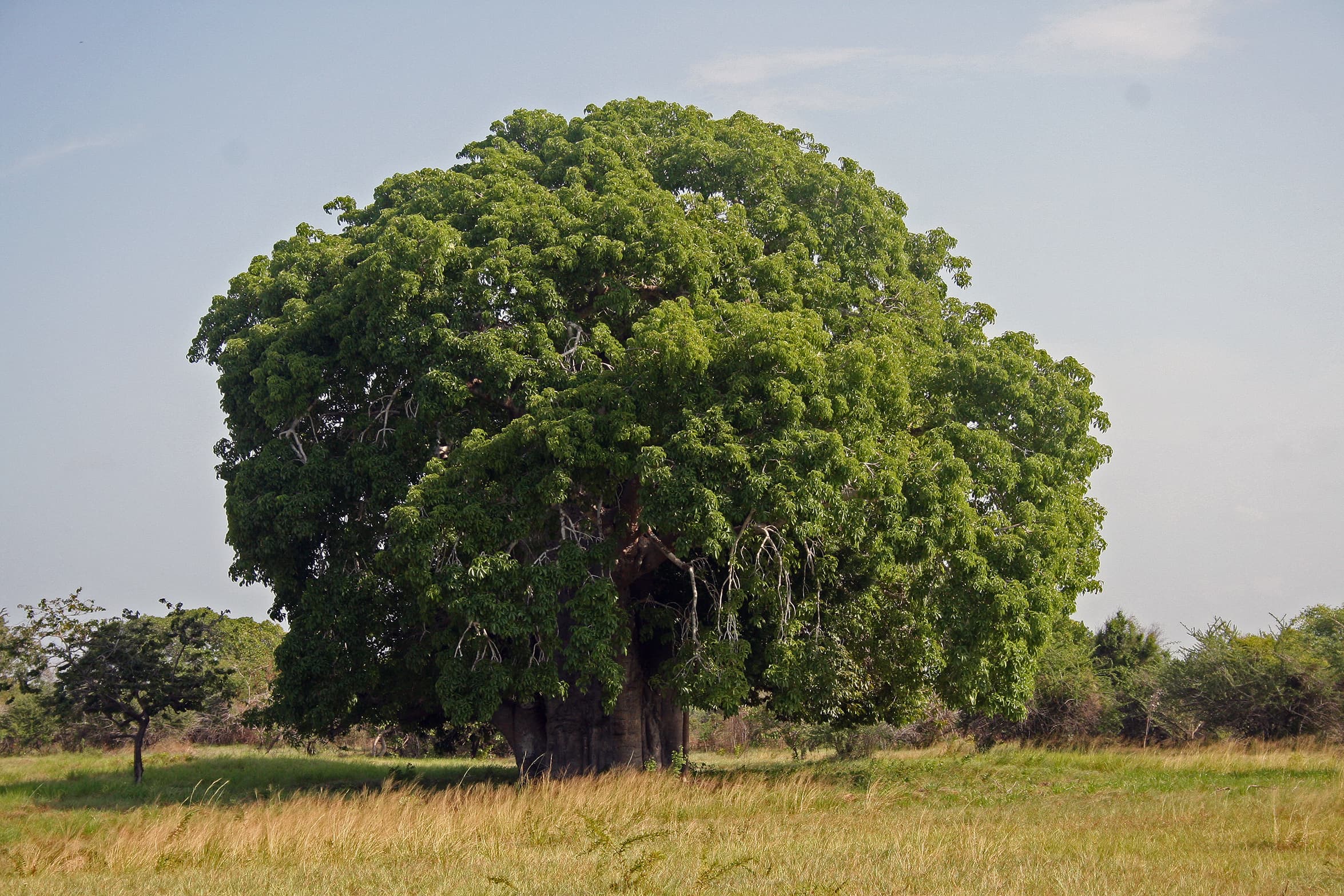
An old story says that the baobab once stood too proudly, so it was pulled up and pushed back into the ground upside-down. That's why the branches look like roots. The real reason is simpler: those short, twisty branches help the tree survive in dry places, where leaves would lose too much water in the heat.
The trunk is hollow inside, like a giant water bottle. A big baobab can store thousands of litres of water in its trunk - enough to keep the tree alive through a whole dry season. In some villages, people have hollowed out fallen baobabs and used them as small rooms, shops, or shelter from the rain.
Almost every part of the tree is useful. The leaves can be cooked into a sauce. The bark can be turned into rope. The big white flowers open at night and are pollinated by bats. And the fruit - a fuzzy, hard pod about the size of a coconut - holds a sour, tangy powder that tastes like lemon sweets and is full of vitamin C.
In Senegal, you'll see baobabs standing alone in fields, in school playgrounds, and right in the middle of villages. Children climb them to sit in the shade. Many baobabs in Senegal are protected by law because they are so important to the country.