
Classroom lesson · Lake Retba - the pink lake · 🇸🇳 Senegal

Lake Retba - the pink lake

A lake that turns strawberry-milkshake pink in the sunshine

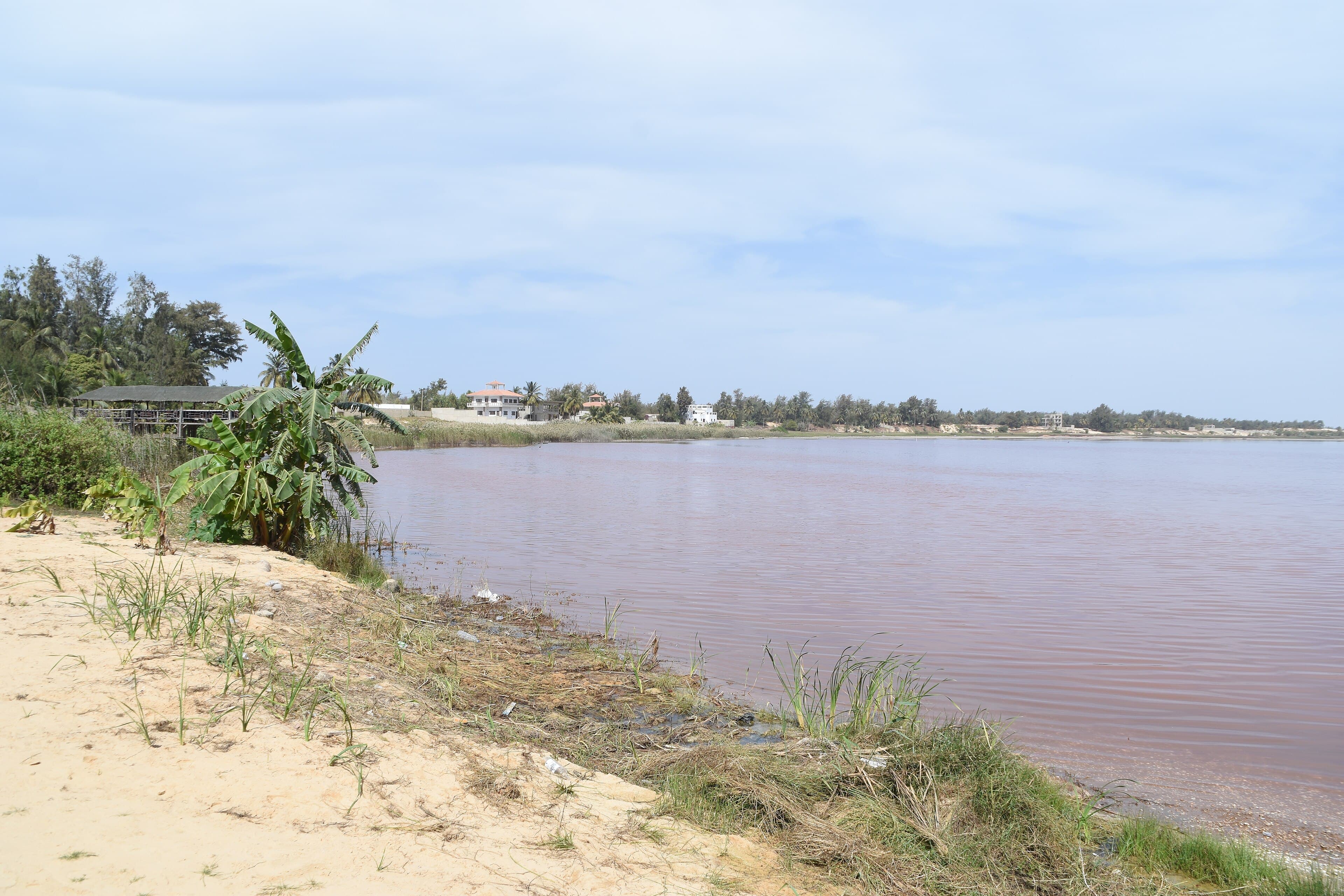
The bright pink waters of Lake Retba with white salt piles on the shore

Photo · Wikimedia Commons

What is it?

Lake Retba (also called Lac Rose, meaning 'pink lake' in French) is a real, naturally pink lake just north of Dakar, the capital of Senegal. From a distance it looks like someone has spilled strawberry milkshake into the middle of the desert. The colour is brightest in the dry season when the sun is high.

Tell me more

The pink colour comes from tiny living things in the water - a kind of algae called Dunaliella salina. These algae love very salty water, and they make a red colour to protect themselves from the strong sunshine, a bit like sun cream. When millions of them all sit just below the surface, the whole lake turns pink.

Lake Retba is one of the saltiest places on Earth. It is about ten times saltier than the sea, and almost as salty as the famous Dead Sea. The water is so salty that you can lie on your back and float without trying - the salt pushes you up like a cushion.

Hundreds of workers harvest salt from the lake by hand. They stand in the shallow water in long wooden boats, scooping salt off the bottom with baskets. They rub shea butter on their skin to protect it from the strong salt. The harvested salt is piled into bright white hills along the shore - pink lake, white hills, blue sky.

The lake is small - only about 3 square kilometres - but it is one of the most photographed places in West Africa. It changes colour through the day, from light rose in the morning to deep pink at midday. After a big rain, it can fade to almost grey for a while before brightening up again.

In the classroom

Walk your class through this in 15 minutes.

Talk together

Discussion prompts

  1. 01Why might tiny algae need to make a special colour to protect themselves from the sun?
  2. 02Have you ever seen water that wasn't blue? What colour was it, and why?
  3. 03The lake is small but world-famous. What small but special thing is near your school?
Try this

Classroom activity

Make a 'colour map' of water bodies. Each pupil draws a lake, river or sea they know - and colours it the actual colour they have seen it (not just blue). Display them together. Discuss: what makes water look different colours in different places?