
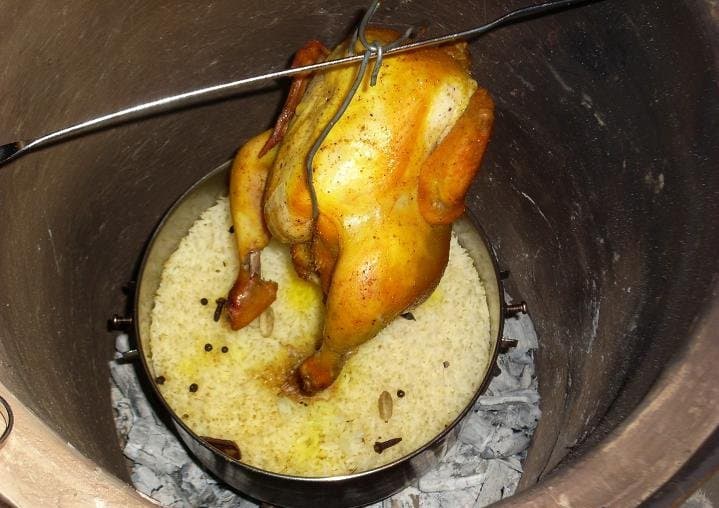
Mandi probably started in the southern part of the Arabian Peninsula - in what is now Yemen and the south-west of Saudi Arabia - hundreds of years ago. It travelled north over time and is now one of Saudi Arabia's favourite dishes, especially in the city of Mecca and the southern Asir region.
The pit is the special part. Wood or charcoal burns at the bottom until it is just glowing coals. The meat - rubbed with simple spices like cumin, turmeric and salt - is hung from sticks over the coals. The pit is sealed with a lid and damp cloth so no air gets in. The meat then cooks slowly in its own steam for several hours.
While the meat is cooking, the rice is prepared separately. Long-grain rice is cooked with stock, saffron and a touch of cardamom. When the meat is done, the rice is piled high on a big platter and the meat goes on top.
Like kabsa, mandi is meant to be a sharing dish. The whole family or group of friends sit around one platter. Many people eat with their right hand only - which is harder than it sounds, and a skill that Saudi children pick up early.