
Classroom lesson 路 The Edge of the World馃嚫馃嚘 Saudi Arabia

The Edge of the World

A cliff that drops 300 metres into a flat ancient seabed

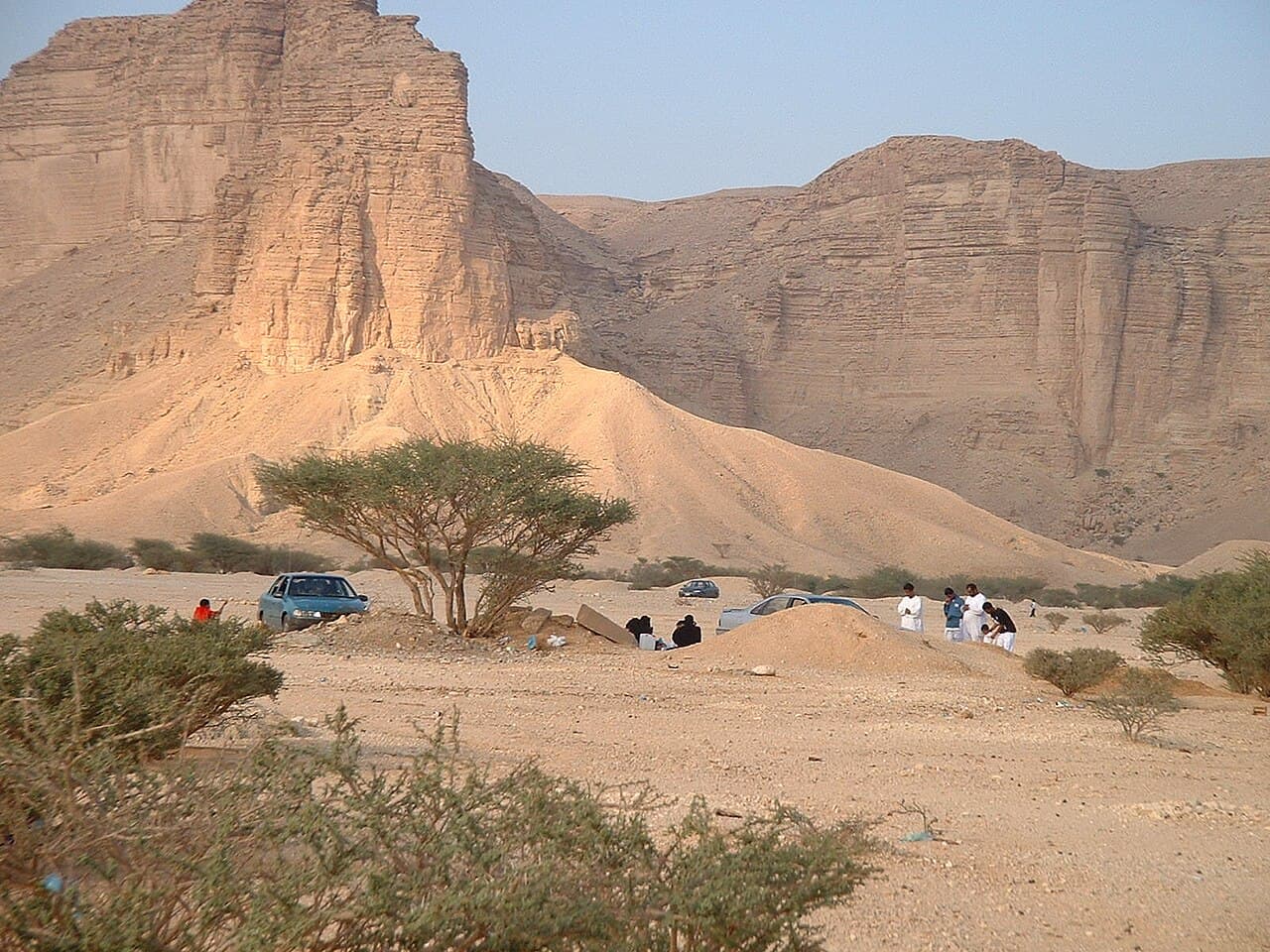
Cliffs of the Edge of the World plateau near Riyadh

Photo 路 Wikimedia Commons

What is it?

About 90 kilometres from the capital Riyadh, the desert ends in a long line of cliffs called Jebel Fihrayn - or, in English, 'The Edge of the World'. The cliffs drop suddenly 300 metres straight down to a wide, flat plain. From the top, it really does feel like you are standing on the edge of the planet.

Tell me more

The cliffs are part of a huge rock wall called the Tuwaiq Escarpment that runs for over 800 kilometres through central Saudi Arabia. It is roughly the same shape as a giant comma that someone has drawn in the desert.

The flat plain below the cliffs used to be the bottom of an ancient sea. If you look closely at the rocks, you can spot fossilised shells from creatures that swam here long before there were any deserts. Saudi Arabia has not always been hot and dry - it has had several huge changes of climate over millions of years.

The view from the top stretches for around 50 kilometres on a clear day. Old camel-trade routes ran along the base of the cliffs, because the flat plain was the easiest place to walk for hundreds of kilometres.

The cliffs face west, so they are most beautiful at sunset - the rocks turn pink and orange, and the shadow of the cliff stretches further and further across the plain below. Families from Riyadh often drive out to watch the sun go down.

In the classroom

Walk your class through this in 15 minutes.

Talk together

Discussion prompts

  1. 01How do scientists know that a desert was once under the sea?
  2. 02If a place can change from sea to desert, what might your local area have looked like a million years ago?
  3. 03Why might people travel out of a busy city to stand somewhere very empty?
Try this

Classroom activity

Each pupil draws their own 'Edge of the World' on A3 paper - a cross-section showing the top of the cliff, the rock layers in the middle, and the ancient seabed at the bottom. Add fossil shells where the old sea was.