
Classroom lesson 路 AlUla and Hegra - stone cities in the desert馃嚫馃嚘 Saudi Arabia

AlUla and Hegra - stone cities in the desert

Tombs and houses carved into sandstone cliffs 2,000 years ago

Carved sandstone tombs at Hegra in the AlUla region of Saudi Arabia

Photo 路 Wikimedia Commons

What is it?

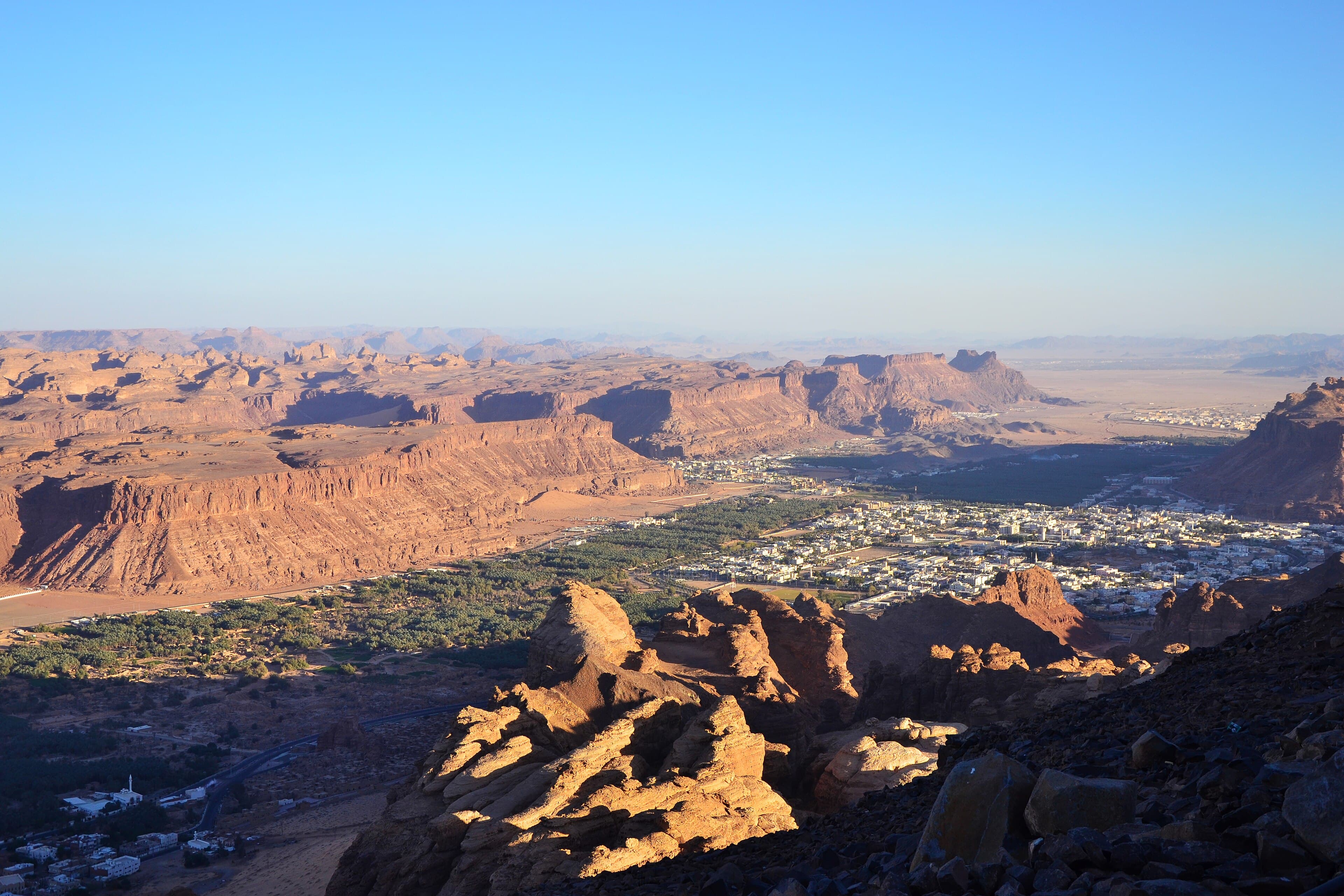
AlUla is a long, oasis-filled valley in the north-west of Saudi Arabia, full of giant sandstone cliffs. Inside one part of it, called Hegra, you can still see more than 100 buildings carved straight into the rock - tombs and houses that the Nabataean people made over 2,000 years ago. It was the first place in Saudi Arabia to be named a UNESCO World Heritage Site.

Tell me more

The Nabataeans were brilliant traders who lived along ancient caravan routes. Travelling merchants on camels passed through AlUla carrying frankincense, spices, silks and gold. The Nabataeans grew rich by looking after the wells, gardens and stopping points along the way.

Instead of stacking up bricks, the Nabataeans carved their buildings out of solid stone cliffs. Workers stood on wooden platforms and chipped the sandstone away from the top down, slowly shaping doorways, columns and decorations. The stone is a warm orange-pink, and at sunset the whole valley glows.

AlUla is also full of date palm gardens, lemon and orange trees, and natural springs. For thousands of years, families have grown food in this green strip of land while the desert stretches on either side. Today many of those farms are still running.

Scientists and archaeologists are still discovering new things in AlUla. Recently they found ancient rock carvings of camels that are over 7,000 years old - older than the pyramids of Egypt. There is also a giant rock called Elephant Rock that the wind has slowly shaped to look exactly like an elephant.

In the classroom

Walk your class through this in 15 minutes.

Talk together

Discussion prompts

  1. 01Why might people carve buildings out of cliffs instead of building from bricks?
  2. 02Caravan traders walked through here for thousands of years. What would your school look like if hundreds of camels passed by every day?
  3. 03How do scientists work out how old a carving is? What clues might they look for?
Try this

Classroom activity

Give each pupil a bar of soap and a blunt stick or pencil. Carve a small Nabataean-style doorway or face into the soap. Discuss: was it easy? How long did it take? Now imagine doing it on a 30-metre cliff.