
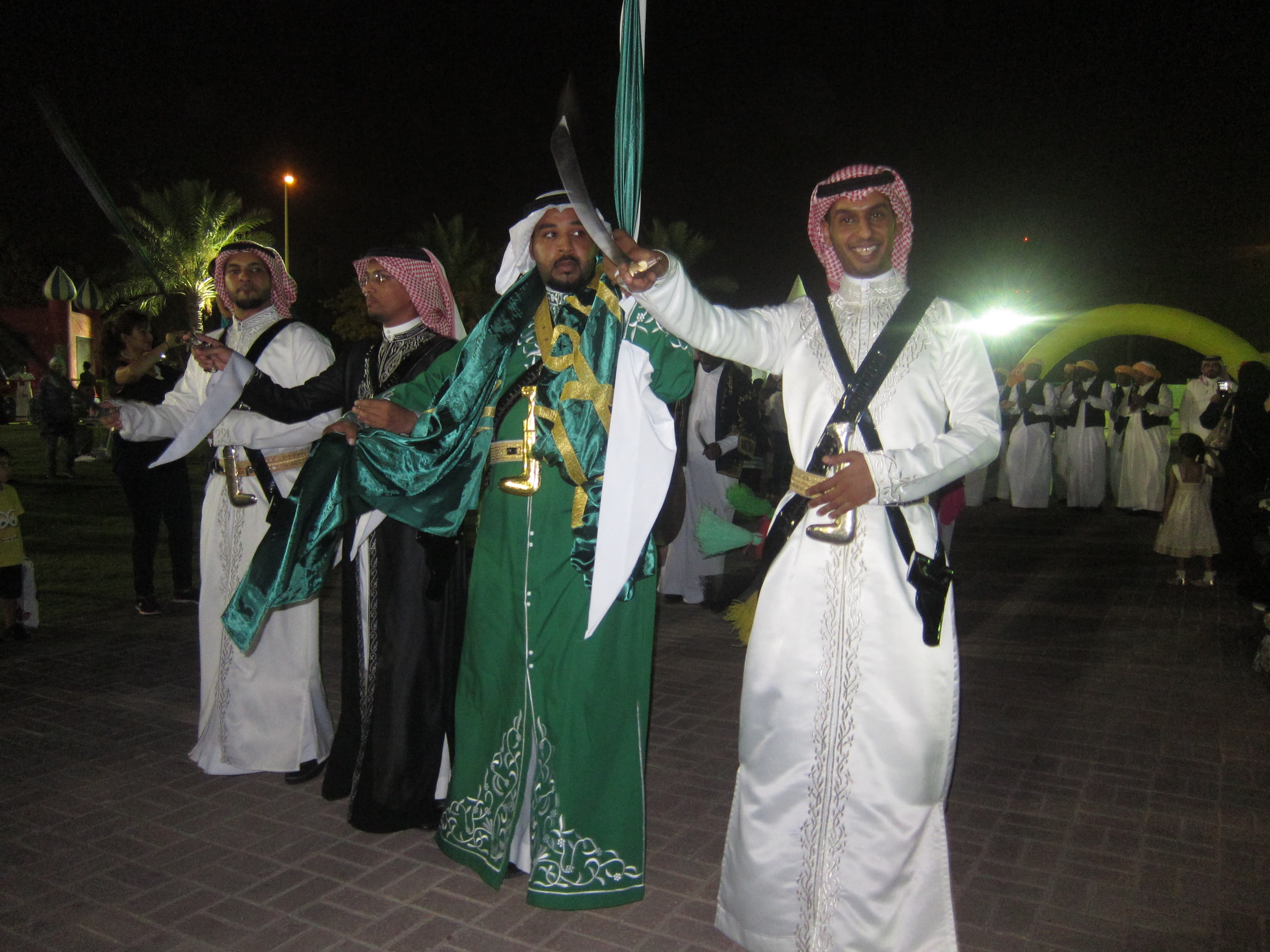
The Ardha goes back hundreds of years. Long ago, it was performed by groups returning home after a long journey or a tough season - a way of celebrating the community together. Over time, it became a dance for any happy event. Children learn it at school. Adults dance it at family gatherings.
The drums are the heart of it. There are usually two kinds - a deeper 'tar' drum and a higher 'mihbash'. The drummers stand in the middle of the lines and set the beat. The dancers' feet step in time. The whole thing has a steady, hypnotic rhythm.
While the drumming goes, a poet sings - and this is the clever part. The verses are often made up on the spot. The poet sings a line, then the dancers sing it back. Then the poet sings the next line, and so on. The poetry tells stories about home, friends, or the celebration itself. A really good poet can keep this going for hours.
In 2015, UNESCO added the Ardha to its list of important world cultural traditions, alongside tango from Argentina and Arabic coffee. It is recognised as something Saudi Arabia shares with the world.