
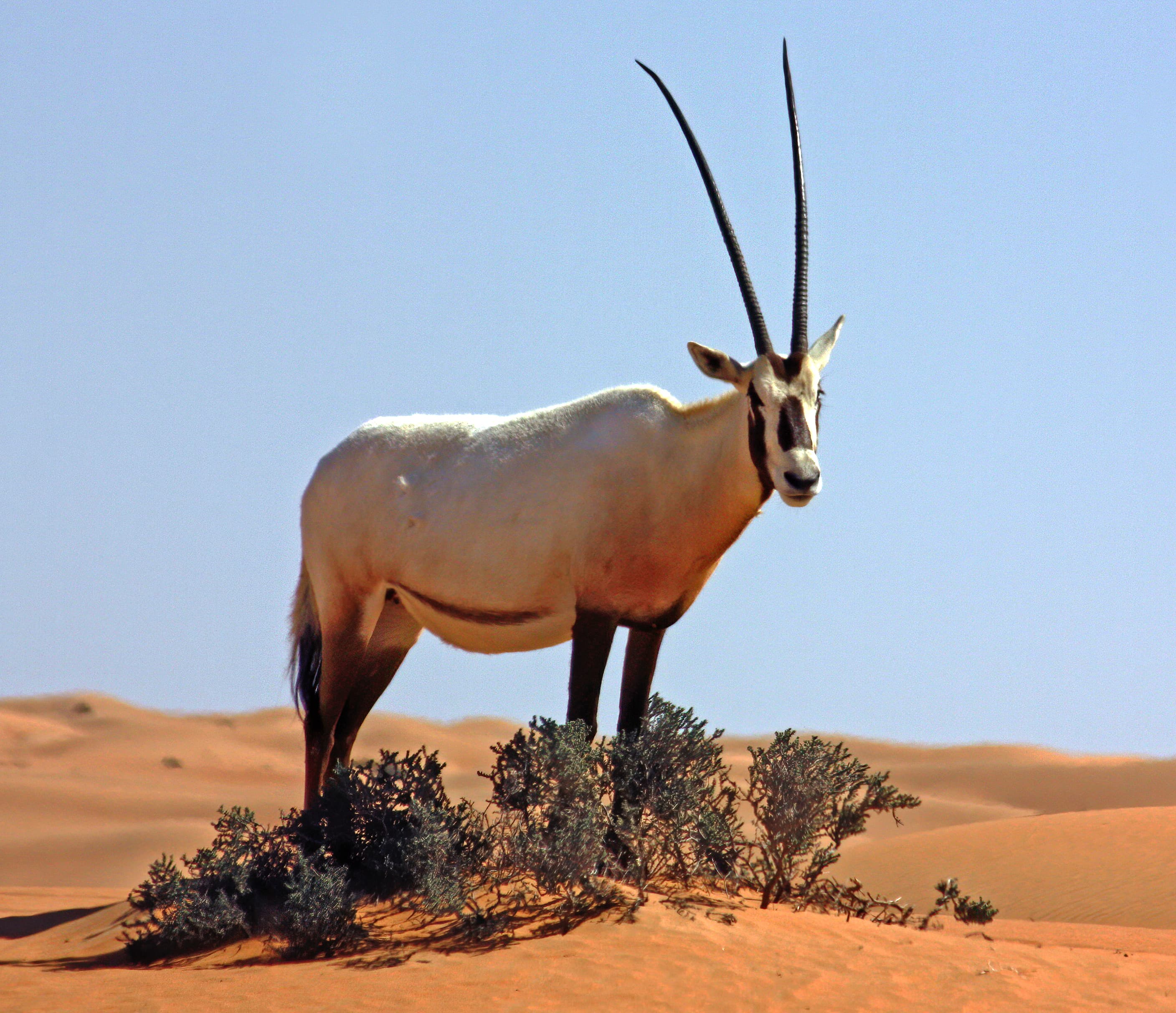
Arabian oryx are built for the desert. Their white coats reflect the sun. Their hooves are wide and splayed, so they can walk on soft sand without sinking. They can survive without drinking water for weeks at a time - they get the water they need from the plants they eat.
By the early 1970s, the Arabian oryx was almost extinct in the wild. A small group of them was carefully looked after in zoos. Then, very slowly, scientists began returning them to the desert in protected reserves. Saudi Arabia, the UAE, Oman and Jordan all worked together.
Today there are thousands of Arabian oryx back in the wild. The oryx is now the only animal that was ever 'Extinct in the Wild' on the world danger list and has since been moved off it. It is one of the very best examples in the world of a wild animal being saved.
Oryx live in family herds led by a senior female. When the sun is highest, they dig small hollows under bushes and lie there to keep cool. They feed at dawn and dusk, walking slowly across huge distances looking for fresh grass after the rains.