
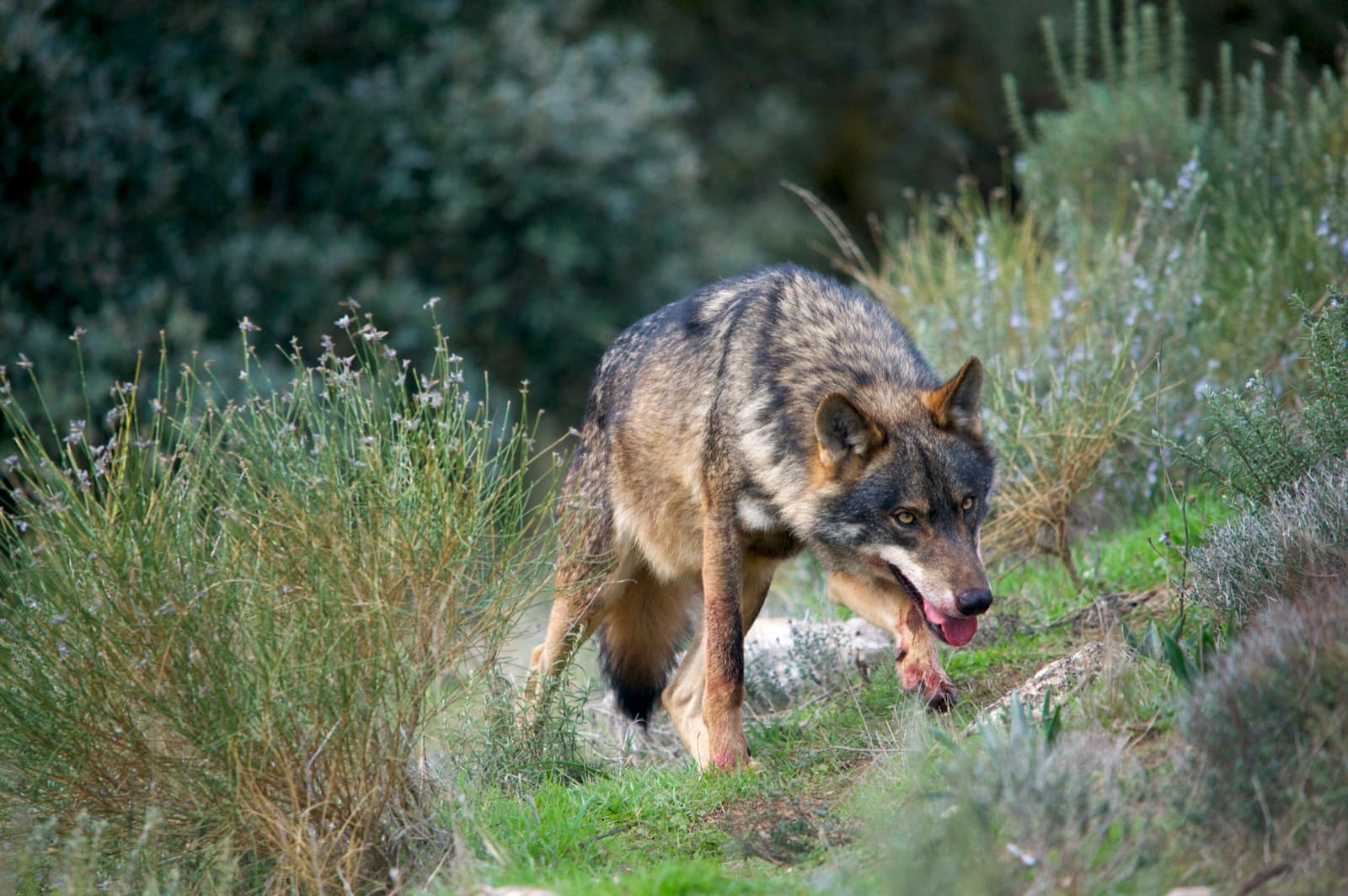
An Iberian wolf pack is usually a family: a mother, a father, and their grown-up children from the last few years. The pack works together. The grown-ups teach the younger wolves how to hunt, where to find water, and which paths are safe. They are very clever - more like dogs trained for one job than wild animals.
Wolves do not hunt with their nose to the wind only - they also talk to each other. They howl to call the pack together when they have been spread out, and they use little yips and body movements to coordinate when they hunt. Each pack has its own howl, a bit like an accent.
For a long time, Iberian wolves were very rare. Now, thanks to careful protection, around 300 wolves live in northern Portugal. They mostly hunt wild deer and wild boar, deep in the forests, and avoid people. Most Portuguese have never seen one, even if they live in wolf country.
Scientists who study them never see the wolves either. Instead, they follow paw prints in the mud and look for special places where the pack has 'marked' a trail. Camera traps in the forest can capture a glimpse of a wolf padding silently past in the early morning fog.