
Classroom lesson 路 Cork trees - the forest that gives without being cut馃嚨馃嚬 Portugal

Cork trees - the forest that gives without being cut

Portugal grows over half the world's cork, peeled from oak trees every nine years

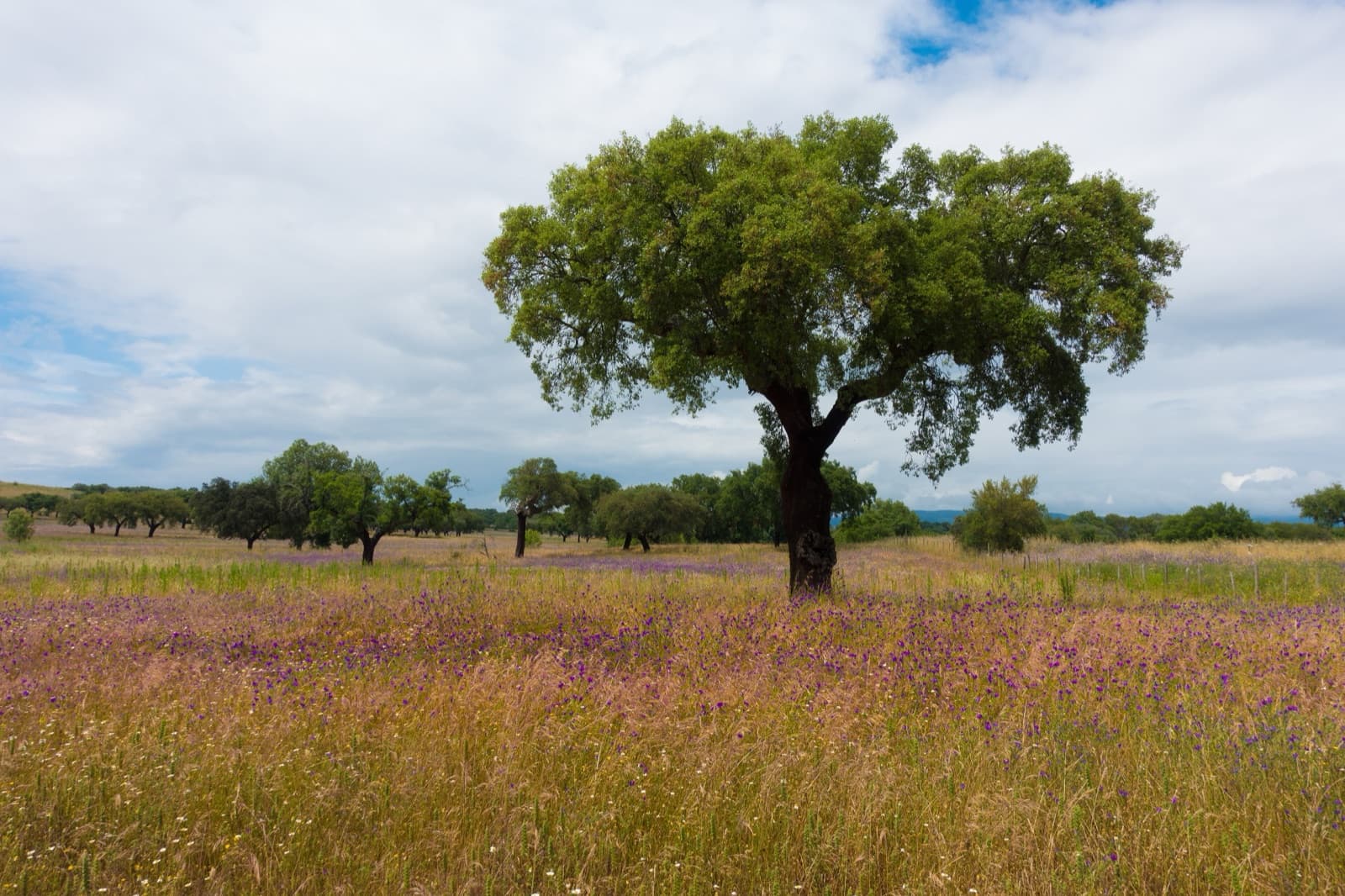
A cork oak tree in Portugal with its bark stripped, showing the red trunk underneath

Photo 路 Wikimedia Commons

What is it?

Cork is the bouncy, light material in noticeboards, shoe insoles, sports balls and the stoppers on bottles. Most of the world's cork - more than half of it - comes from one country: Portugal. It is harvested from a special kind of oak tree without cutting it down.

Tell me more

Cork is the bark of the cork oak tree. The tree grows a thick layer of bark to protect itself from sun and small fires. Once every nine years, skilled workers carefully peel the outer bark off in big sheets, using a special axe. The tree is not harmed. Underneath, the trunk is bright red. Over the next nine years, the bark slowly grows back, ready to be peeled again.

A cork oak can live for 250 years. Most trees are peeled for the first time when they are about 25 years old. So one tree might give cork around 16 to 20 times in its lifetime, with nine years between each harvest. The workers paint the year on the trunk so they know when to come back.

Portugal has huge cork oak forests called montados, mostly in the south. Because the trees are never cut down, these forests are full of birds and animals. The very rare Iberian lynx, golden eagles, storks and wild boar all live in the montados.

Cork is amazing stuff. It is light, waterproof, fireproof and bouncy. It is also natural and grows back. Today, Portuguese scientists are using cork to make insoles for shoes, parts of space rockets, surfboards and even fabric for handbags. One renewable bark that does all of that.

In the classroom

Walk your class through this in 15 minutes.

Talk together

Discussion prompts

  1. 01Why might it be better to peel a tree's bark than to cut the tree down?
  2. 02What other natural materials in your classroom come from a plant or animal?
  3. 03If you had to make something useful out of cork, what would it be?
Try this

Classroom activity

Look around your classroom for cork - the noticeboard is the most obvious. Pass it round and feel it. Now compare it to plastic and to wood. List three things cork is good at, and three things it is not good at. Where in the room would a cork floor be a good idea?