
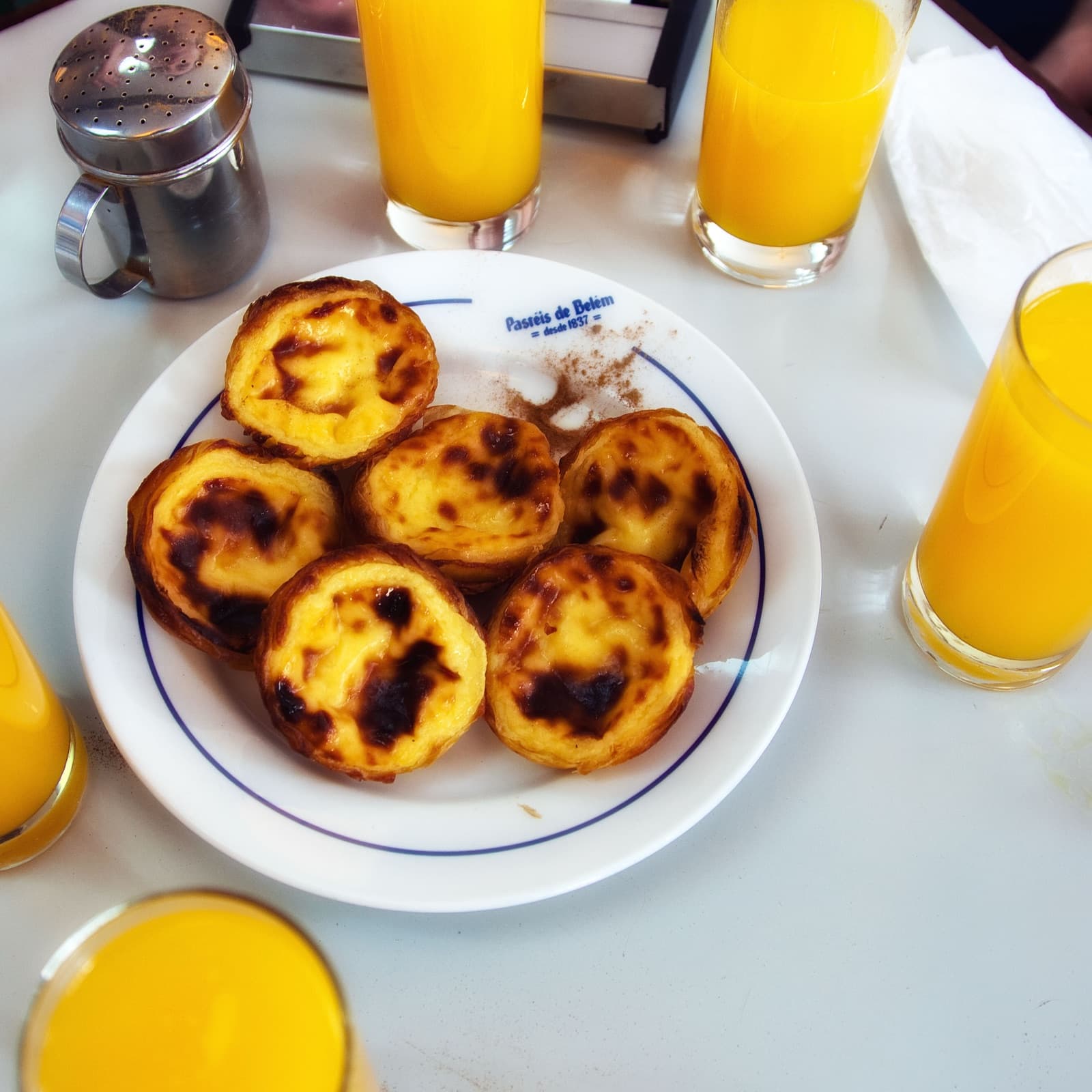
The story begins in the early 1800s at a monastery in Belém. The monks there had lots of egg yolks left over from another job (they used the whites to starch their clothes). They turned the yolks into a sweet custard, poured it into thin pastry cases, and baked them. People loved them, so the monks began selling them at a little shop next door.
The recipe was written down on a piece of paper and locked away. Today, only three people in the world are allowed to know the full recipe, and they sign a promise never to share it. The shop, called Pastéis de Belém, has been baking the same tarts since 1837 and people queue around the block to buy them warm from the oven.
A proper pastel de nata has a paper-thin pastry that crackles when you bite it, and a custard that is just set in the middle and a little wobbly. The top has dark spots where the sugar has caramelised in the very hot oven. Most Portuguese people eat them with a little cinnamon and a dusting of icing sugar.
Pastéis de nata have travelled the world. You can now find them in cafés in London, Paris, Tokyo and Sydney - but most Portuguese will tell you the very best ones are still the originals in Belém. Some bakers there make over 20,000 every single day.