
Carnaval happens about six weeks before Easter. The exact dates change every year. In Portugal, the celebration usually lasts several days, peaking on the Tuesday before Lent begins. Whole streets are decorated in coloured ribbons, and shops close so everyone can join in.
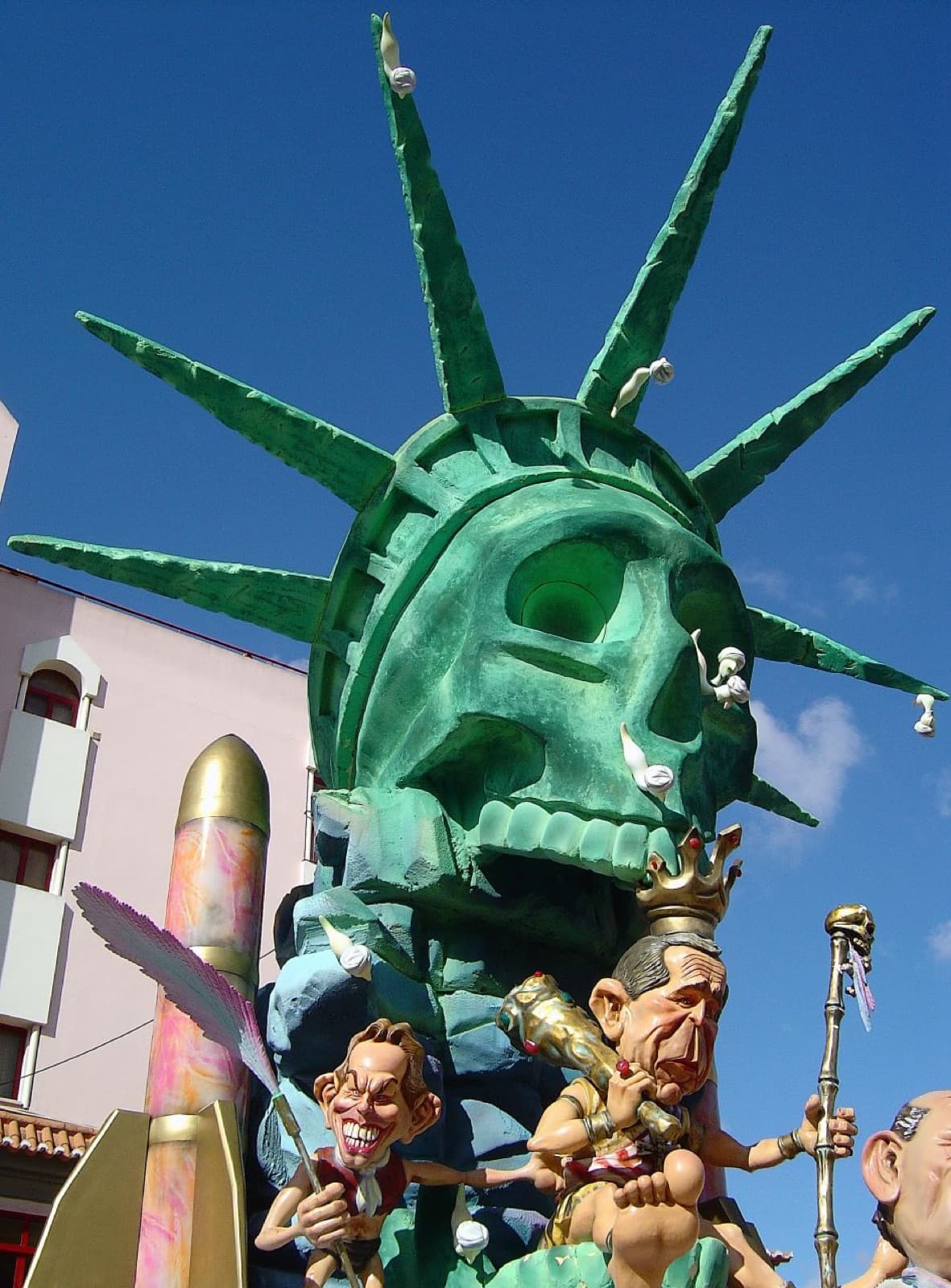
In Torres Vedras, just north of Lisbon, the parade has been going for over 100 years. People build huge paper-mâché heads called 'cabeçudos' - bigger than a human head, with funny faces, often gently teasing famous people in the news. The heads bob along through the crowd, making everyone laugh.
In Madeira, the parade is more like a glittering ball: thousands of dancers in feathers and sequins, with music that sounds a little like Brazil. In Loulé in the south, the floats are sometimes the size of a small house, and take a whole year to build.
Kids love carnaval because they get to dress up as anything they like and there are no rules. Many schools have their own carnaval parade in the playground. People will throw streamers, blow whistles, and dance with strangers as the music goes by.