
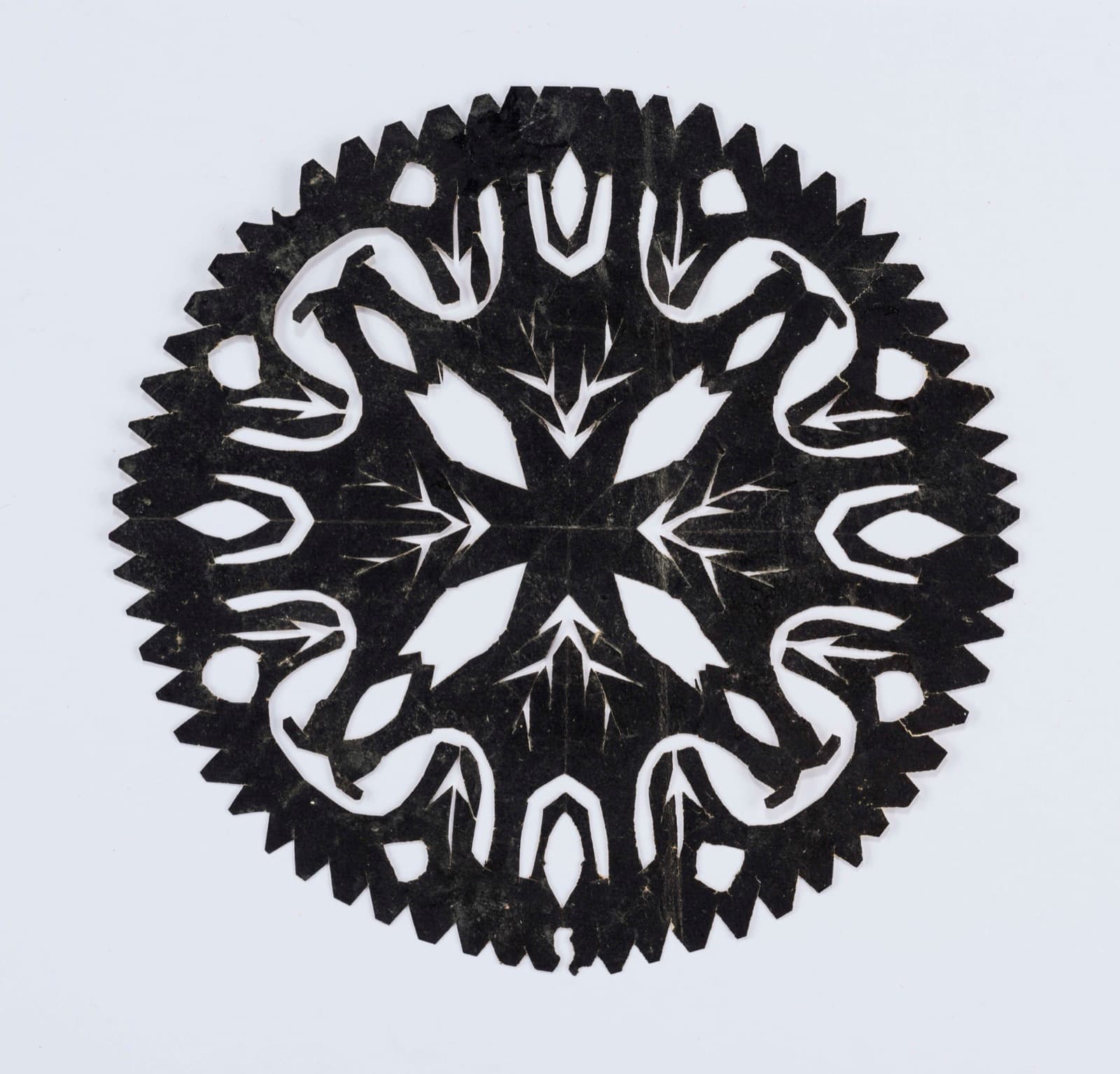
The story goes that village women started making wycinanki using the only sharp tool they had - the big metal scissors used for shearing sheep. They would fold a piece of coloured paper and snip away, opening it up to see what shape appeared. Roosters, flowers, peacocks and stars were the favourite designs.
Each part of Poland developed its own style. In the Łowicz region, people stacked many layers of bright paper to build up rich, colourful designs like little gardens. In the Kurpie region, people made delicate single-colour cuts that look like black lace against the wall. Looking at a wycinanka, an expert can tell which village it came from.
The pictures were stuck onto the white walls inside houses, around windows, or above doorways. Just before Easter, the women would peel off the old ones and put up fresh new ones for spring. The houses looked like the insides of paper kaleidoscopes.
You don't need any fancy materials. Just paper, scissors, and a willingness to make a mess of the first few attempts. Polish children make wycinanki for school art classes today, often shaped like roosters - a favourite bird in Polish folk tales because of the way it greets the morning sun.