
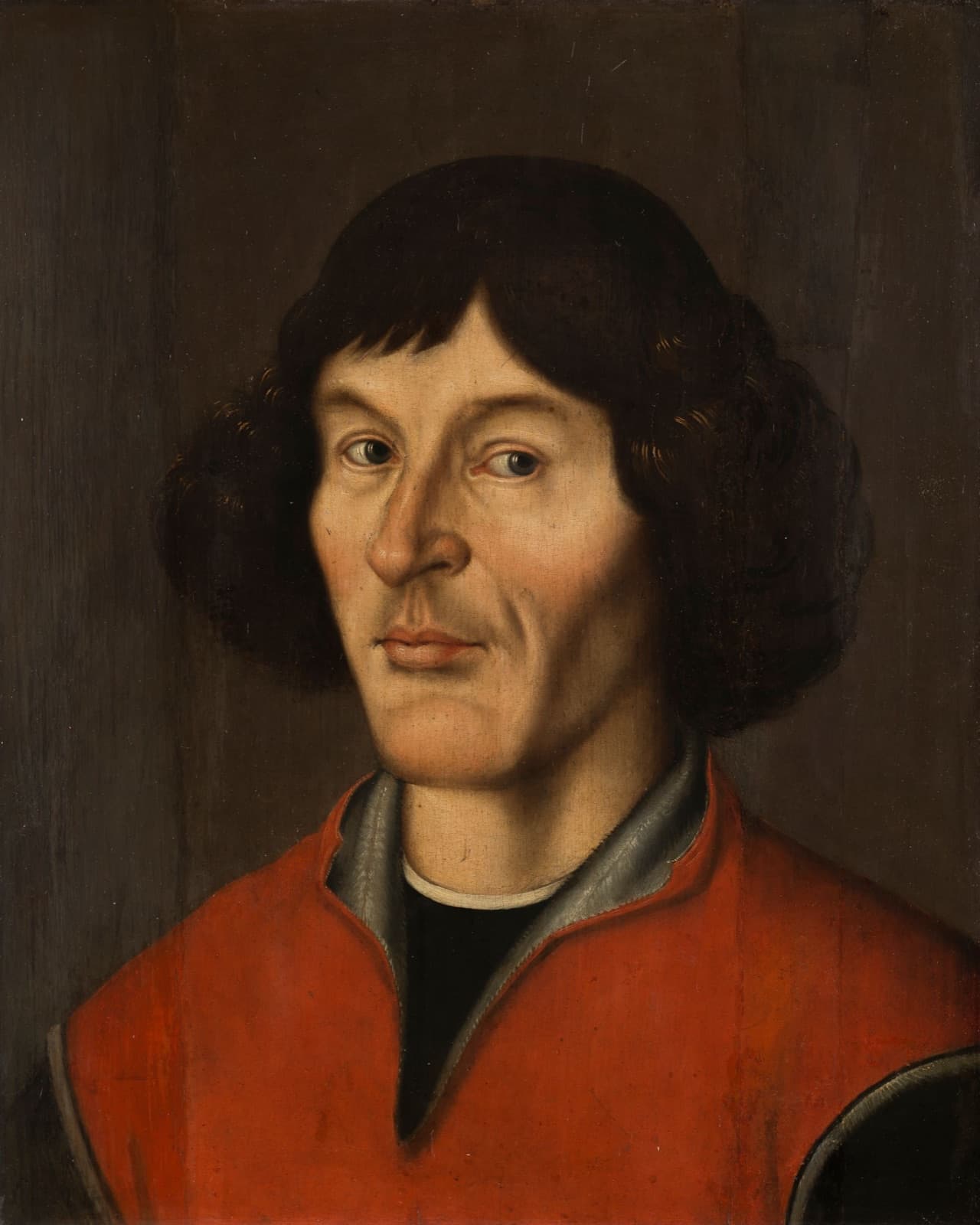
Imagine being told that your home isn't actually in the middle of everything. That is what Copernicus did to the whole world. For more than a thousand years, people had thought of the Earth as a special, still point and the Sun, Moon and stars as lights spinning around it. Copernicus's idea was a big leap.
He didn't have a telescope - they hadn't been invented yet. He worked everything out by watching the sky carefully, night after night, with just his eyes and a few simple instruments. He kept very neat notes, and he was good at the kind of maths that turns small patterns into big ideas.
He published his great book in 1543, when he was very old. The book argued that the Earth spins on its own axis (which is why night turns into day), and that it travels around the Sun once a year (which is why we have seasons). At first many people did not believe him, but slowly the world caught up.
Today, Copernicus is on every Polish 1,000-złoty banknote in older history books. There are statues of him in his hometown of Toruń, where you can also visit the house where he grew up. The European space agency named one of its biggest projects 'Copernicus' to honour him.