
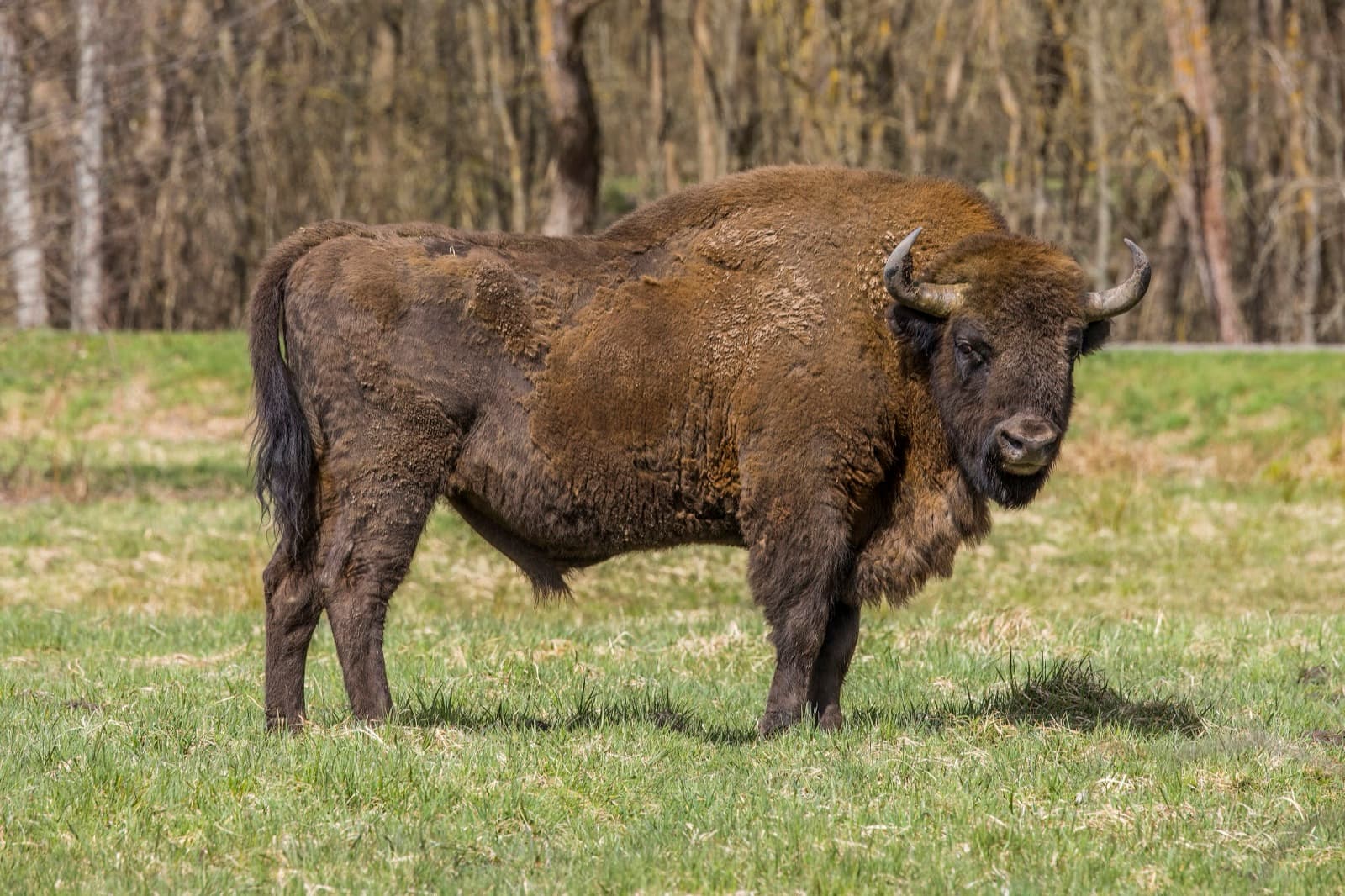
European bison look a bit like the American bison you might have seen in cowboy films, but they are taller, with longer legs and smaller heads. Their thick brown coat keeps them warm in Polish winters, when the temperature can drop to -20°C. In summer they shed the heavy winter coat and look much sleeker.
About 100 years ago, there were almost no European bison left in the wild. People had hunted them too much. The very last one in the wild was seen in 1919. But a few were still alive in zoos. Polish foresters and scientists started a careful rescue plan: they bred bison in special parks, taught them how to find food in the forest, and slowly let them go free again.
Today, thanks to that work, around 800 bison live wild in the Białowieża Forest, and many more in other parts of Poland and Europe. There are now nearly 8,000 alive in total. The story of the European bison is one of the world's best examples of a species being saved.
Bison are gentle most of the time. They eat grass, leaves, bark and acorns - up to 30 kilograms a day. Babies (called calves) are reddish-brown when they are born, and stick close to their mum for the first year. Polish children love them: zoo gift shops are full of żubr toys.