
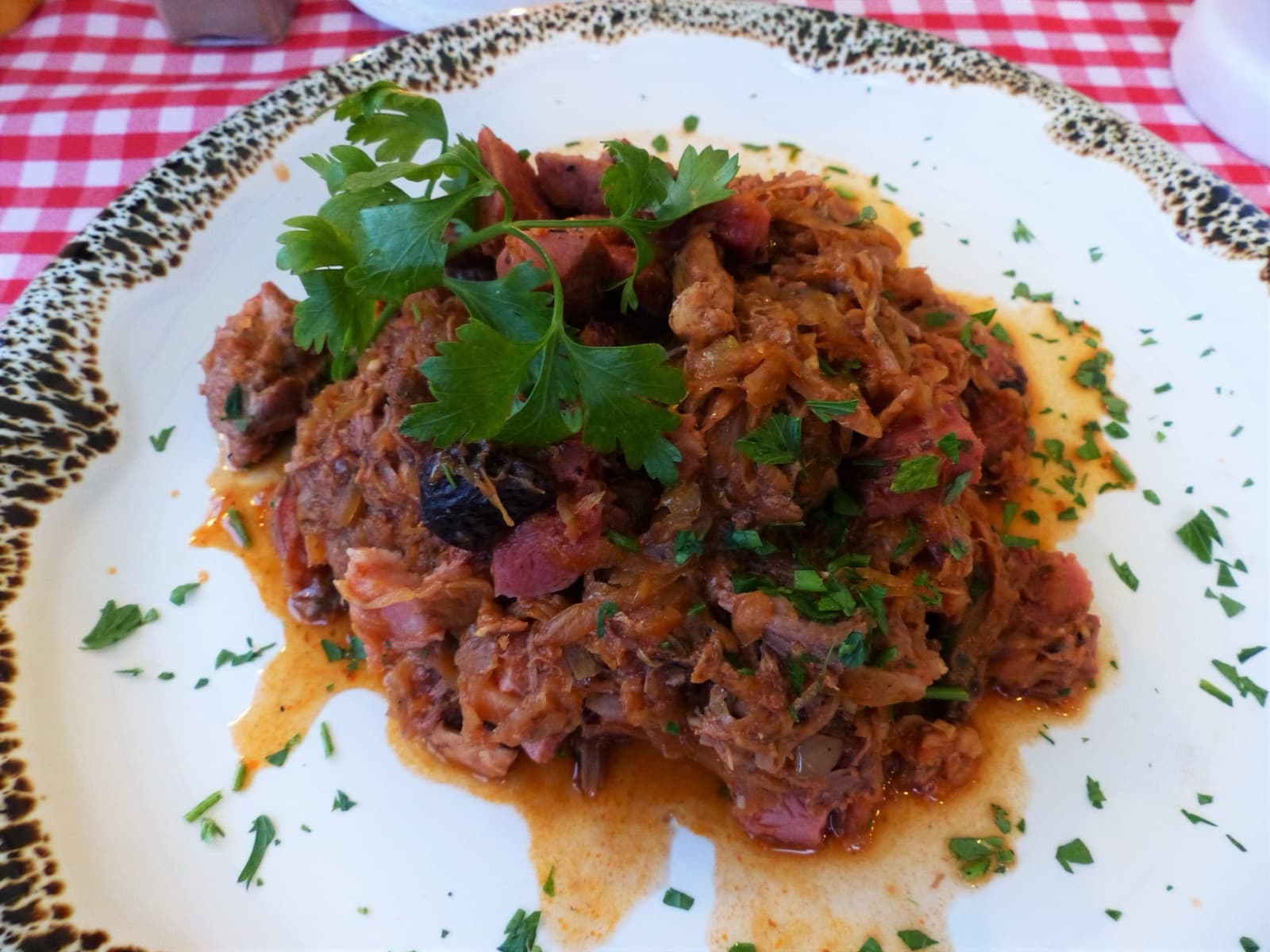
The main ingredient is cabbage in two forms: fresh white cabbage and sauerkraut, which is cabbage that has been gently fermented in a barrel until it turns a little sour and tangy. The mix of fresh and sour cabbage gives bigos its special flavour.
Then come the mushrooms - usually wild ones picked in the autumn forest, dried, and saved in cupboards for winter. Bigos also has bits of meat (often sausage), onions, and sometimes apples or dried plums for a hint of sweetness. Everything goes into one big pot and bubbles away for a long time.
The strange thing about bigos is that it gets better every day. The flavours mix more deeply each time the pot is reheated. Polish families make a giant pot of bigos at the start of cold weather and eat it for a whole week, warming it up each evening. Many people say the third day's bigos is the best.
Bigos used to be eaten by hunters on long autumn trips. Today it is more often a winter dish - a warm dinner that fills the kitchen with steam and smells. Polish kids who have grandparents in the countryside often grow up knowing the exact smell of grandma's bigos.