
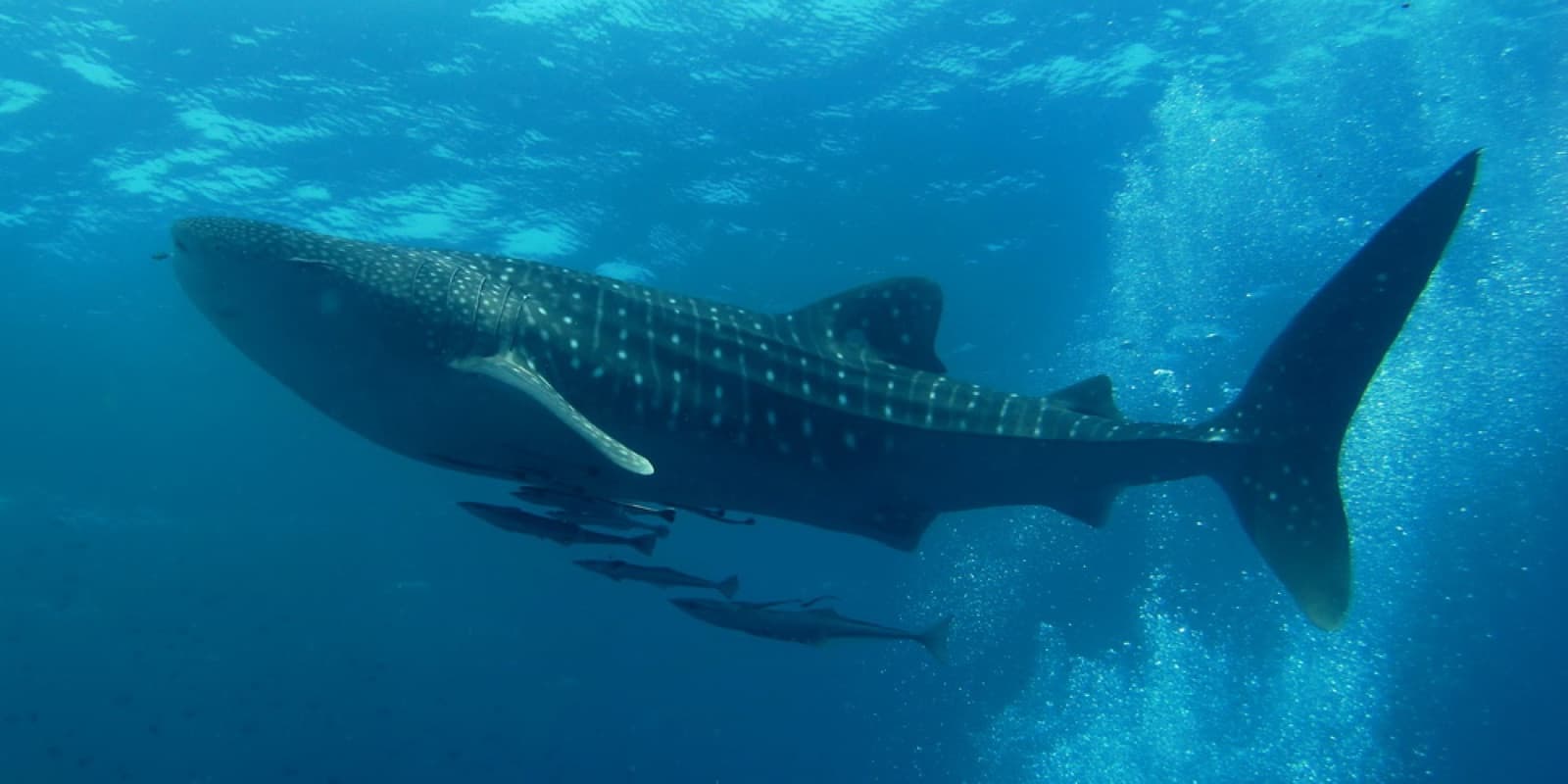
A grown-up whale shark can be 12 metres long. That's the length of three cars parked end-to-end, or as long as a classroom. Its mouth is about 1.5 metres wide - wide enough to swallow a small fridge, though it never would. It uses its giant mouth like a filter, scooping in seawater and trapping the tiny food inside.
Each whale shark has a unique pattern of pale spots and lines along its dark back, like a fingerprint. Scientists use these patterns to recognise individual whale sharks year after year. They give them names like Bubbles, or numbers like P-101 (the 101st one spotted in the Philippines).
Whale sharks visit Philippine waters every year. In a town called Donsol, in the south of Luzon, they gather just off the coast. Local people work as 'butanding interaction officers' - guides who take small boats out and let visitors snorkel calmly alongside the giants, following strict rules: no touching, no flash, and always keep a respectful distance.
Even though it has 'shark' in its name, the whale shark is so gentle that small fish hide under it for protection. Tiny remora fish even hitch a ride by attaching to its belly. Bigger predators leave them alone because the whale shark itself is too big to mess with.