
Mangoes grow on big trees, sometimes 30 metres tall - taller than a ten-storey block of flats. The fruit hangs in clusters from long stems. Pickers use long bamboo poles with little nets on the end to gently catch them, one by one.
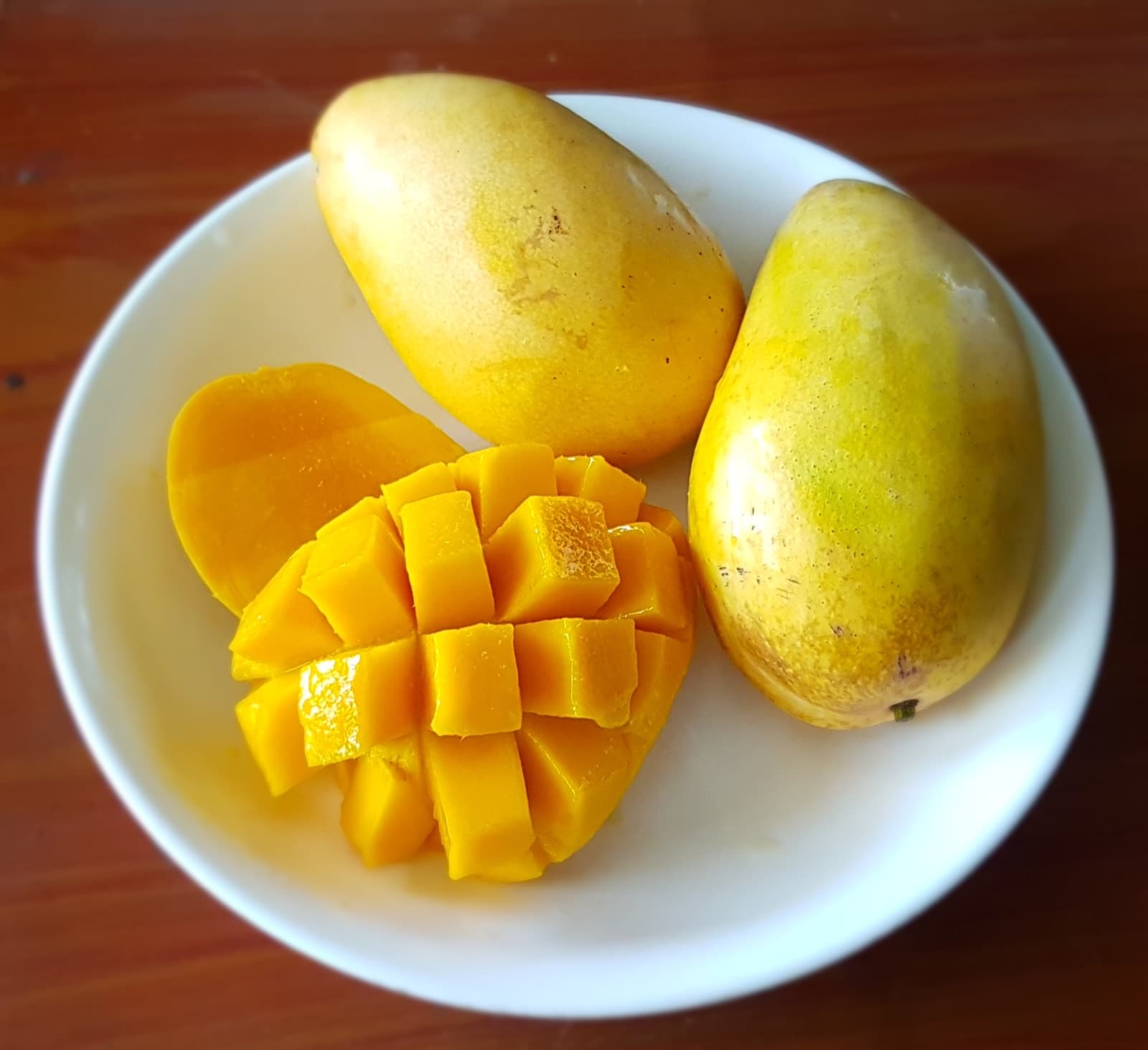
A green mango is sour and crunchy. A yellow mango is sweet and juicy. In the Philippines, both are popular - kids dip slices of green mango into salt or shrimp paste as a tangy snack, and ripe yellow mangoes are eaten on their own or blended into smoothies and ice creams.
The most common way to serve a ripe mango is the 'mango hedgehog'. The cook slices off one cheek of fruit, criss-crosses the inside with a knife without cutting through the skin, then pushes the skin inside-out so the cubes pop up - and you can eat each one with a spoon.
Mangoes have been growing in the Philippines for thousands of years. They are so important that the carabao mango is one of the country's national symbols, right alongside the eagle and the carabao itself.