
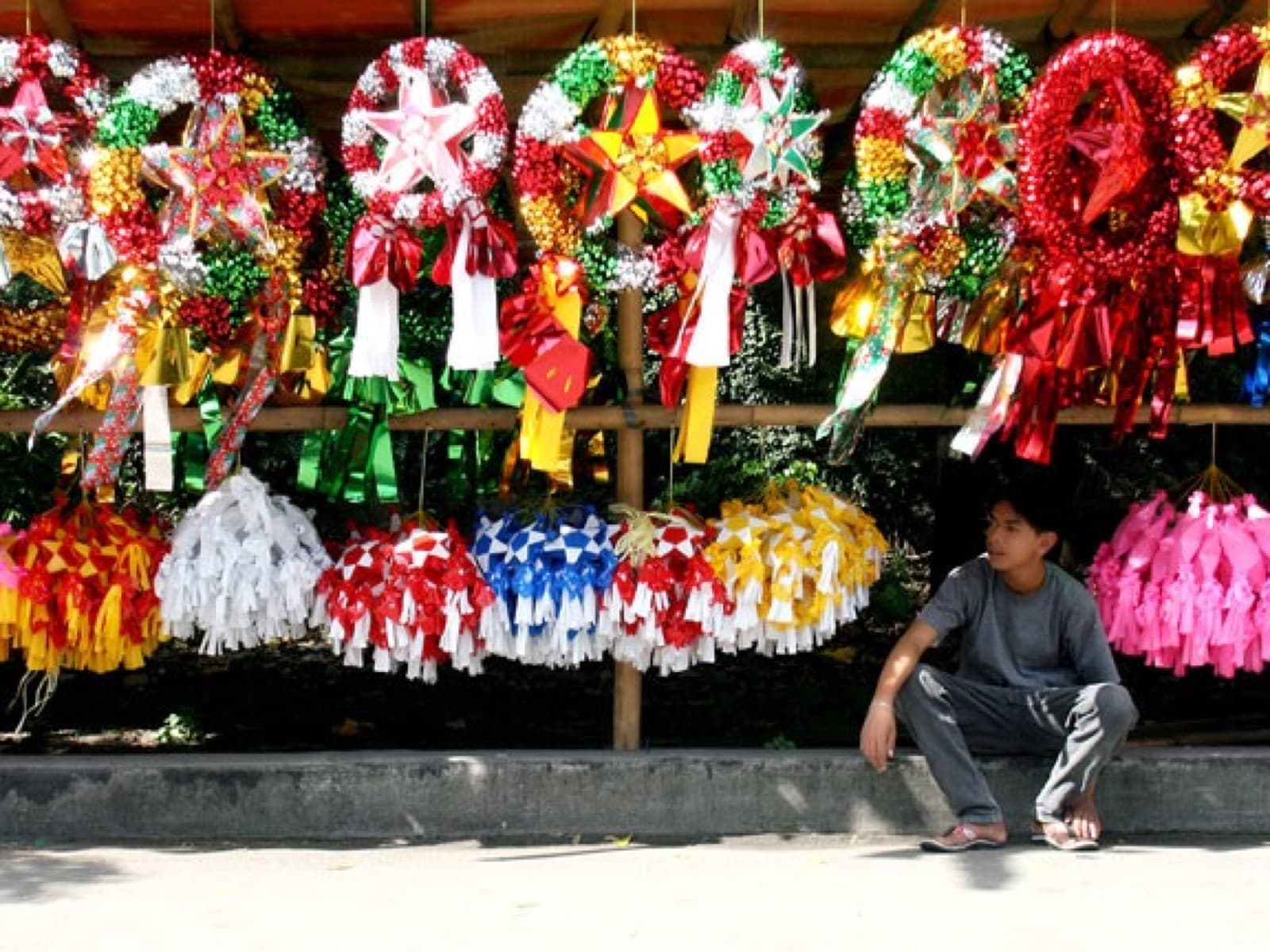
The most famous Filipino Christmas decoration is the parol. It is a star-shaped lantern, often made from bamboo sticks and brightly coloured paper or capiz shells, lit up from the inside. Parols hang outside houses, in school playgrounds and from the front of shops. The star reminds people of the story of Christmas, but everyone enjoys them, whatever they believe.
Filipino families have lots of Christmas traditions that build up over the months. There is caroling - kids walking from house to house singing songs in exchange for coins or sweets. There is Simbang Gabi, nine special early-morning gatherings in the week before Christmas, where families eat hot rice cakes called bibingka and puto bumbong as the sun comes up.
Noche Buena is the big Christmas Eve dinner. The whole family - aunts, uncles, cousins, grandparents - get together, often around midnight, for a giant meal. Roast pork, fruit salad, hot chocolate and ham are typical. Children stay up late and open presents at midnight.
Christmas in the Philippines is a warm Christmas - in November and December the weather is around 25 to 30 degrees Celsius. There is no snow. Instead, there are parols glowing in the warm evenings, the smell of bibingka, and the sound of carols from every neighbourhood.