
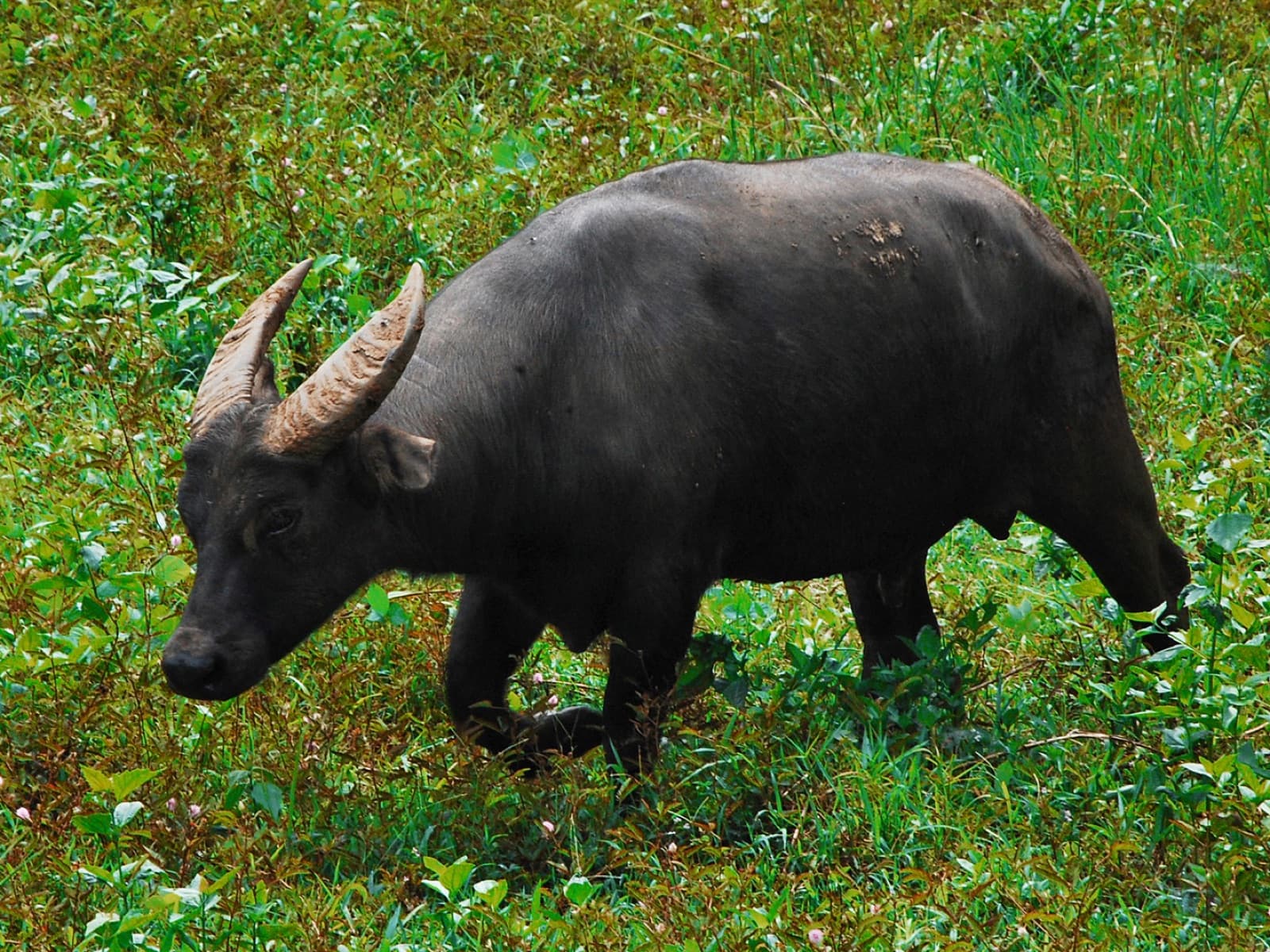
A tamaraw is much smaller than a carabao - about a metre tall at the shoulder, the height of a primary-school child. Its dark brown coat is short and shiny. Its horns sit like a tidy 'V' on top of its head. Unlike the carabao, the tamaraw has never been tamed - it lives wild in the forests and grasslands of Mindoro.
Tamaraws are shy and prefer to stay hidden in the long grass. They are most active early in the morning and late in the afternoon, when the air is cooler. The rest of the time they rest in the shade. They live alone or in very small family groups, unlike many big animals that live in big herds.
Hundreds of years ago, there were tens of thousands of tamaraws across Mindoro. Today there are only a few hundred. Forests were cleared for farming and the tamaraw's home got smaller. So scientists, rangers and Mindoro children all work together now to protect what is left.
Mount Iglit-Baco Natural Park is the main place tamaraws still roam wild. Park rangers count them every year by climbing to high lookouts and watching the grasslands at dawn with binoculars. October is Tamaraw Month in the Philippines, when schools across the country teach about the dwarf buffalo and how to keep its home safe.