
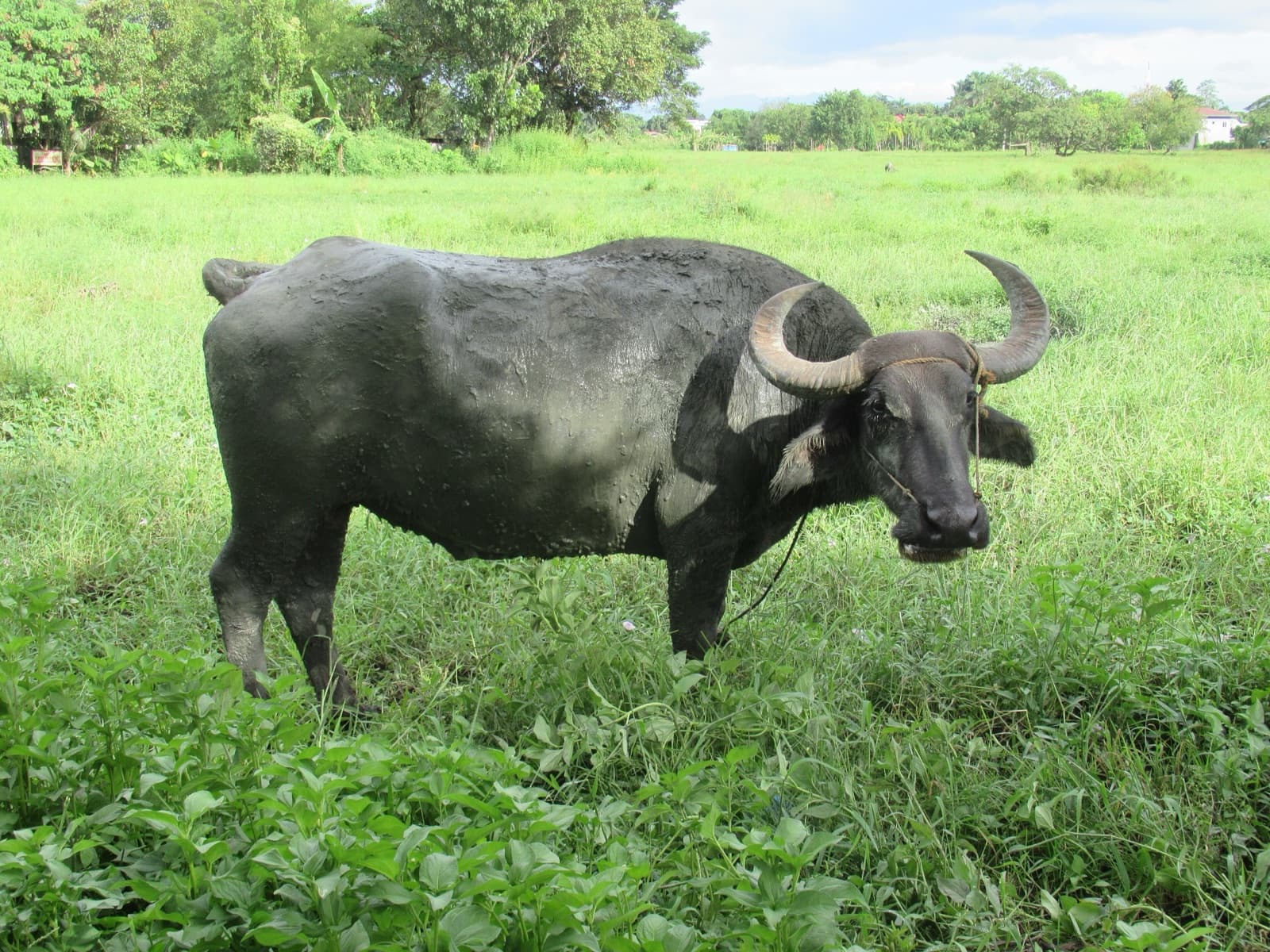
A grown carabao weighs around 500 to 700 kilograms - five or six times the weight of a grown-up human. Its horns curve out and backward from its head in a wide 'V', sometimes more than a metre across. Despite its size, a carabao is known for being calm and gentle.
On a Filipino farm, the carabao is a tractor, a removal van and a friend all rolled into one. It pulls a heavy wooden plough through wet rice fields, walking patiently while the farmer guides it. It pulls carts loaded with vegetables to market. Some farm children even ride to school on the back of their family's carabao.
Carabaos love water. After a hot day's work, they wallow in muddy ponds or rivers up to their chins. The mud cools them down and protects their skin from biting flies. Children sometimes wash them with a bucket of water, scratching the carabao behind its ears - and the carabao closes its eyes in pleasure, like a giant cat being stroked.
Today there is a special centre called the Philippine Carabao Center that breeds healthy carabaos and helps farmers look after them well. Carabao milk is delicious - thicker and creamier than cow's milk - and is used to make a sweet cheese called 'kesong puti' that is a Filipino favourite at breakfast.