
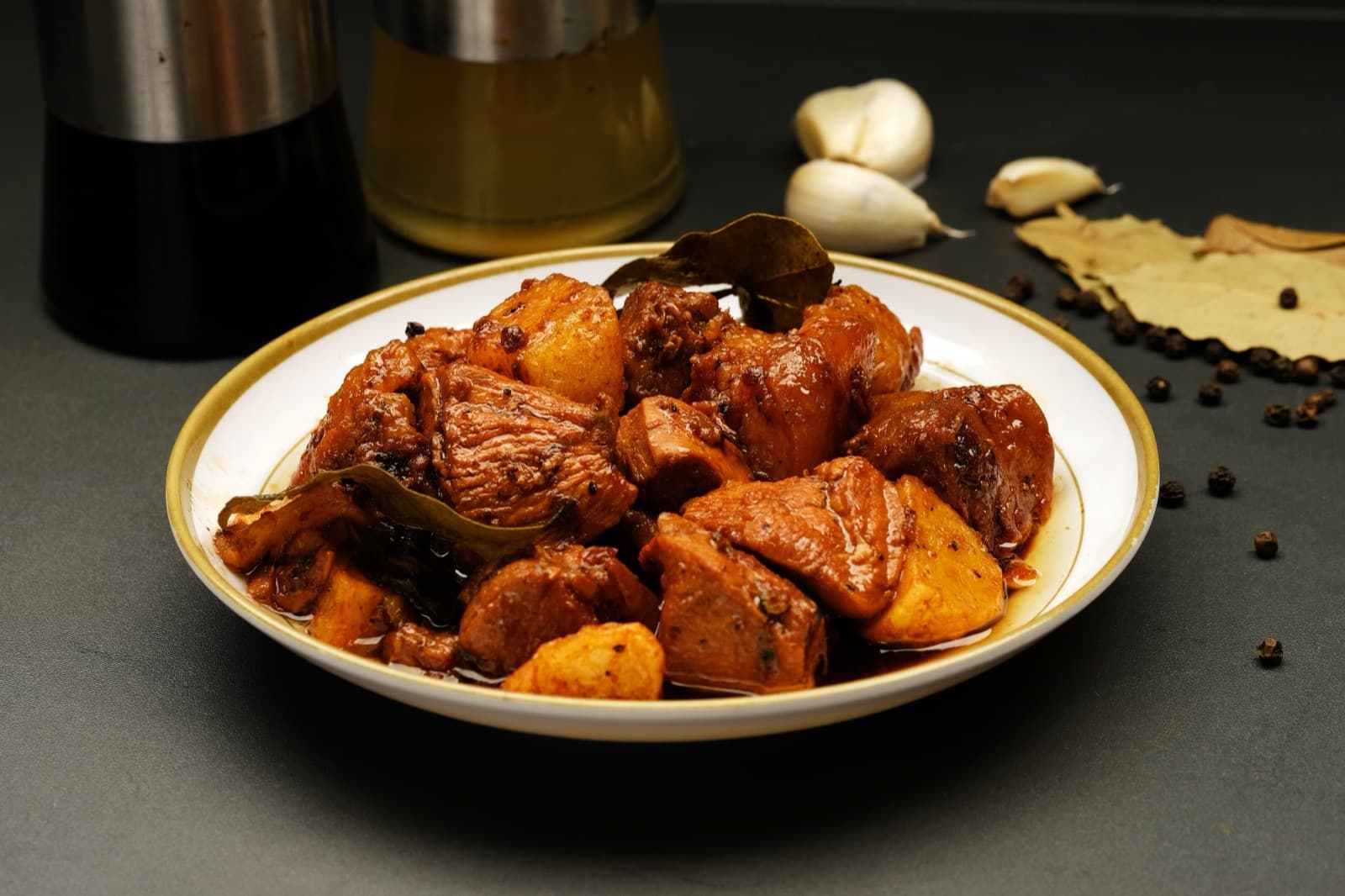
Making adobo is simple. You put pieces of chicken or pork into a pot with soy sauce (salty), vinegar (sour), crushed garlic, bay leaves and a few cracked peppercorns. Then you let it bubble gently for about an hour. The slow cooking makes the meat fall-apart soft and the sauce becomes deep brown and full of flavour.
The word 'adobo' comes from a Spanish word that means 'to marinade'. But the way of cooking - slowly preserving meat in vinegar and salt - is much older in the Philippines than Spanish times. Filipino cooks were already doing this for centuries before, because vinegar keeps food fresh in a hot country with no fridges.
Adobo is usually served on a mountain of steamed white rice. The sauce soaks into the rice, and you eat it with a spoon and fork - the Filipino way. Some families add hard-boiled eggs, potatoes or even pineapple chunks. Some use coconut milk for a creamier version. Each region puts its own twist on it.
If you ever meet a Filipino child living overseas, ask them about adobo. They will almost always tell you about their grandmother's or mother's version - exactly how vinegary it was, what was in it, and that it was the food they missed the most when they were far from home.