
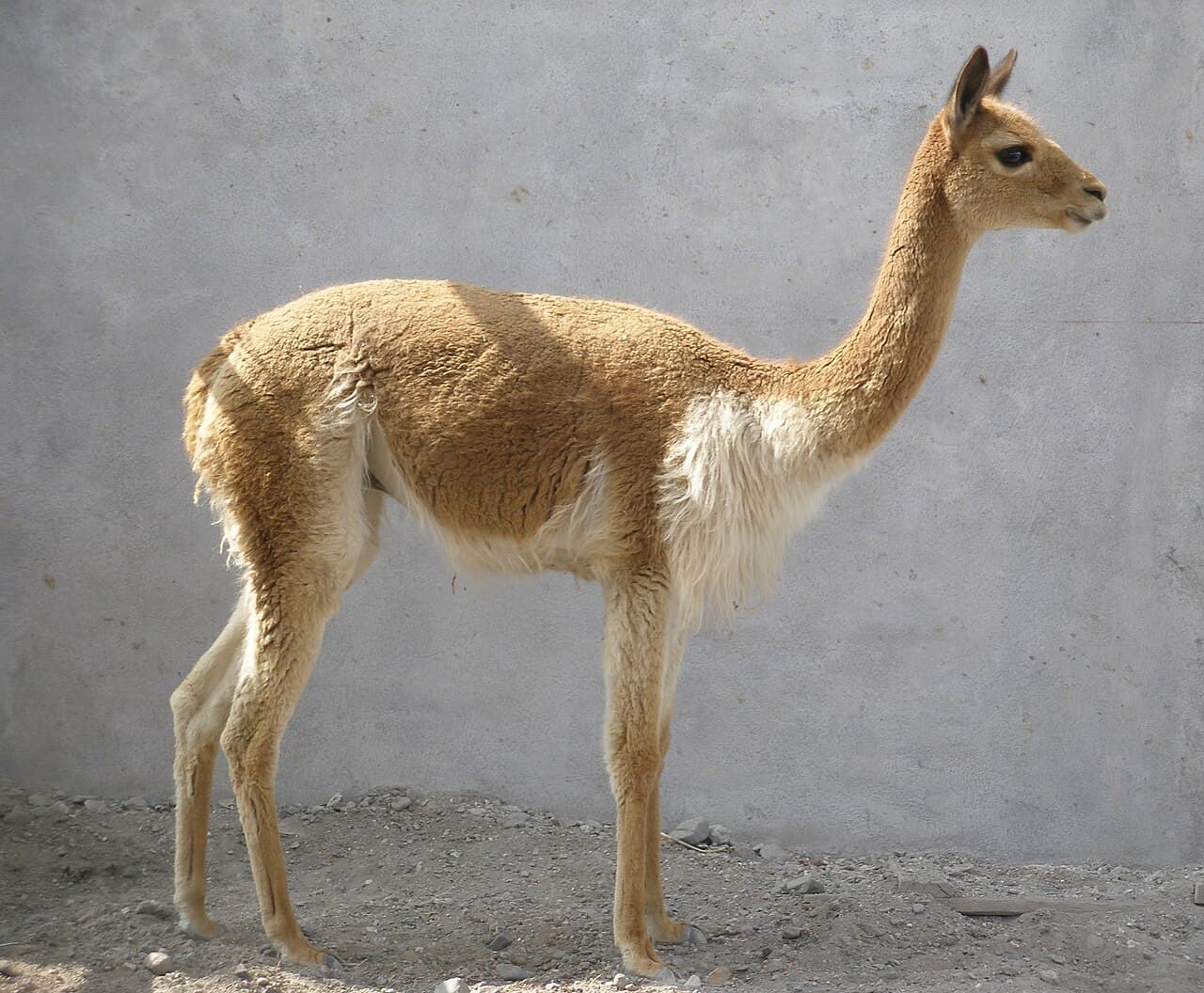
Vicuñas live up where the air is thin, between 3,200 and 4,800 metres above the sea. The fleece on their chest is so light and silky it feels almost like air. It has to be - it keeps them warm against the freezing mountain nights, while letting heat out during the bright sun-baked days.
Vicuña wool is so valuable that for hundreds of years, only the Inca emperor was allowed to wear it. Even today, a single vicuña scarf can take many days to weave by hand and is one of the most expensive fabrics on Earth.
Because vicuñas are wild, you can't just shear them. Every year or two, whole communities work together for a day called the chaccu. People form a giant ring around a group of vicuñas and gently herd them into a pen. Each vicuña has a tiny amount of wool clipped, is checked by a vet, and is then set free.
Years ago, vicuñas were hunted so much that they almost disappeared. Then in 1969 they became protected, and Andean communities began looking after them again. Today there are over 200,000 vicuñas in the wild - a brilliant comeback story.