
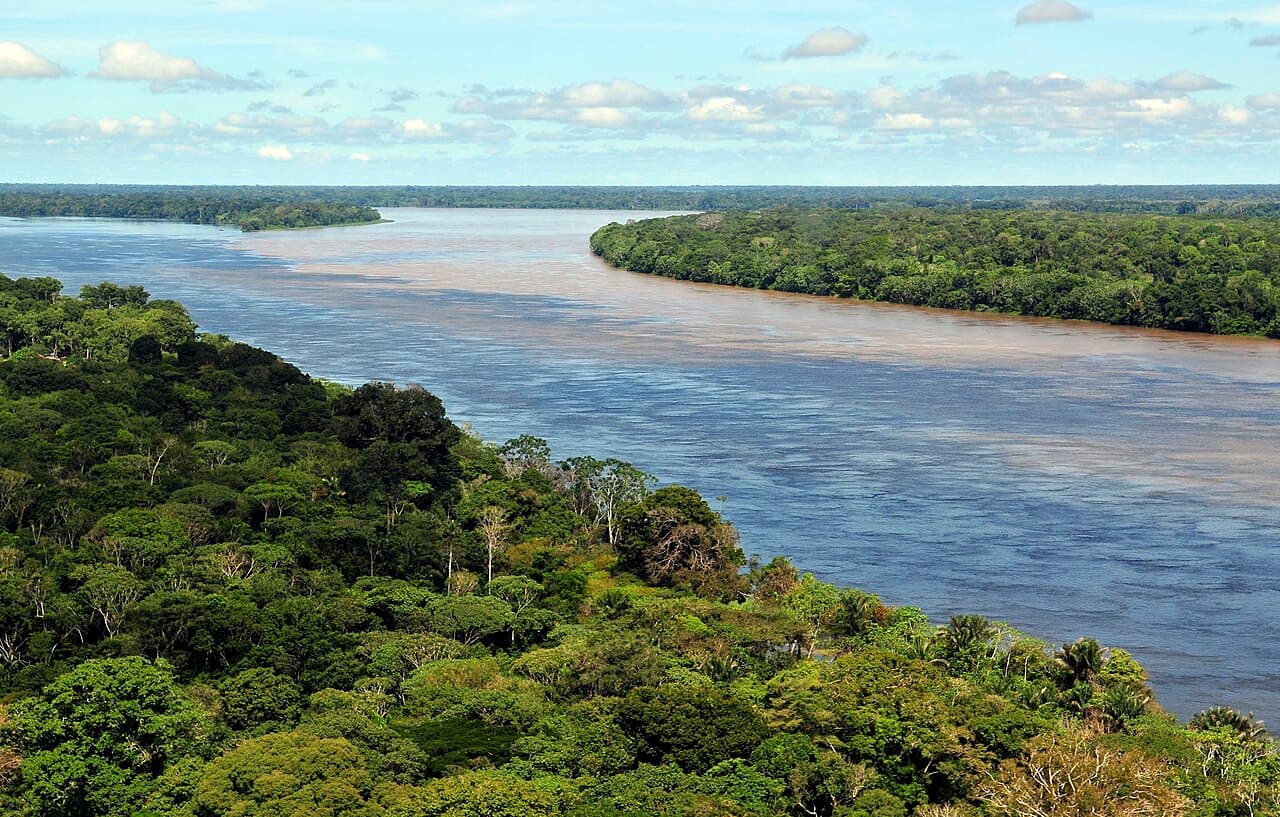
From the air, the rainforest looks like a giant green carpet stretching out for thousands of kilometres. Underneath that carpet, the tallest trees grow over 50 metres tall - higher than a 15-storey block of flats. The leaves at the top are so thick that on the forest floor, even at midday, it is dim and shady.
The rainforest is alive with sound. Birds, frogs, monkeys, insects - they all call to each other, day and night. Scientists think the Peruvian Amazon is home to more than 2,000 different fish, 1,800 birds, and millions of insects - many of which still don't have names because nobody has discovered them yet.
Big winding rivers run through it. They are the rainforest's roads. People who live in the Amazon often travel by boat, because there are no big highways. Communities sit on river banks, and children might take a small boat to school the way you might take a bus.
The Amazon also makes a lot of the rain that falls in South America. Trees pull water out of the ground and breathe it back into the sky, where it forms clouds and rains down again. Cutting down the forest doesn't just hurt the animals - it changes the weather for thousands of kilometres around.