
Classroom lesson 路 Lake Titicaca and the floating islands馃嚨馃嚜 Peru

Lake Titicaca and the floating islands

The highest big lake in the world - with islands made of reeds

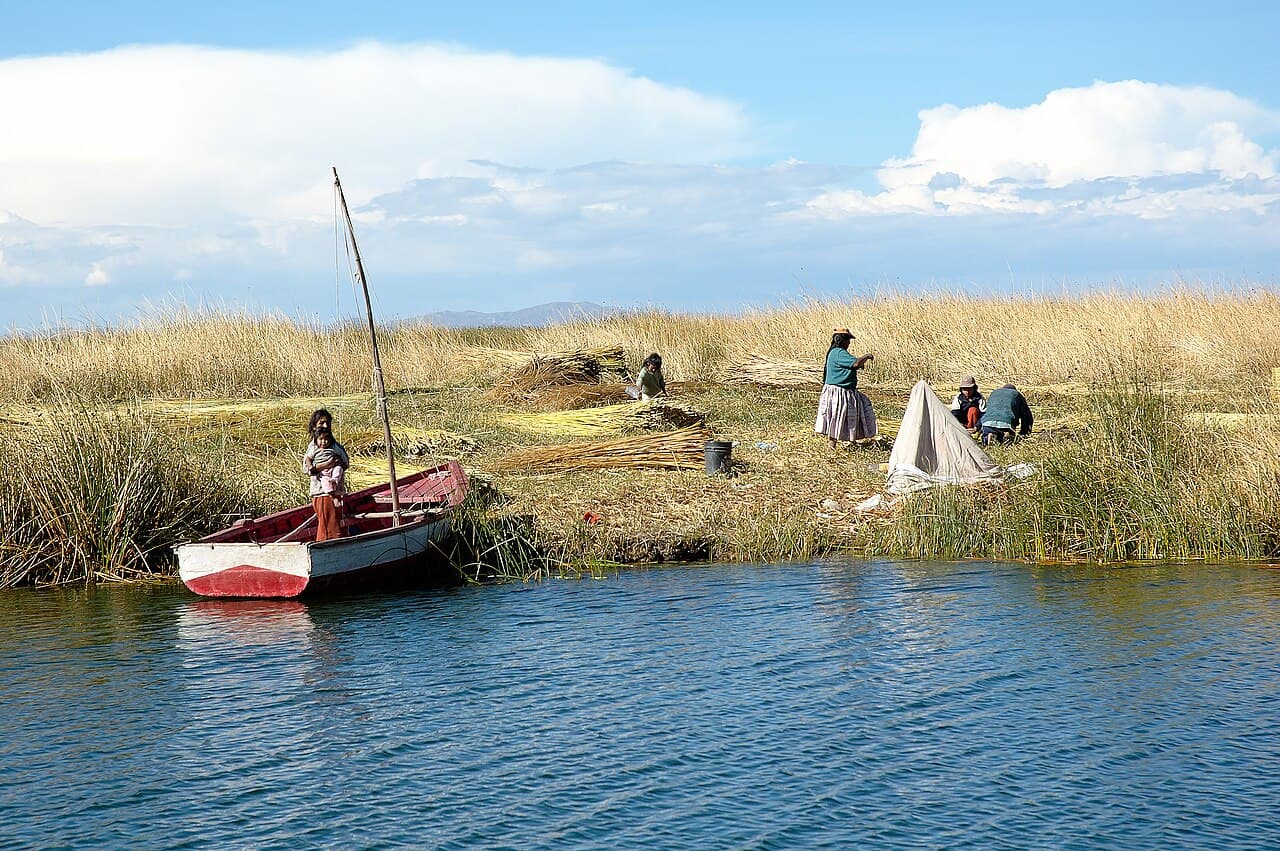
A small reed boat at the edge of a floating reed island on Lake Titicaca

Photo 路 Wikimedia Commons

What is it?

Lake Titicaca sits high in the Andes mountains, between Peru and Bolivia. At 3,810 metres above the sea, it is the highest lake in the world that big boats can sail on. And the most amazing thing about it is that some of the islands aren't islands at all - they float, and they are made of reeds.

Tell me more

The lake is enormous. It is over 190 kilometres long - roughly the distance from London to Manchester - and 280 metres deep in places. Around its shore live the Aymara and Quechua people, whose families have farmed and fished here for thousands of years.

A group called the Uros people had a brilliant idea hundreds of years ago. They learned to build their own islands out of a tough reed called totora that grows in the lake. They cut bundles of reeds, tie them together into thick mats, and lay mat after mat on top until the whole 'island' is strong enough to walk on.

Each floating island is about the size of a small football pitch. Several families live on each one. Their houses, their boats and even some of their fires sit on top of the reed bed. As the bottom rots away in the water, they simply add more reeds on top - so the island stays the right thickness.

The Uros people travel between islands in boats also made of totora reeds. The reeds smell sweet, taste a bit like cucumber if you chew them, and last for ages. There are over 60 floating islands on Lake Titicaca, and children grow up running across spongy reed floors that wobble gently with the lake.

In the classroom

Walk your class through this in 15 minutes.

Talk together

Discussion prompts

  1. 01How might it feel to live on something that floats and gently moves all the time?
  2. 02What other 'floating' things have humans built (e.g. boats, oil platforms, ferries)? How are reed islands the same? How are they different?
  3. 03If you had to build a new home using only one plant that grew near you, which plant would you choose?
Try this

Classroom activity

On a tray of water, build a tiny 'floating island' out of bundled drinking straws or dry grass tied with string. Add cardboard houses on top. Can it hold a small toy without sinking? Discuss what makes the Uros design clever.