
Classroom lesson 路 Wildlife馃嚨馃嚜 Peru

The spectacled bear - the real Paddington

South America's only bear - and the bear behind Paddington

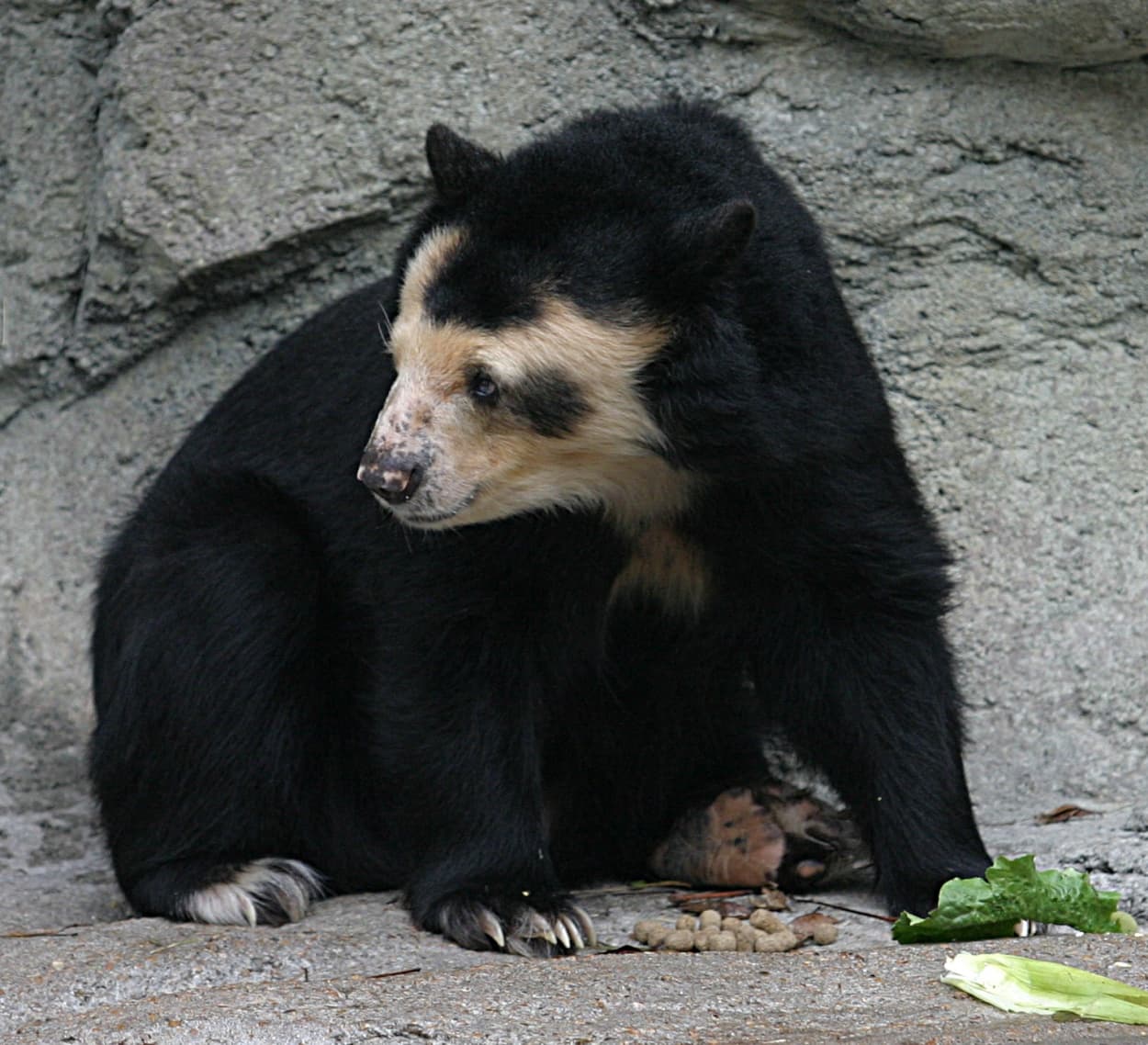
A spectacled bear with pale rings around its eyes, sitting in a rocky enclosure

Photo 路 Wikimedia Commons

What is it?

The spectacled bear is the only kind of bear that lives in South America. It is small, fluffy, and has pale rings around its eyes that look just like a pair of glasses - which is how it got its name. It is also the bear that inspired Paddington from 'Darkest Peru'.

Tell me more

Spectacled bears live in the cloud forests of the Andes - those misty, mossy forests where the mountainsides disappear into the clouds. They are very shy, very good at climbing, and spend a lot of time up in the trees. They sometimes build leafy platforms in the branches to sit on and eat.

Even though they are bears, they mostly eat plants. Their favourite foods are wild fruit and the soft inside of a plant called bromeliad - which looks a bit like a giant pineapple top. They occasionally eat small animals, but most days, a spectacled bear is more of a salad-eater than a hunter.

Every spectacled bear has different markings around its eyes - some have full circles, some have a little 'mask', some just have a stripe. Like a giraffe's pattern or a zebra's stripes, no two are identical. Scientists who study them can recognise individual bears by their face pattern.

The British author Michael Bond wrote 'A Bear Called Paddington' in 1958 after seeing toy bears in a London shop on Christmas Eve. He decided his bear should come from 'Darkest Peru' - and the real bears living in Peru's cloud forests are spectacled bears. Today, many people first hear of Peru because of Paddington.

In the classroom

Walk your class through this in 15 minutes.

Talk together

Discussion prompts

  1. 01Why might it be helpful for a bear to be a good climber?
  2. 02Paddington travels from Peru to London. What do you think he would find most surprising about your town?
  3. 03If every spectacled bear has a different face pattern, how is that like (and unlike) your own face?
Try this

Classroom activity

Each pupil draws their own spectacled bear face on paper - decide where the pale markings go: full circles? Half mask? Stripes? Give each bear a name. Hold them up at the front and play 'guess whose bear?' - can the class spot which marking belongs to which artist?