
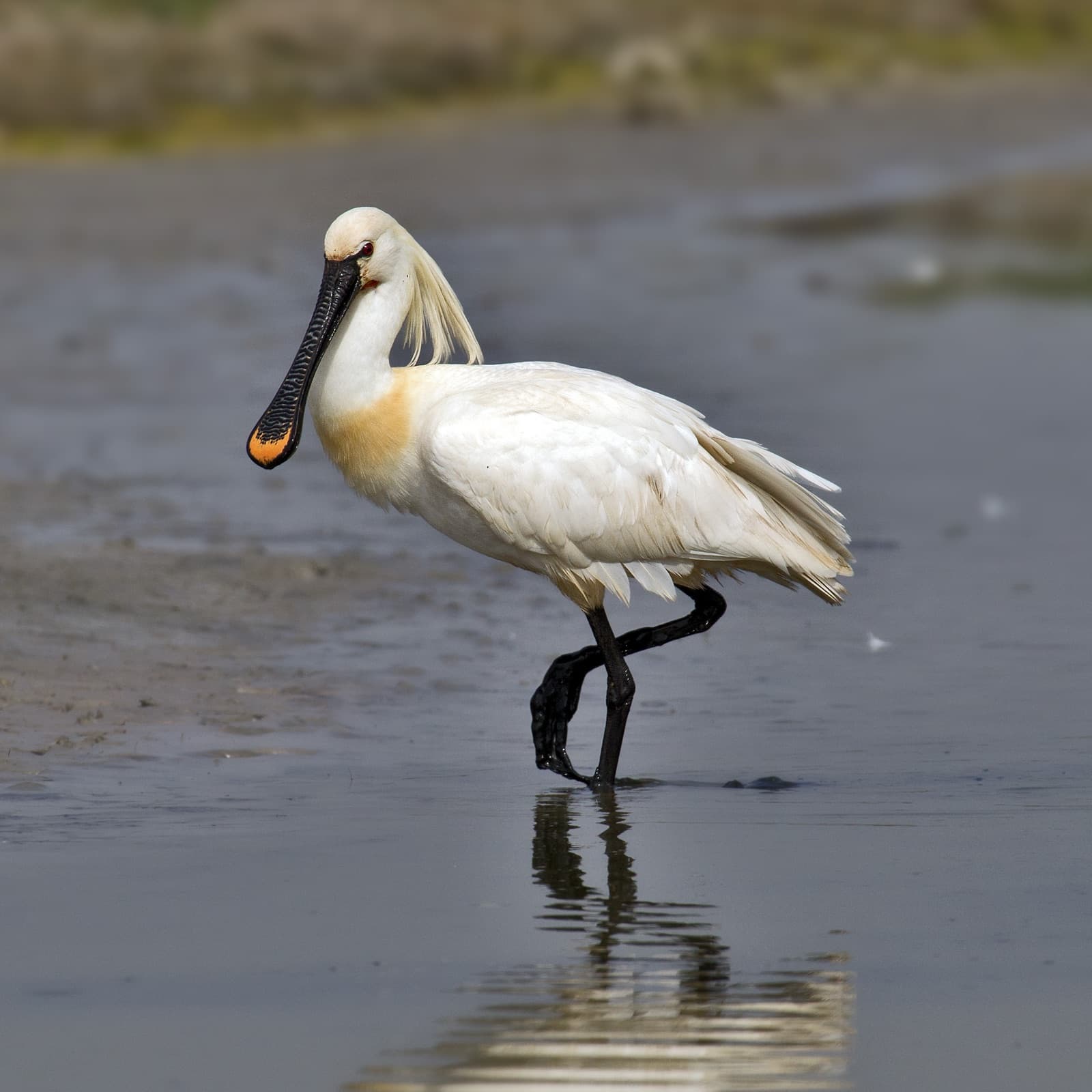
Spoonbills feed by walking slowly through shallow water with their beak half-open and sweeping it left and right. Tiny fish, shrimp and water bugs bump into the spoon-shaped end - and snap! - the spoonbill closes its beak and swallows. They are sometimes called 'living shrimp nets'.
Most of Europe's spoonbills come to the Dutch coast to nest. They build big stick nests in the dunes, on islands, or in special protected wetlands called 'natural reserves'. The Wadden Sea, on the north Dutch coast, is one of the most important places in the world for them.
In the breeding season, grown-up spoonbills grow a beautiful yellow patch on their chest and a fluffy crest on the back of their head that looks like a punk hairstyle. The babies hatch covered in fluffy white down with short, normal-looking beaks. The spoon shape grows as they grow up.
Spoonbills were almost lost from the Netherlands a hundred years ago - there were only a few hundred left. But people protected the wetlands and built new ones, and now there are thousands. It is a brilliant example of what happens when we look after a place properly.