
Classroom lesson 路 Windmills and the 19 of Kinderdijk馃嚦馃嚤 Netherlands

Windmills and the 19 of Kinderdijk

Giant machines that pump water out of fields

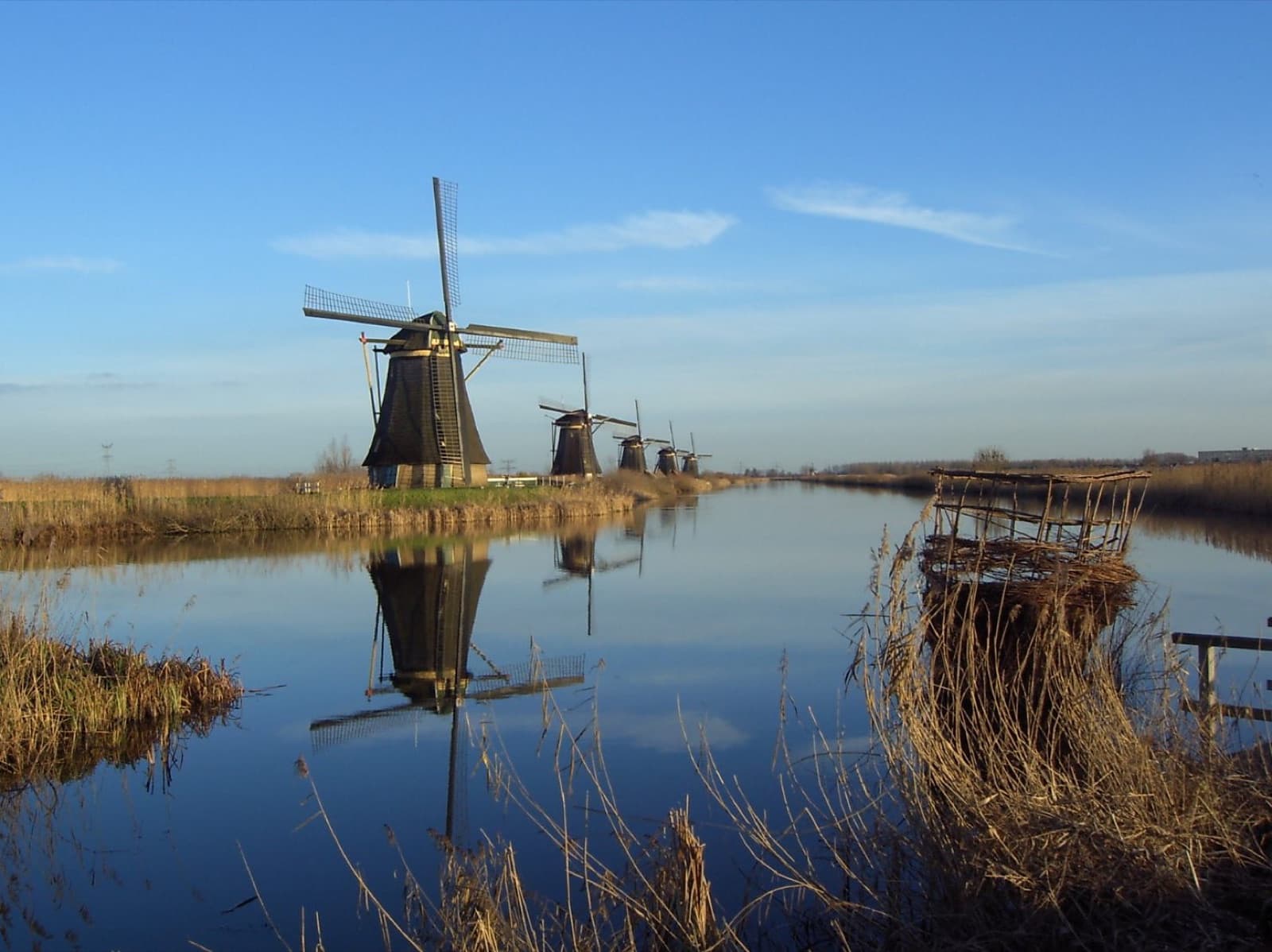
A line of historic Dutch windmills at Kinderdijk reflected in still water

Photo 路 Wikimedia Commons

What is it?

Dutch windmills are not just pretty. They were giant water-pumping machines. For hundreds of years, the Netherlands used windmills to lift water out of low, soggy fields so people could live and farm on the land. At a place called Kinderdijk, 19 of these old windmills still stand in a row by the water.

Tell me more

Much of the Netherlands is lower than the sea. Without help, the fields would flood. The Dutch had a brilliant idea: build a windmill where the wind catches its big sails, and use that turning power to drive a big screw or scoop that lifts water up and away.

Each windmill at Kinderdijk is taller than a house. The sails are made of wood and white cloth and can be over 25 metres across - longer than two buses. When the wind picked up, the miller (the person who looks after the mill) would let the sails turn, and the water would start flowing out of the fields.

Windmills weren't only used for pumping water. Some ground wheat into flour for bread. Some sawed huge tree trunks into planks for ships. Some squeezed seeds to make oil. At one point, the Netherlands had around 10,000 working windmills - now there are about 1,200 still standing.

Kinderdijk means 'children's dyke' in Dutch. A dyke is a long wall that holds back water. The 19 windmills there are nearly 300 years old and a UNESCO World Heritage Site - which means they are looked after for the whole world, not just the Netherlands.

In the classroom

Walk your class through this in 15 minutes.

Talk together

Discussion prompts

  1. 01Why might the Dutch have spent so much effort lifting water out of their fields?
  2. 02How is a windmill a bit like a modern wind turbine you might see on a hill? How are they different?
  3. 03If you had a windmill at your school, what useful work could it do for you?
Try this

Classroom activity

Make a simple paper pinwheel. Hold it up and walk into the wind - watch it spin. Talk about how that spinning motion could be turned into useful work: pumping water, grinding flour, sawing wood. Draw your own design for what your pinwheel could power.