
Classroom lesson 路 Wildlife馃嚦馃嚤 Netherlands

The Friesian cow - black-and-white and famous

The cow that helped feed the world

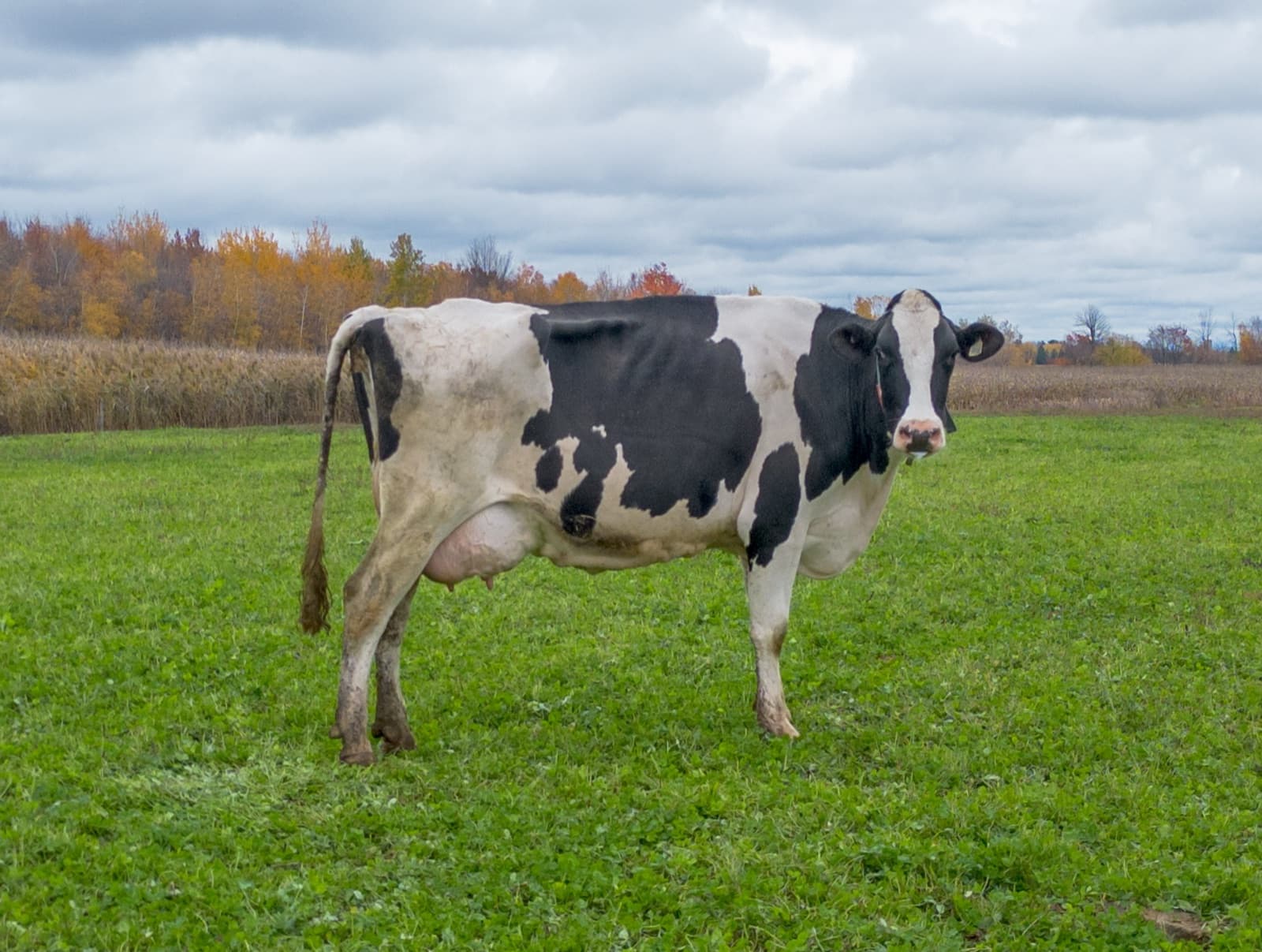
A black-and-white Friesian dairy cow grazing in a flat green Dutch field

Photo 路 Wikimedia Commons

What is it?

The black-and-white cow you probably draw whenever you draw a cow comes from the Netherlands. It is called the Friesian (or Holstein-Friesian) cow, named after the Dutch region of Friesland. Friesian cows are now the most common dairy cows in the world.

Tell me more

Friesians were bred in the Netherlands over many hundreds of years to be excellent milk-makers. A modern Friesian cow can produce around 30 litres of milk a day - that is about 60 big bottles, every single day. Across the world today, around half of all dairy cows are descended from Dutch Friesians.

Dutch dairy farms are usually small and family-run. Many farmers know each of their cows by name. The cows live in flat green fields between canals, eating fresh grass in summer and stored hay in winter. In the cool damp climate of the Netherlands, grass grows brilliantly - which is one big reason Dutch dairy farming has always done so well.

Cows have a special stomach with four chambers. They eat the grass once, then bring it back up later and chew it again. This is called 'chewing the cud'. If you ever see a cow lying in a field chewing slowly with its eyes half-closed, that's what's happening.

Friesian cows make the milk that goes into Dutch cheeses like Gouda and Edam, into Dutch chocolate-milk (chocolademelk), into yoghurt and butter. So the cow, the cheese, and the windmill that pumped water off the field she stands in - all are part of the same story.

In the classroom

Walk your class through this in 15 minutes.

Talk together

Discussion prompts

  1. 01Why might it help a farmer to know each of their cows by name?
  2. 0230 litres of milk a day is a lot. What kinds of food could you make from that much milk in a single day?
  3. 03Every black-and-white cow we draw is a bit Dutch. What other 'normal' things around us might have started somewhere far away?
Try this

Classroom activity

Bring a few different milk-based foods into class - cheese, yoghurt, butter, a milky drink. Trace each one back: it came from milk, the milk came from a cow, the cow ate grass, the grass grew in a field. Draw the whole chain on one big poster.