
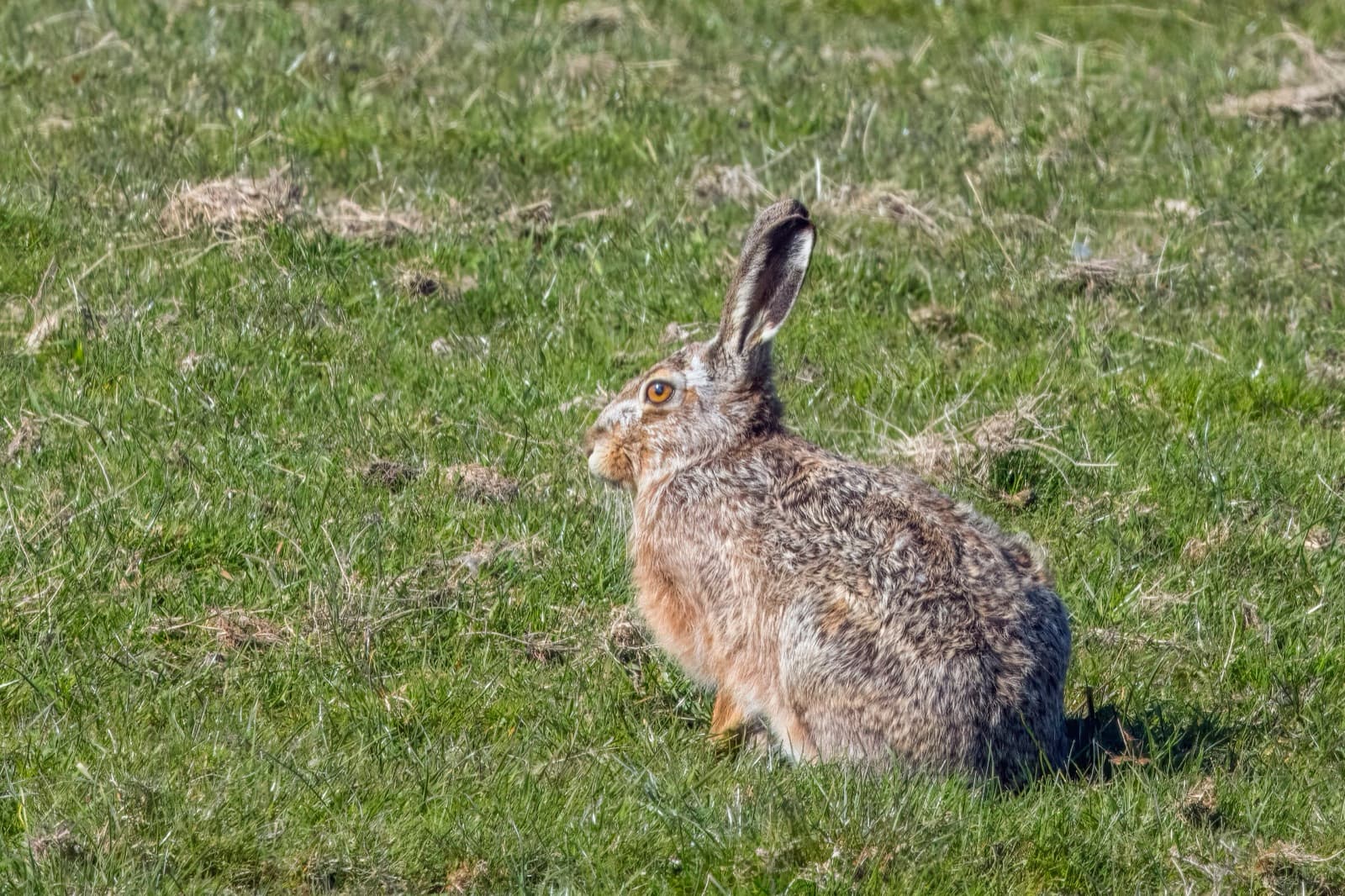
A European hare can run at over 70 kilometres an hour - faster than most dogs. It uses its powerful back legs to leap several metres at a time. When a fox or buzzard comes after a hare, the hare zigzags wildly to confuse the predator, then suddenly disappears into the long grass.
Unlike rabbits, which live in big underground families called warrens, hares live alone above the ground. Baby hares (called leverets) are born with all their fur and their eyes wide open, and can hop within hours. Their mum hides them in dips in the grass, called 'forms', and visits them only at dusk so predators don't notice.
In spring, you can sometimes see hares 'boxing'. Two hares stand up on their back legs and bat at each other with their front paws. People used to think this was two males fighting. Actually it is usually a female telling a male she isn't interested - she stands up and pushes him away with her paws.
Hares are part of old Dutch folk tales and paintings. The Dutch artist Albrecht Dürer (who travelled to the Netherlands) painted one of the most famous animal pictures in the world: 'Young Hare', painted in 1502, with every whisker so real it looks like a photograph.