
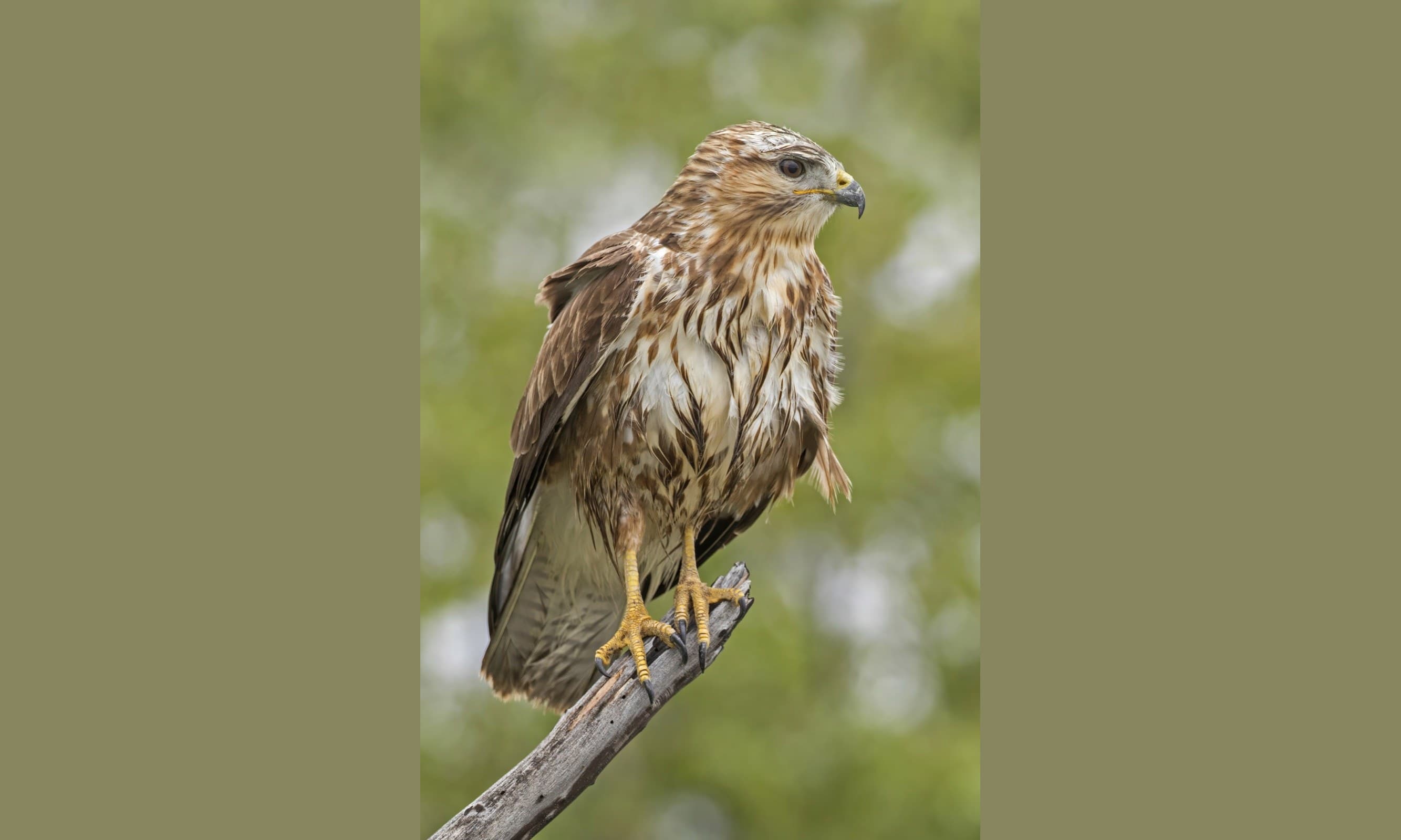
A buzzard's wingspan is around 1.2 metres - about the height of a 7-year-old child with their arms stretched out. They have brown speckly feathers, a hooked yellow beak, and sharp talons (claws) for catching prey. From below they look mostly pale, with dark patches that look like upside-down 'M's near the wrists of their wings.
Buzzards are very clever hunters. They love to perch on fence posts, telephone poles or in single trees in the middle of a field, watching and waiting. When they spot a mouse, vole or rabbit moving in the grass, they swoop down silently and catch it in one move.
They also use the wind. On warm days, columns of warm air rise up off the flat Dutch fields. Buzzards spread their wings and ride these warm columns higher and higher without flapping. Pilots call this 'thermal soaring'. The buzzard saves energy and gets a great view all at once.
Buzzards 'kee-yaaaar' loudly when they fly over their nests. It is one of those sounds that, once you know it, you'll start hearing all the time. Try listening next time you are outside on a windy day - you may already have a buzzard living near you and never knew.