
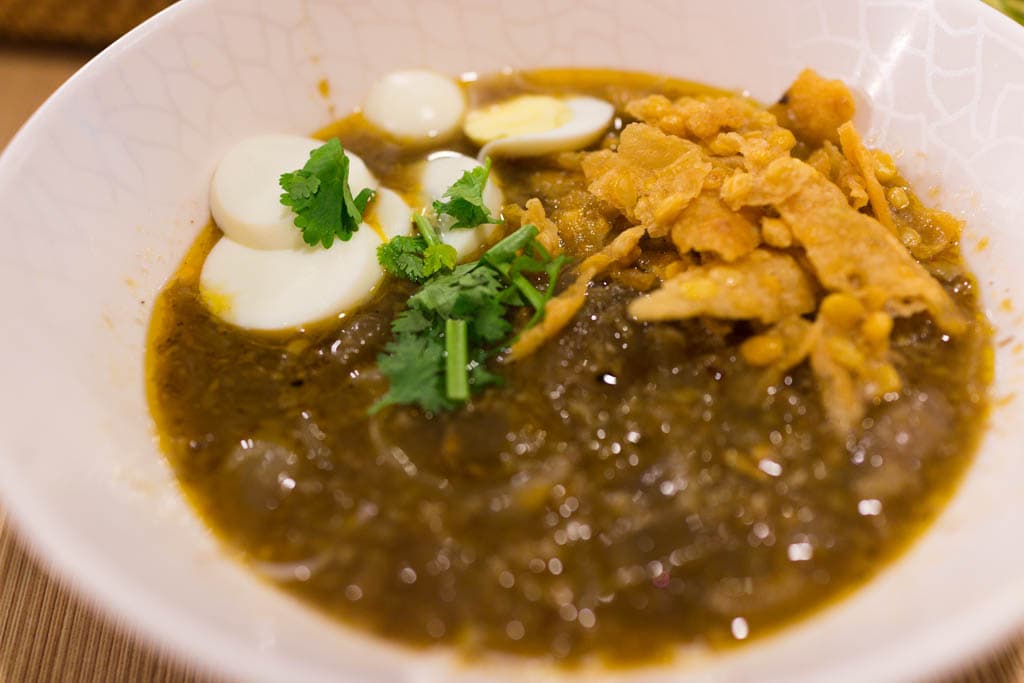
The broth is the heart of mohinga. Cooks simmer fish (often a river fish called catfish) with lemongrass, ginger, garlic and turmeric for hours, then thicken the liquid with toasted rice powder and chopped banana-tree stem. The result is golden, savoury and just a little bit sour from the lime.
Mohinga is everywhere. Sellers push wooden carts along the streets at dawn, ringing bells. Kids on their way to school stop at the cart and the seller fills a bowl in seconds - noodles first, then ladles of hot broth, then a sprinkle of crispy chickpea fritters and a wedge of lime. It costs the same as a sweet at a corner shop in many countries.
Different parts of Myanmar make mohinga differently. In the south the broth is fishier, in the centre it is more lemony, in the north some cooks add boiled egg or fried chickpea cakes. Many families have their own grandparents' recipe and will argue (kindly) that it is the best one.
Although it is mostly a breakfast food, you can find mohinga at any time of day - at street stalls, at small cafes, at family gatherings, even at the school cafeteria. For lots of Myanmar children, the smell of mohinga in the morning is the smell of 'time to go to school'.