
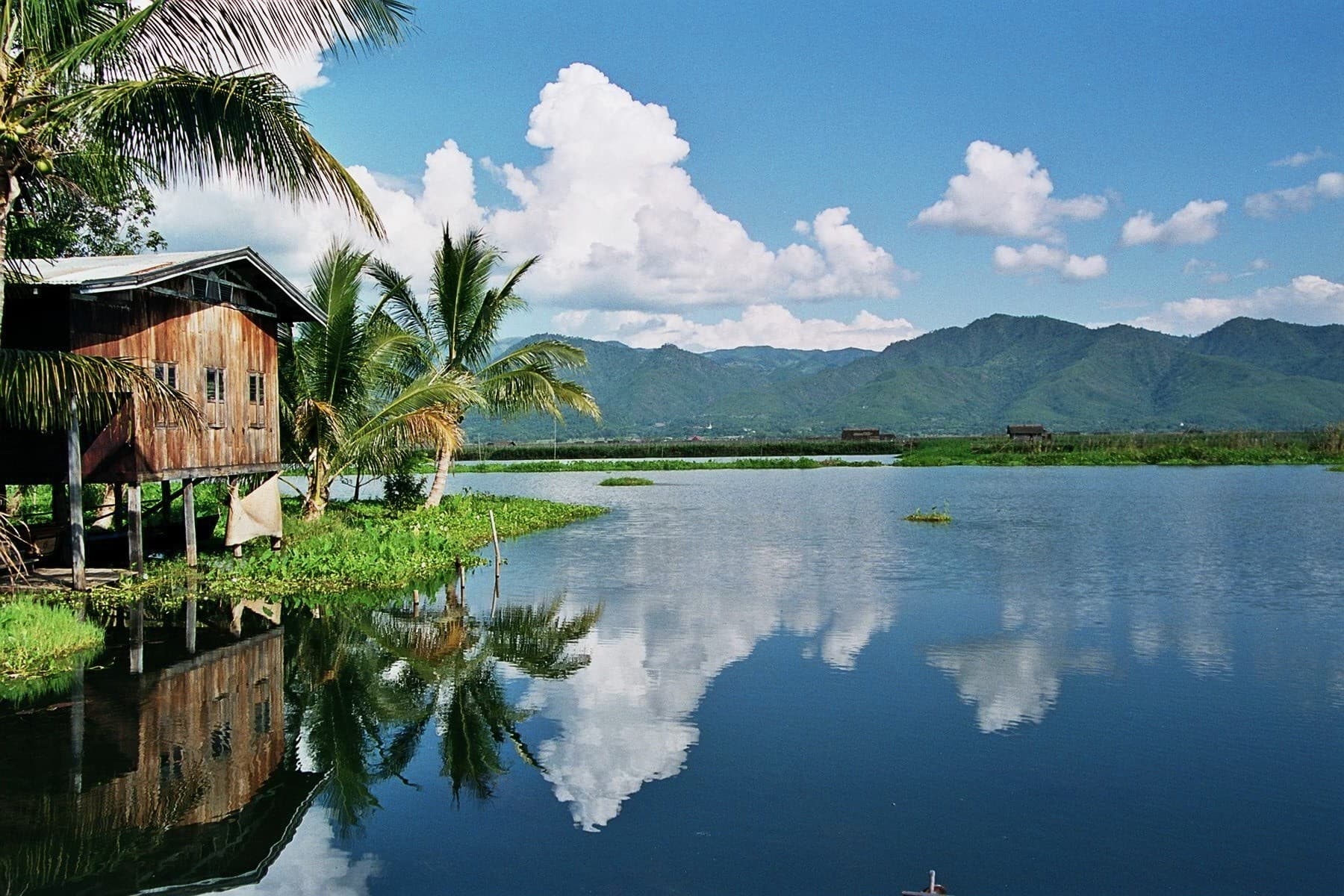
The lake is enormous - about 22 kilometres long. Whole villages are built right on the water, on wooden stilts. Children paddle to school in small canoes, and shops, schools and even a hospital sit on platforms over the lake. There are floating gardens too - long strips of soil and water-plants tied to bamboo poles, where farmers grow tomatoes and salad.
Leg-rowing is a clever invention. When the Intha fishermen need both their hands free to lower a fishing net into the water, they need a way to keep the boat moving. Standing up gives them a much better view across the reeds. Wrapping one leg around the oar lets them push the water steadily while the hands work the net. Most Intha kids learn to leg-row by about age ten.
The lake is surrounded by hills. In the morning, mist sits on the water and the leg-rowers slowly appear out of it, one by one. Around the edges of the lake, weekly markets rotate from village to village, with people arriving by boat from miles around.
Inle is also famous for its lotus weaving. The long stems of the lotus plant can be twisted into fine threads, which are then spun into special silk-soft fabric. Almost nowhere else in the world is cloth made this way. It is one of the most painstaking jobs you can imagine - 4,000 lotus stems are needed to make a single scarf.