
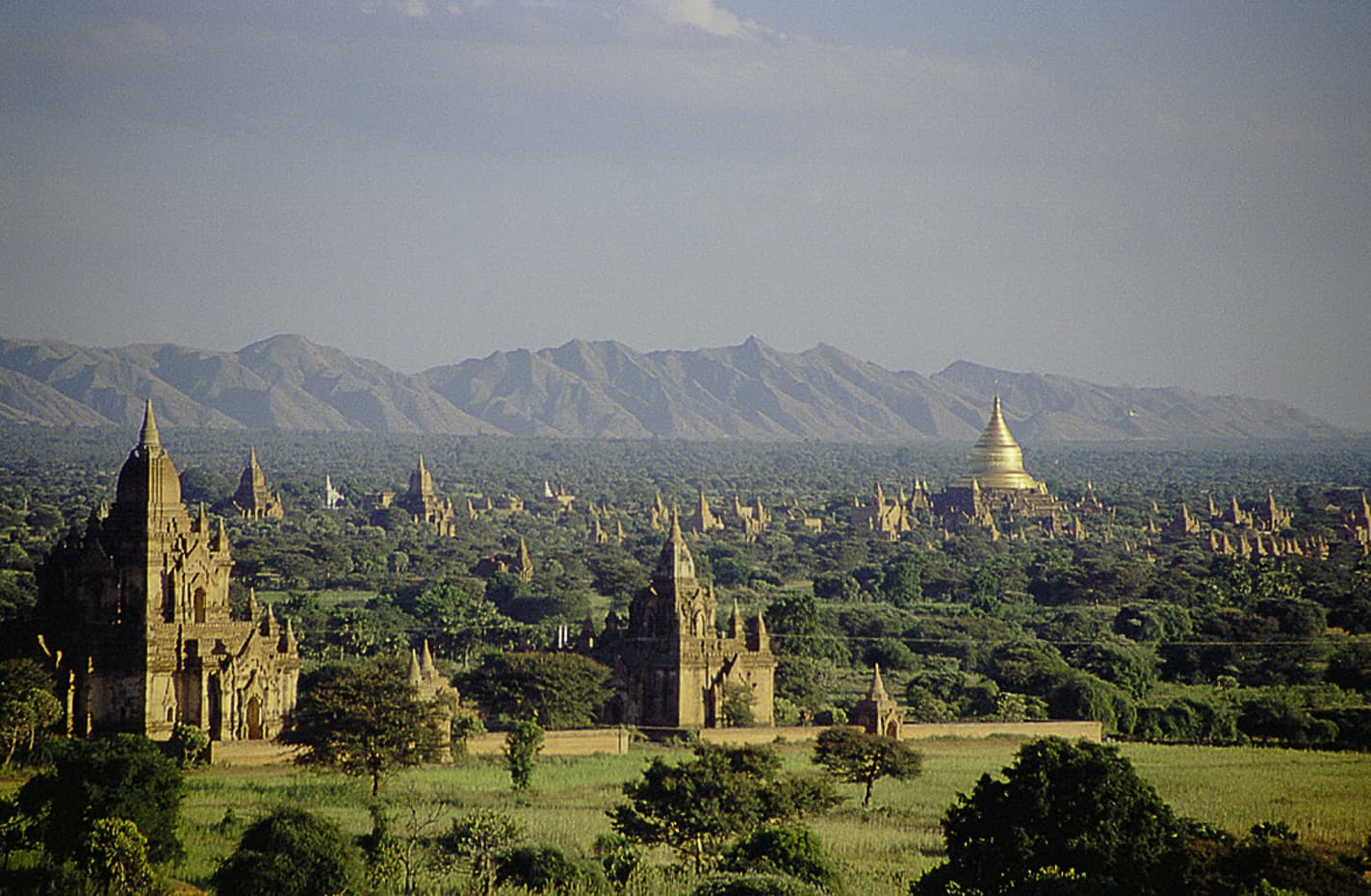
At its busiest, Bagan was the heart of a powerful kingdom. The kings and their families spent enormous amounts of time and money having temples built - some are small and quiet, others are huge and shaped like a stepped pyramid. Over 200 years, more than 10,000 temples were built. Around 2,000 still stand today.
The temples are mostly made of red-brown brick, which is why they all look like they belong to one family even though every single one is a slightly different shape. Inside, the walls are often painted with stories - old paintings of animals, palaces and patterns that have lasted for centuries.
Bagan sits on the banks of the Irrawaddy River, and the soil all around is dry and sandy. Goats, oxen and horse-carts still trot along the dusty paths between the temples. Children who grow up in Bagan say the best time to look at it is at sunrise, when the brick turns pink in the early light.
Some visitors climb a small hill at dawn just to watch the sun come up over the temples. On a good morning, the air is still cool, hot-air balloons float past, and the whole plain looks like a painting. Bagan was added to UNESCO's list of important world places in 2019.