
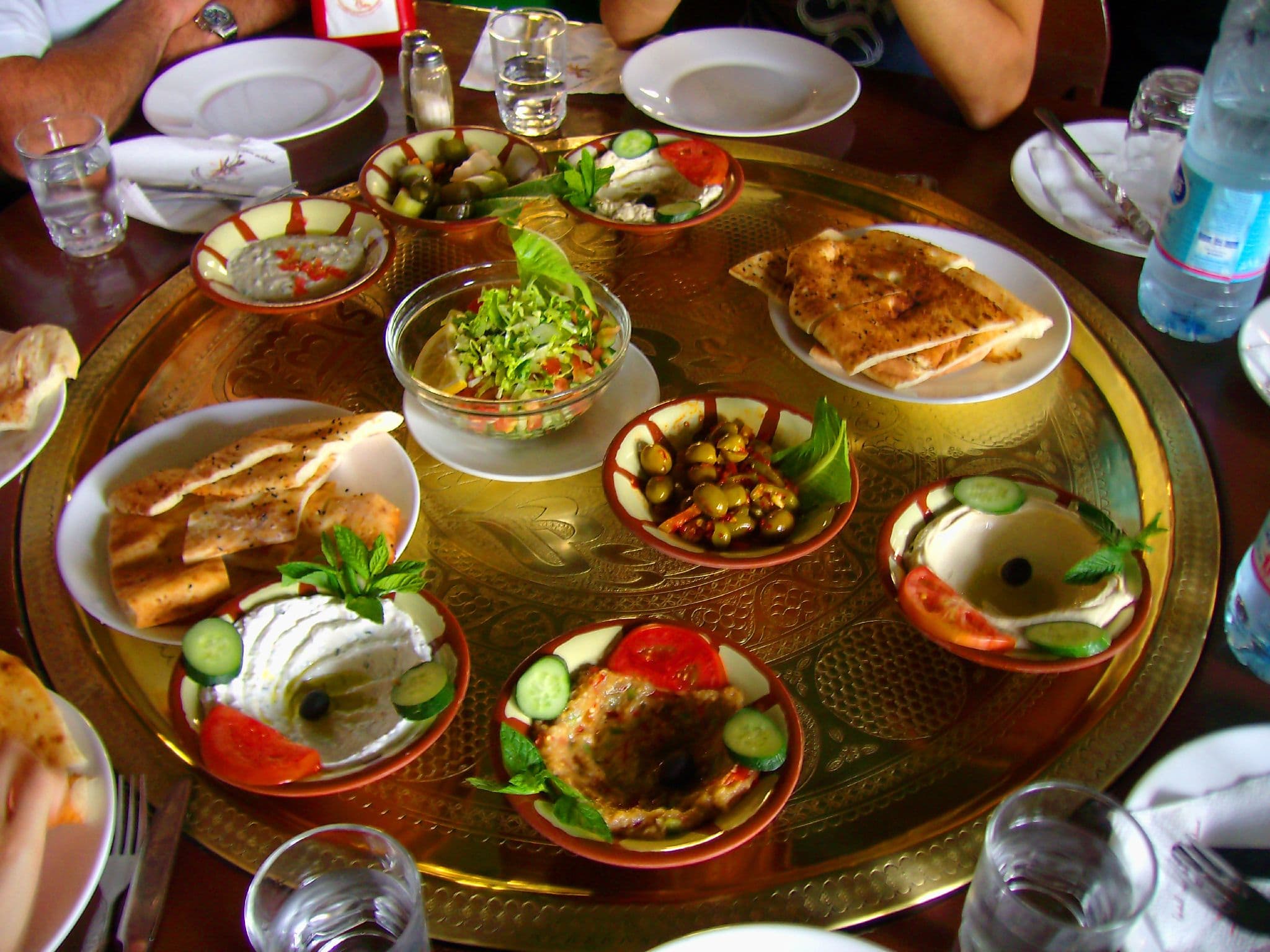
A mezze table usually has dips like hummus (mashed chickpeas with sesame paste) and baba ganoush (smoky aubergine), salads like tabbouleh and fattoush, pastries called fatayer, little meatballs called kibbeh, stuffed grape leaves, olives, fresh tomatoes, cucumbers, mint, parsley and warm flatbread to scoop everything up with.
The point of mezze is that no two mouthfuls are the same. You tear a piece of bread, dip it in hummus, then try a leaf of parsley, then a piece of cheese, then a little grilled vegetable. Every plate has a turn in front of you, and then it moves on.
Mezze is meant to be slow. Families and friends sit around the table for two, three, sometimes four hours. People talk between bites, refill each other's glasses with cool water or lemonade, and pass dishes around. The food keeps coming - just when you think it is over, another plate arrives.
Many countries around the eastern Mediterranean have something like mezze - Greece has its meze, Turkey has its meze too, and other countries have their own versions. Each shares the same idea: many small dishes, one shared table, plenty of time.