
Classroom lesson 路 Baalbek - the giant stone temples馃嚤馃嚙 Lebanon

Baalbek - the giant stone temples

Some of the biggest stones any humans have ever moved

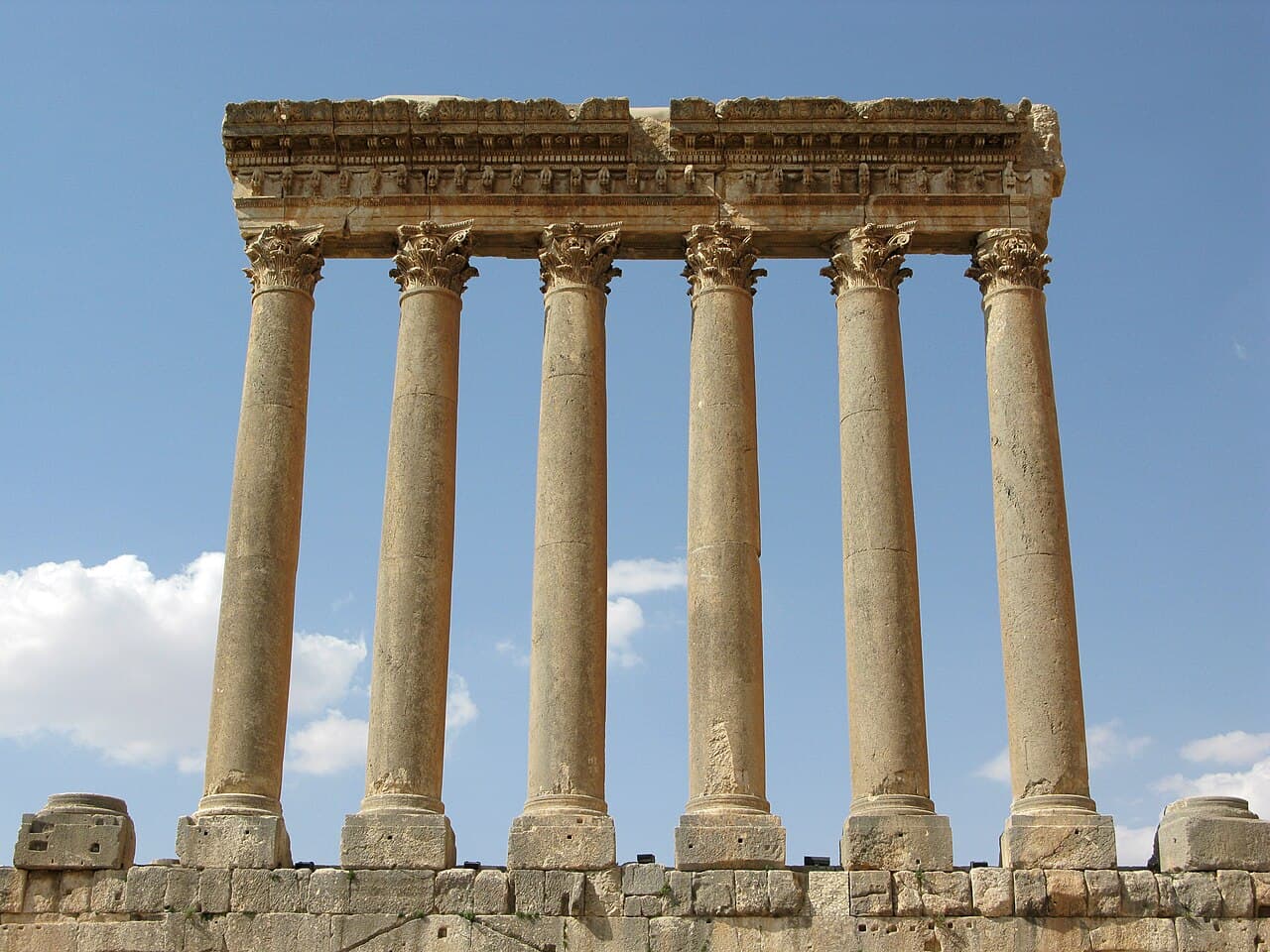
The huge columns of the Temple of Bacchus at Baalbek with the sky behind them

Photo 路 Wikimedia Commons

What is it?

Baalbek is an ancient stone city in the Bekaa Valley, in eastern Lebanon. About 2,000 years ago, Roman builders constructed three enormous temples here. The columns are still standing today, and some of the stone blocks at the base are so huge that even modern machines would struggle to move them.

Tell me more

The biggest temple at Baalbek is the Temple of Jupiter. Only six of its columns are still standing, but each one is 20 metres tall - the height of a six-storey building. If you stood at the bottom and looked up, your neck would hurt before you could see the top.

Underneath the temples are foundation stones called the 'Trilithon'. Each of these is around 800 tonnes - heavier than 100 elephants stacked together. Nobody is completely sure how the Romans moved them. There is even a single uncut stone nearby, called the 'Stone of the Pregnant Woman', that weighs more than 1,000 tonnes.

The Temple of Bacchus, right next door, is smaller but in much better condition. Its walls and roof carvings still have detailed patterns of grapes, flowers and leaves cut into the stone. Looking up close at the carvings, you can imagine the stonemasons chipping away for years, one tiny chisel-stroke at a time.

Every summer, Lebanon holds a big music festival inside the ruins - the Baalbek International Festival. Singers, orchestras and dance groups perform with the giant columns lit up behind them. It is one of the most spectacular concert stages in the world.

In the classroom

Walk your class through this in 15 minutes.

Talk together

Discussion prompts

  1. 01How might people have moved 800-tonne stones with no engines or trucks?
  2. 02Why might a country want to keep very old buildings standing instead of replacing them?
  3. 03What does it feel like to be inside or next to something much, much bigger than you?
Try this

Classroom activity

On a long piece of paper, draw a 20-metre Baalbek column next to a 1.4-metre child (one of your classmates). Use squared paper if you can. How tall is the column compared to the child? Then label other tall things you know - a tree, a lamppost, your school building - on the same scale.