
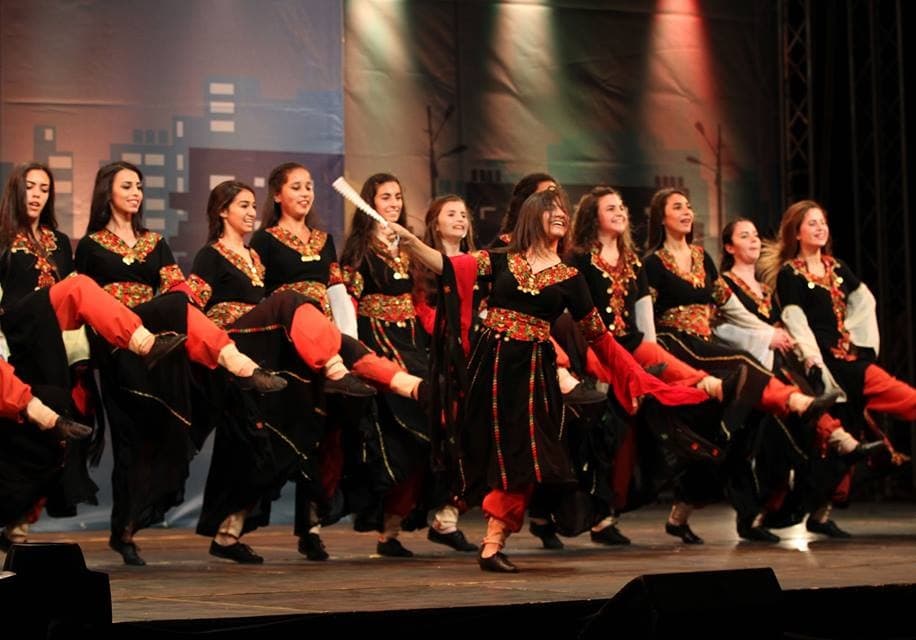
The word 'dabke' comes from a word meaning 'stamping of the feet'. In old Lebanese villages, when a family was building a new house, the neighbours would come and help stamp down the mud roof so it was strong and waterproof. They held hands and stomped in time to music - and over the centuries, that work job slowly turned into a dance.
The music has a strong, clear drumbeat - usually played on a goblet-shaped drum called the darbuka. There is often a high reedy pipe called the mijwiz adding the melody. The beat is steady so the dancers can keep their feet together: stomp-stomp-kick, stomp-stomp-kick.
There are many different styles. 'Dabke al-Shamaliyya' (northern dabke) is fast and athletic - dancers leap into the air. 'Dabke al-Karadiyya' has softer steps. Each village in Lebanon has its own favourite version, and dance teachers can sometimes guess where someone is from by watching their step.
Dabke is for everyone. Children learn it at five or six and dance it for the rest of their lives. At a Lebanese wedding, the whole party - grandparents, parents, children, cousins - will join the line, hold hands and dance together. Some dabke lines can stretch the entire length of a hall.