
Classroom lesson 路 Wildlife馃嚠馃嚤 Israel

The hyrax - the elephant's tiny cousin

Looks like a guinea pig, is actually related to elephants

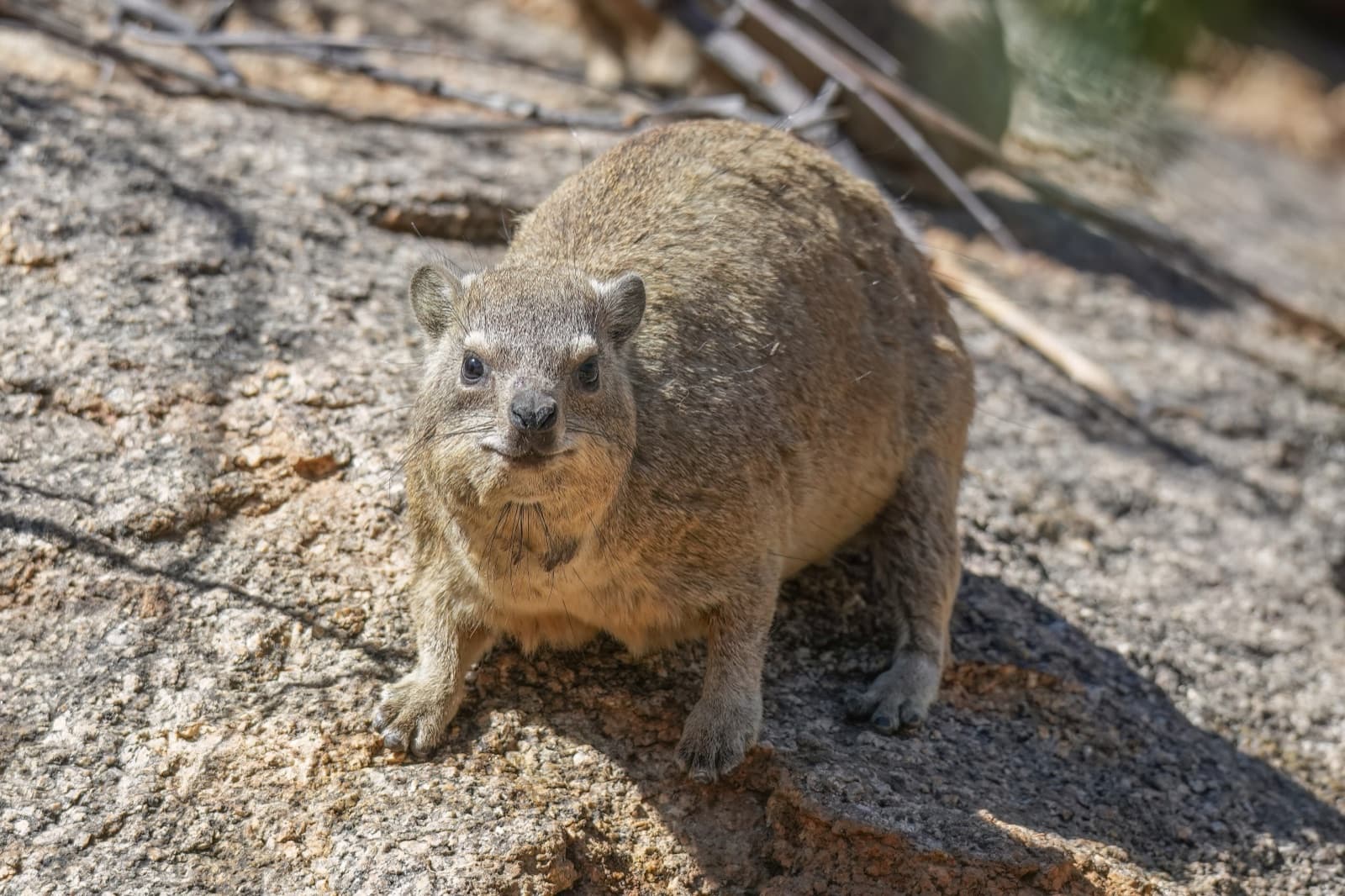
A small brown hyrax sitting on a sunny rock

Photo 路 Wikimedia Commons

What is it?

The rock hyrax looks like a chubby brown guinea pig or rabbit. It lives on rocky hillsides across Israel, often sunbathing in big family groups. But here is the surprise: hyraxes are not rodents. Their closest living relatives are elephants. Scientists worked this out from their teeth, their toes, and their DNA.

Tell me more

Hyraxes look nothing like elephants. They are only about 50 centimetres long and weigh 4 kilograms. But if you look closely you can see clues: they have little flat hooves on their toes instead of claws, and their tusks (yes, tusks!) stick down a little from their top lip. Elephants have huge tusks; hyraxes have tiny ones.

Hyraxes live in family groups of 10-50 on rocky hillsides. One adult always stands lookout while the others sun themselves and feed. If the lookout sees a hawk or a snake, it gives a sharp whistle. The whole group dashes for cracks in the rocks.

They are vegetarians - eating leaves, flowers, twigs and fruit. Their stomach has lots of chambers, like a cow's, to digest tough plants. They sun themselves in the morning to warm up before they start moving around.

Hyraxes are very chatty. They make over 20 different sounds, from squeaks to growls to long musical calls. Scientists studying them in Israel have noticed that hyrax 'songs' have patterns, almost like words in a sentence. Each family has its own accent.

In the classroom

Walk your class through this in 15 minutes.

Talk together

Discussion prompts

  1. 01How can a tiny animal be related to an elephant? What clues might scientists look at?
  2. 02Why might it help an animal to live in a big group with a lookout?
  3. 03If your family had its own 'accent' of sounds, what would your hello sound like?
Try this

Classroom activity

As a class, invent five 'hyrax sounds' for different things: hello, danger, food found, all clear, goodbye. Use them in a short hyrax-language conversation between two children at the front. Can the rest of the class guess what they 'said'?