
Classroom lesson 路 Wildlife馃嚠馃嚤 Israel

The Arabian oryx

A snow-white desert antelope brought back from the brink

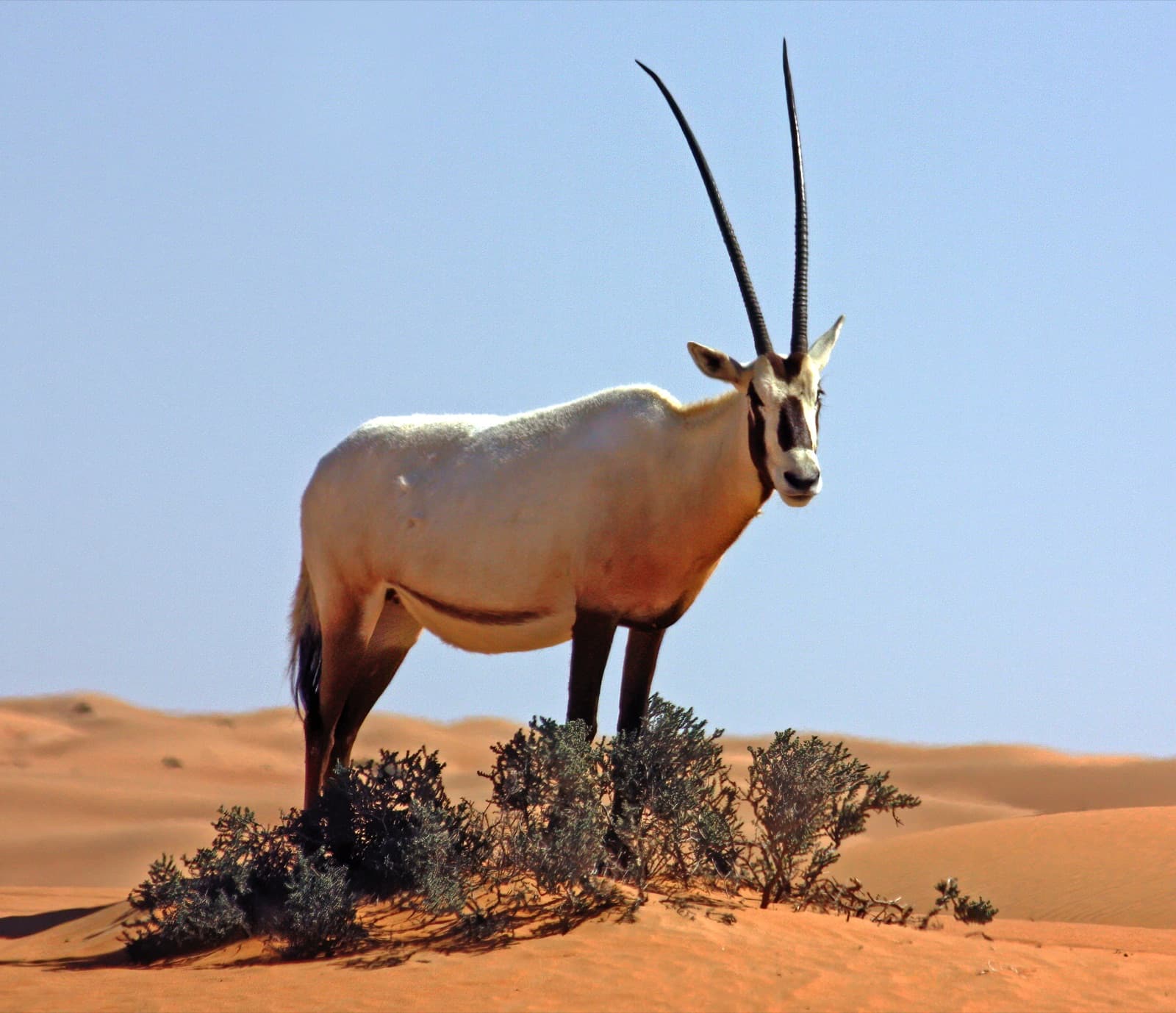
A white Arabian oryx with long straight horns in the desert

Photo 路 Wikimedia Commons

What is it?

The Arabian oryx is a beautiful white antelope with two long, straight horns. They live in the dry deserts of Israel and the Middle East. From the side, with their two horns lined up as one, they look a bit like a unicorn - and some scientists think the unicorn legend started with oryx sightings long ago.

Tell me more

Arabian oryx are built for the desert. Their white coats reflect the sun and keep them cool. Their wide hooves spread out on the sand. They can go for weeks without drinking, getting most of their water from the plants they eat and the cool morning dew.

They live in small herds, led by an older female. They can sense rain from a huge distance away - sometimes 70 kilometres - and the whole herd will walk together to where they know fresh plants will be growing.

Sadly, by the 1970s wild Arabian oryx had been hunted until there were almost none left. The last wild one was seen in 1972. But people had kept some safely in zoos. Israel set up a special reserve in the Negev called Hai-Bar, where oryx born in zoos learned how to live wild again before being released.

Today there are again hundreds of wild oryx, including herds in Israel. It is one of the world's best wildlife rescue stories - an animal that had completely disappeared from the wild was brought back by people working together across many countries.

In the classroom

Walk your class through this in 15 minutes.

Talk together

Discussion prompts

  1. 01How might a white coat help an animal stay cool in the desert?
  2. 02What does it mean to bring an animal 'back from extinction'? Why might that take more than one country?
  3. 03If you could pick one disappeared animal to bring back, which would it be and why?
Try this

Classroom activity

Look up the oryx and pick three desert features it has (white coat, wide hooves, etc.). Then design your own desert animal that has all three. Give it a name and a story.