
Classroom lesson 路 Wildlife馃嚠馃嚤 Israel

Griffon vultures

Giant birds with a 2.8-metre wingspan that ride the desert wind

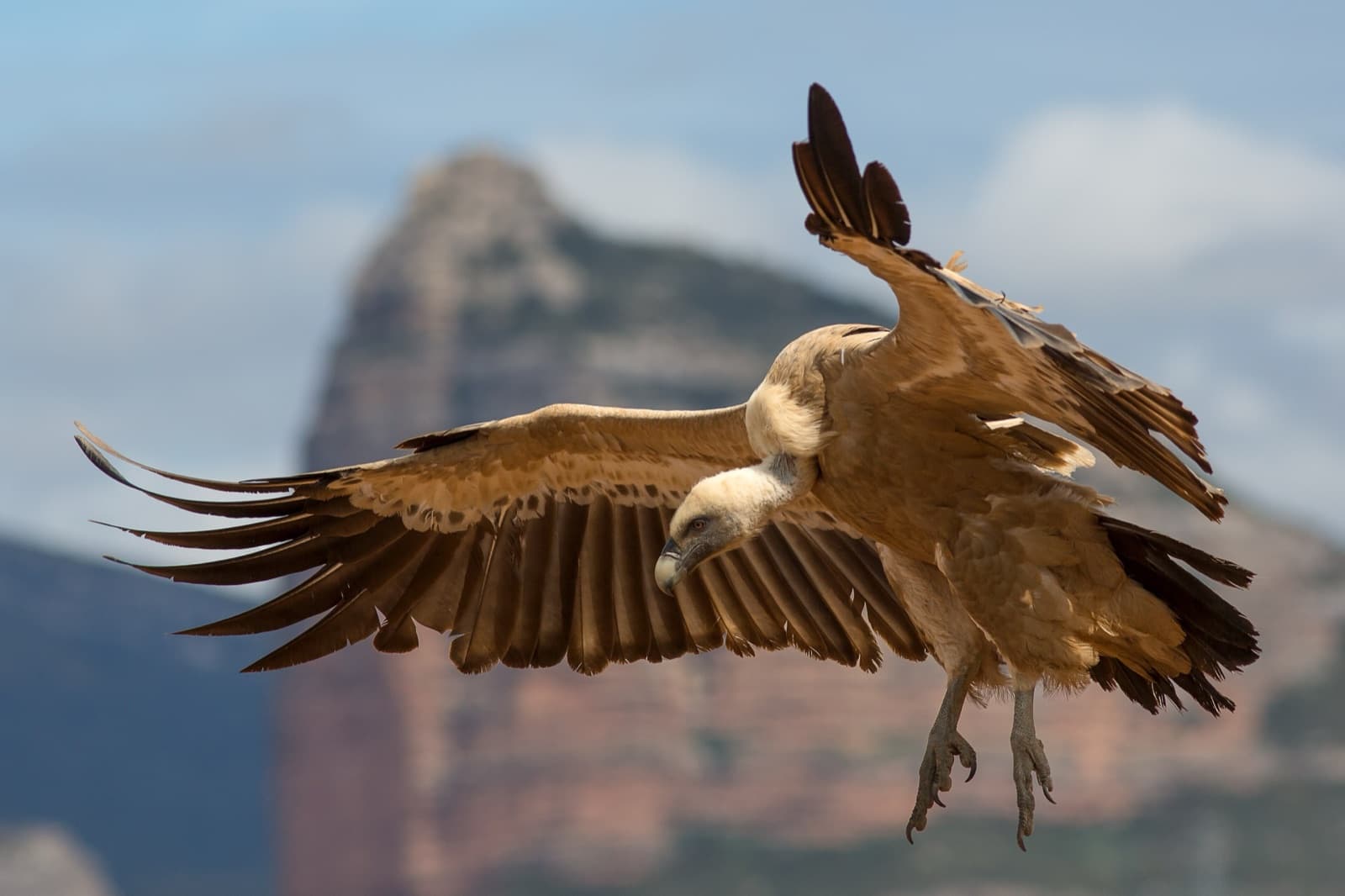
A griffon vulture in flight, wings spread wide

Photo 路 Wikimedia Commons

What is it?

Griffon vultures are huge birds - their wingspan can be over 2.8 metres, as wide as a small car. They live in the cliffs of northern Israel and ride warm air currents called thermals high above the hills, looking for food. From the ground they look like dots in the sky.

Tell me more

Griffon vultures don't hunt living animals. They are clean-up birds - they find animals that have already died and eat them. This is really important: by eating dead animals fast, they stop diseases spreading and keep the land healthy. Scientists call them nature's recyclers.

Their eyesight is incredible. From half a kilometre up in the air, a vulture can spot a dead rabbit on the hillside. They glide for hours without flapping their wings, just riding the warm air rising off the hot rocks. Some vultures barely flap once in a whole afternoon.

They nest on big rocky cliffs in the Galilee and Carmel hills, in colonies with other vultures. A pair has only one chick a year. Both parents take turns sitting on the egg, and later flying off to bring food back.

Israel takes care of them carefully. Scientists at places like the Hai-Bar reserve raise vulture chicks and release them into the wild. There are now hundreds of griffons soaring over the country - one of the best places in the Middle East to see them.

In the classroom

Walk your class through this in 15 minutes.

Talk together

Discussion prompts

  1. 01Why are clean-up animals like vultures important for keeping the land healthy?
  2. 02How might it feel to glide in the air for hours without flapping?
  3. 03Many people think vultures are scary. After learning more, what do you think?
Try this

Classroom activity

In the playground, mark out 2.8 metres with chalk. Lie a few children head-to-foot until you fill that line. That's how wide one vulture is when its wings are spread.