
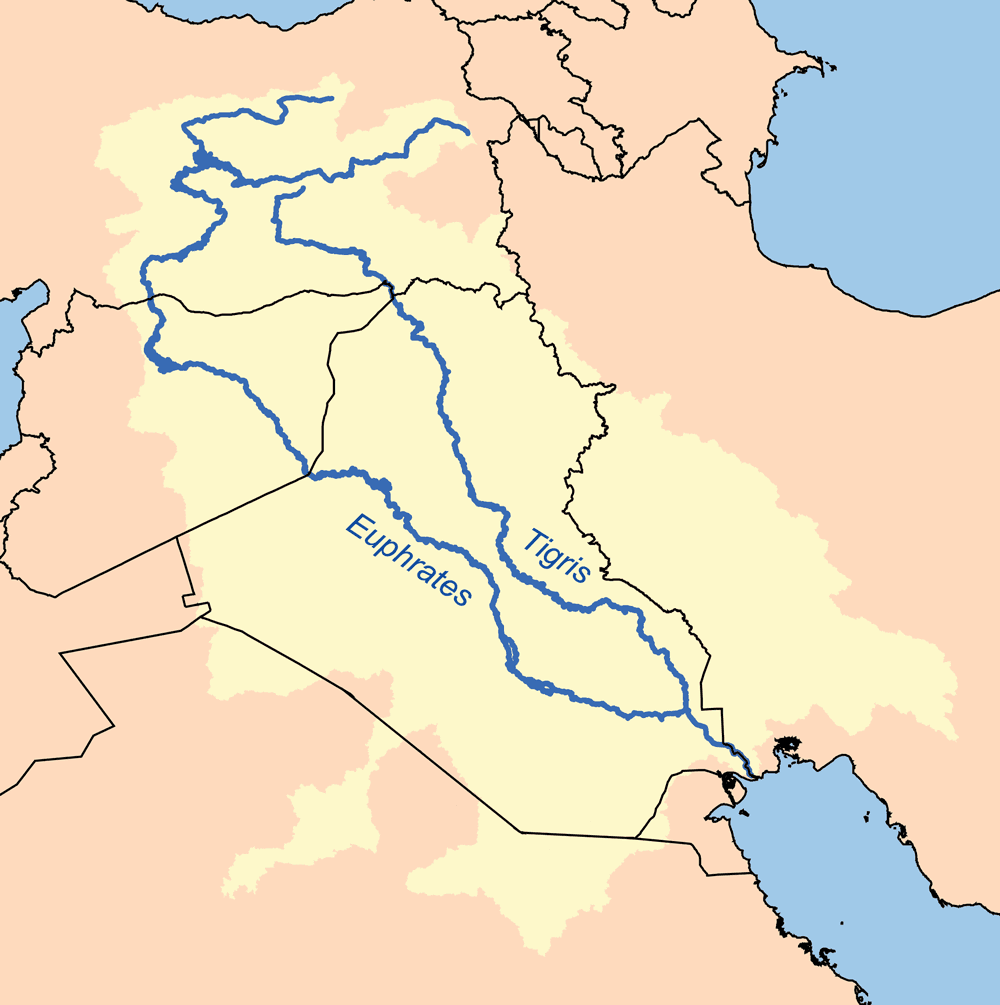
The two rivers start in the mountains of modern Turkey and travel southwards through Syria and Iraq before meeting and flowing into the sea. The Euphrates is the longer of the two, stretching about 2,800 kilometres, while the Tigris is faster-flowing, carved through rocky gorges in its upper reaches before spreading wide across the Iraqi plains.
Ancient farmers discovered that the flat land between these two rivers was perfect for growing crops. Every year the rivers flooded slightly, leaving behind a thin layer of rich soil - perfect for growing wheat, barley, dates, and vegetables. This reliable food supply allowed people to settle in one place and build the world's first cities.
The rivers teem with fish, including the famous binni carp, which has been caught and eaten in Iraq for thousands of years. Fishermen use traditional wooden boats called mashhuf, long and narrow so they can move easily through reedy waterways. The same boat design has barely changed in millennia.
Today both rivers are important for drinking water, farming, and electricity generation across Iraq. Schools near the river banks often use the rivers in science lessons - measuring water flow, spotting birds and fish, and learning about the water cycle. The rivers connect modern Iraqis to the ancient past in a very direct way.