
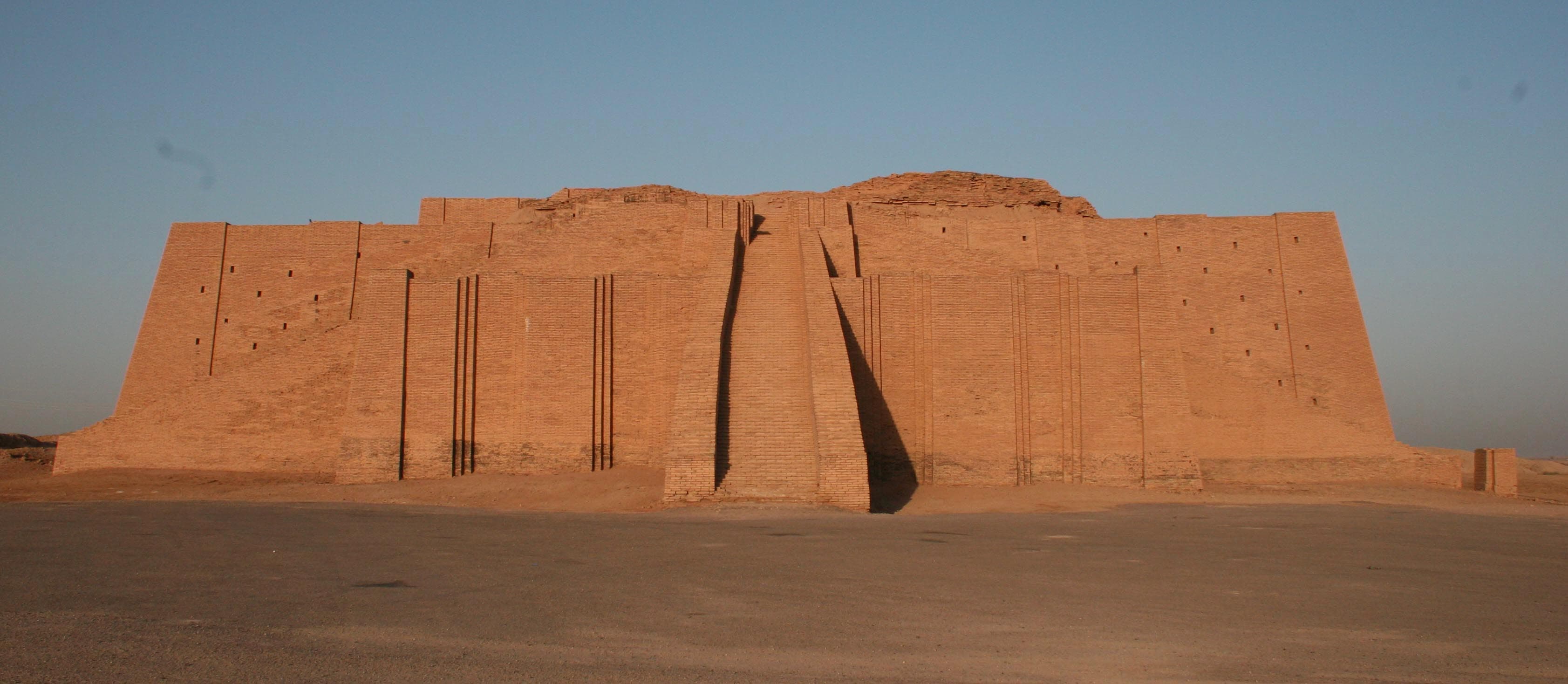
A ziggurat is a type of stepped tower built in ancient Mesopotamia. The Great Ziggurat of Ur was built around 2100 BCE by a king called Ur-Nammu. It was built from millions of mud bricks - the same material people still use in some parts of the world today because mud bricks stay cool in hot weather.
The ziggurat rises in three huge terraces, each one smaller than the one below, a bit like a giant wedding cake. At the very top there may once have been a small building. The base measures about 64 metres by 46 metres - roughly the size of ten tennis courts side by side.
The ancient city of Ur was home to many thousands of people and was an important centre for trade. Merchants brought goods from as far away as modern-day India and Afghanistan. Archaeologists have found wonderful objects at Ur including golden jewellery, musical instruments, and beautifully decorated game boards.
Even after 4,000 years, large sections of the ziggurat still stand. Archaeologists have carefully studied and partially restored the outer walls. It is one of the best-preserved examples of ancient Mesopotamian architecture anywhere in the world, and a powerful reminder of just how skilled ancient builders were.