
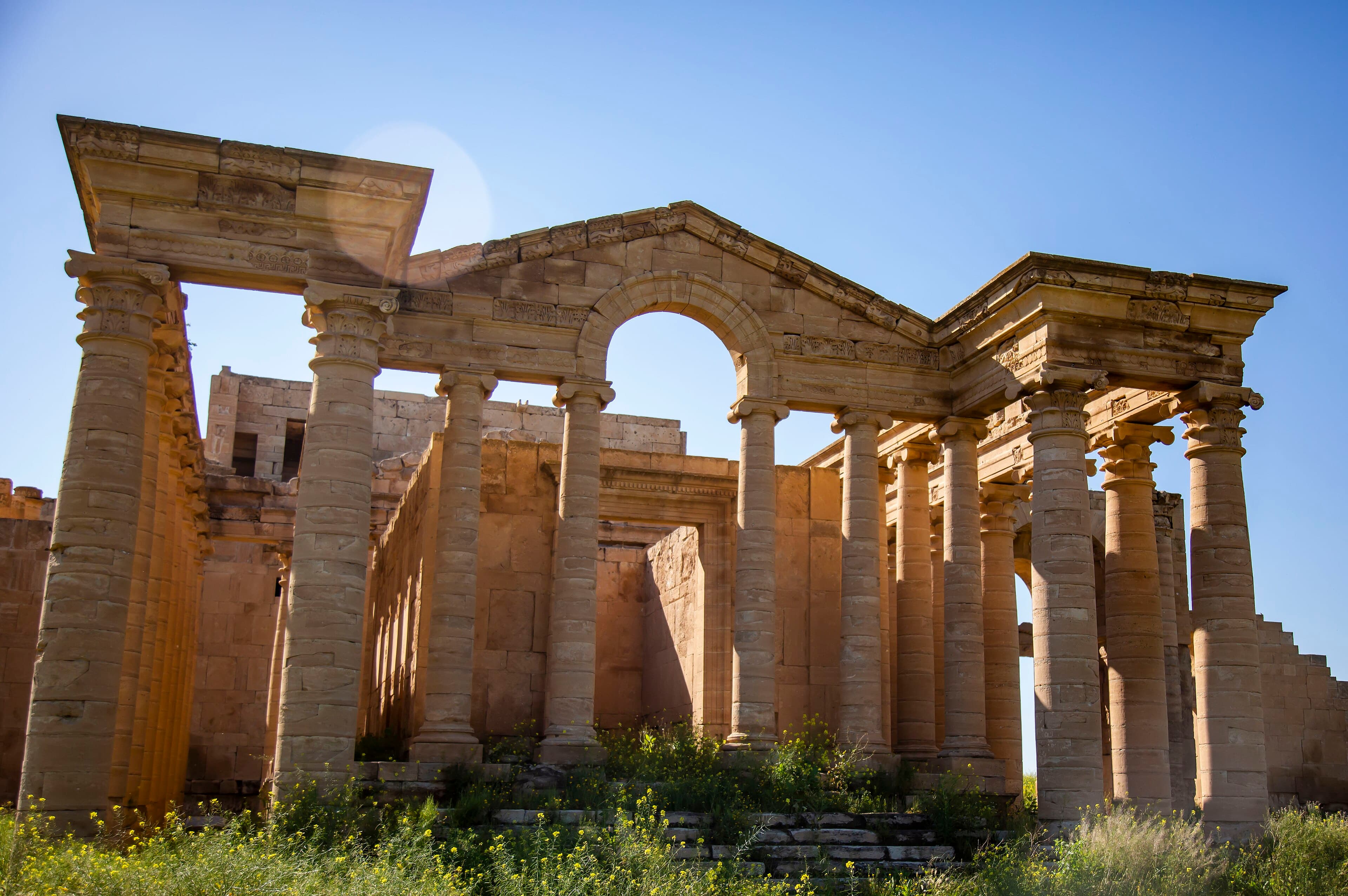
Hatra was built around 2,000 years ago and became an important stop on ancient trading routes crossing the desert. Merchants and travellers from the east and west passed through its gates, making it a lively meeting place of cultures. The city's builders mixed different styles - you can see influences from ancient Greece, Rome, and the East all blended together in the stonework.
The city is surrounded by two huge circular walls, making it look like rings around a bullseye from above. Inside, grand temples and colonnaded halls rise from the sandy ground. The carved decorations on the walls show eagles, snakes, lions, and human faces - all carved with extraordinary skill.
Hatra sat in open desert, yet it had a clever system for collecting and storing rainwater so that people could survive even in the driest seasons. These ancient cisterns - underground water tanks - showed how inventive and resourceful the people of Hatra were.
Hatra was added to the UNESCO World Heritage List in 1985, recognising it as one of the most remarkable ancient sites in the world. Archaeologists and conservationists continue to study the city's carvings, hoping to understand more about the multicultural community that once called this desert place home.