
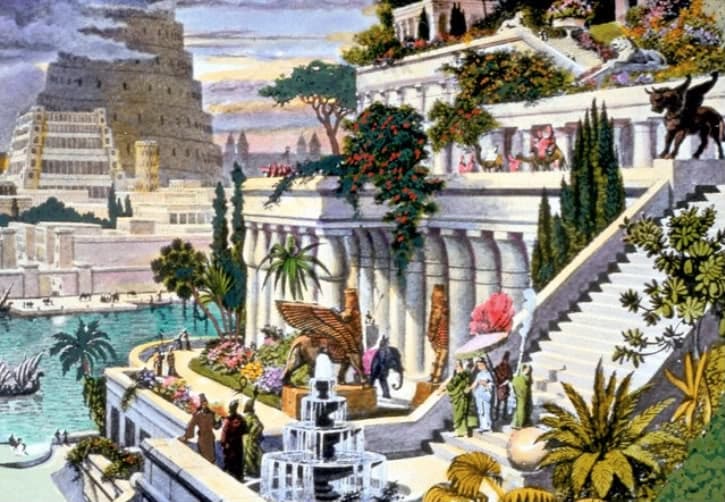
Babylon rose to greatness around 4,000 years ago and became famous across the ancient world for its size and beauty. The city sat on the banks of the Euphrates River, which provided fresh water for gardens, crops, and daily life. At its busiest, hundreds of thousands of people may have lived here.
One of Babylon's most stunning features was the Ishtar Gate - a towering entrance decorated with brilliant blue glazed bricks and golden images of dragons and bulls. The original gate was taken to Berlin many years ago and can be seen in a museum there, but a reconstruction stands at the Babylon site in Iraq today.
Ancient writers described something called the Hanging Gardens of Babylon - a spectacular terraced garden supposedly built high above the ground, full of exotic plants and trees. Historians are still debating whether the Hanging Gardens really existed, making it one of history's great mysteries.
Babylon was designated a UNESCO World Heritage Site in 2019, which means the whole world agrees it is a precious place worth protecting. Archaeologists continue to carefully dig and study the site, uncovering new clues about how ancient Babylonians lived, traded, and celebrated.