
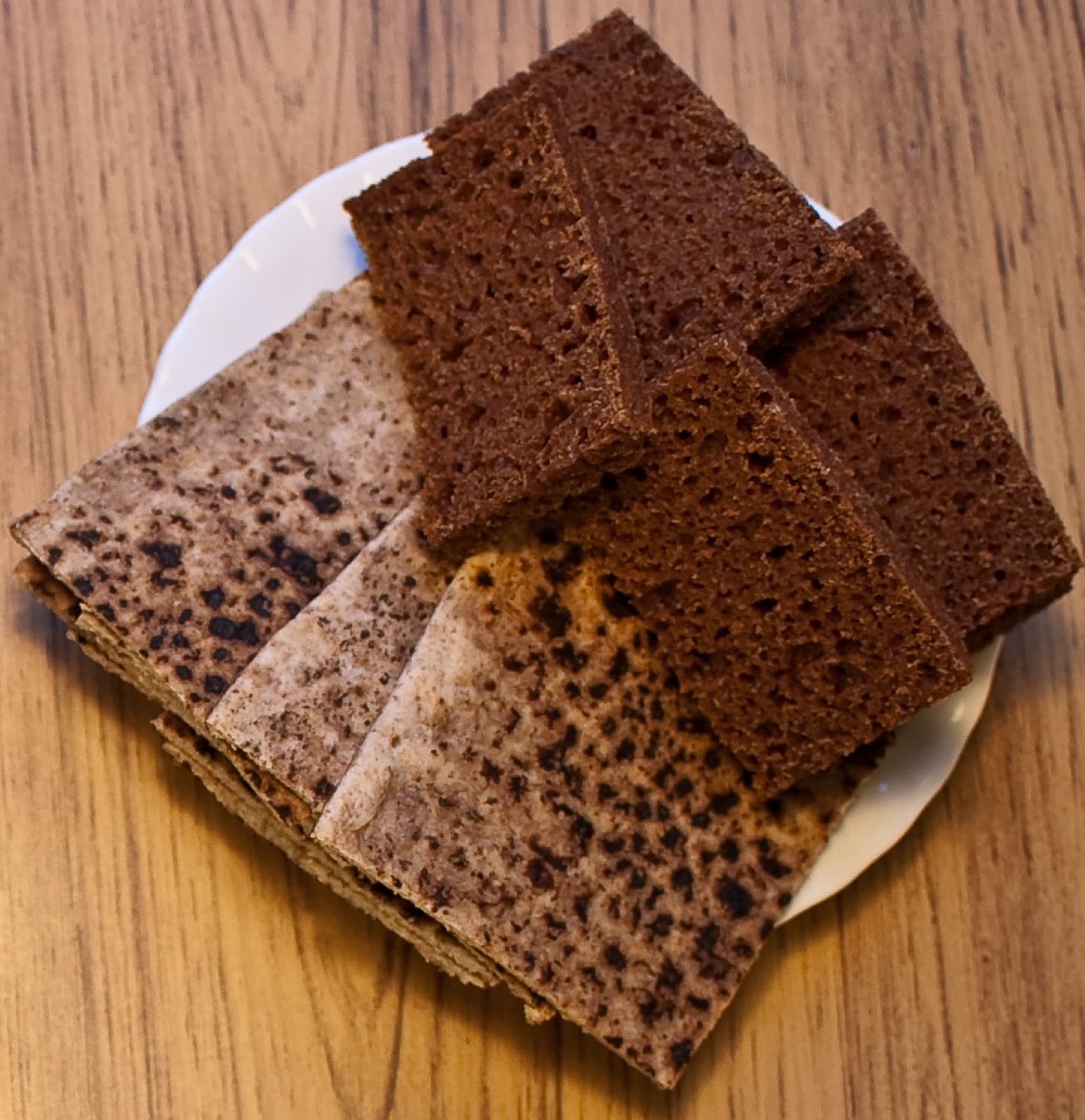
Rye is a tough grain that grows well in cold places. The dough for rúgbrauð is made from rye flour, water, a little molasses or syrup (which gives it the sweet, almost cake-like taste), and sometimes a bit of buttermilk. It is mixed into a thick, sticky dough and packed into a sealed pot.
Around Lake Laugarvatn, in southern Iceland, the ground is naturally warm because of the volcanic heat below. Bakers dig a hole near the lakeshore, lower in the sealed pot, cover it back over with sand, and walk away. Twenty-four hours later, they dig the pot back up - and inside is a perfectly baked loaf of rúgbrauð. The earth has done all the work.
Because of the long, slow bake at low temperature, rúgbrauð comes out dark brown and slightly sweet, with a soft, dense texture - more like a cake than a normal bread. It is delicious sliced thinly and spread with butter, or topped with skyr, smoked fish, or cheese.
If you visit Laugarvatn, a baker called Siggi gives demonstrations to school groups. He digs up the day's loaf in front of you, splits it open with steam rising out, and hands round warm slices with butter. The bread, the steam, and the smell of the warm earth is something children remember for years.