
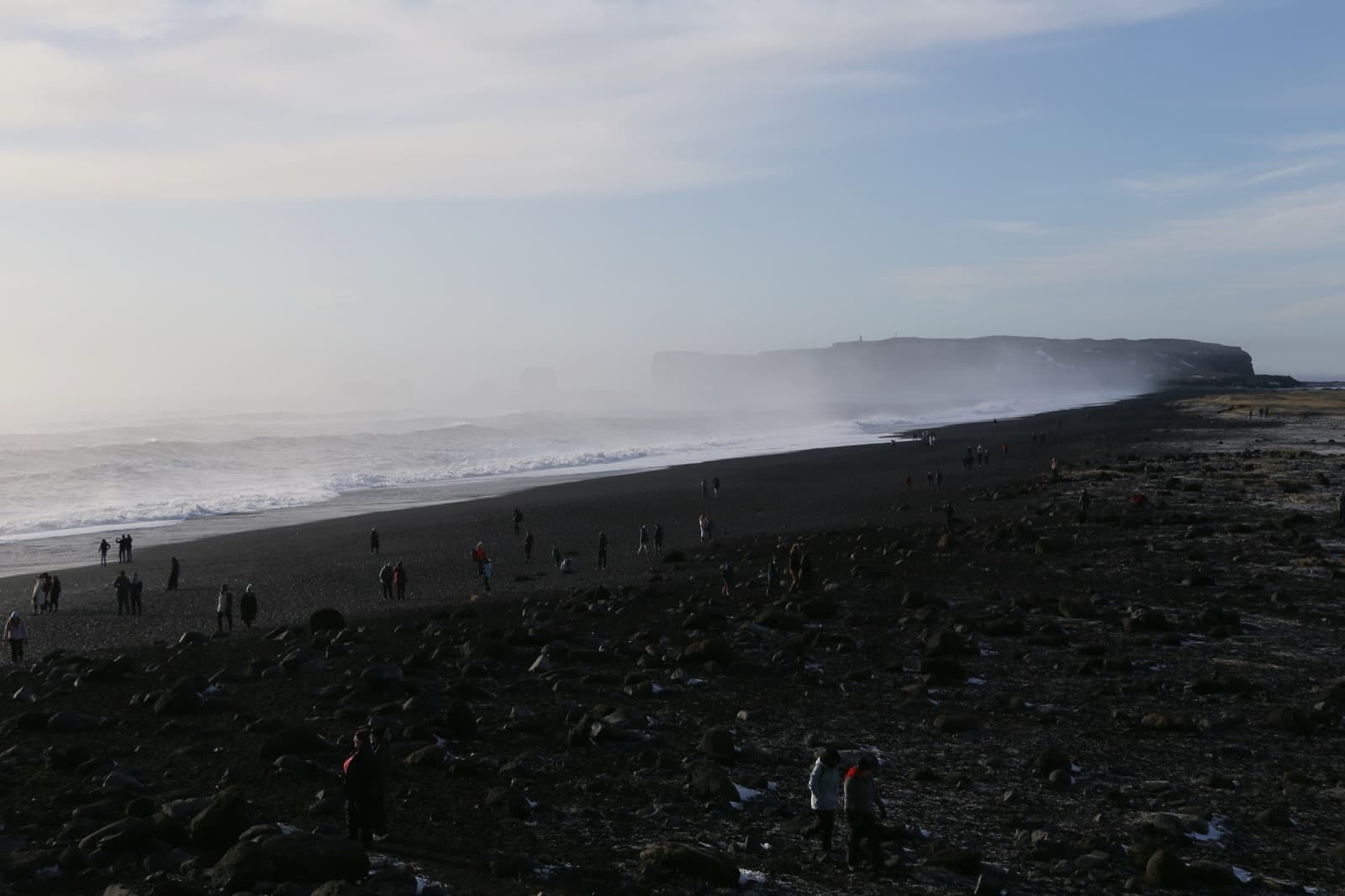
The black sand is the leftover bits of old volcano eruptions. When red-hot lava meets the cold sea, it cools down so fast that it shatters into tiny black glass-like pieces. Waves grind those pieces into fine black sand. Walk along Reynisfjara beach near the village of Vík and your footprints look like ink on a page.
Iceland is growing every year. The Mid-Atlantic Ridge is the place where the North American plate of the Earth's crust meets the European plate, and the two plates are slowly pulling apart, by about 2 centimetres a year - roughly the speed your fingernails grow. New land bubbles up to fill the gap.
Most Icelandic volcanoes are friendly. People watch them with telescopes and apps, and scientists at the Icelandic Met Office can tell when an eruption is coming days or even weeks in advance. Some volcanoes are now even tourist attractions - people walk up to see the red glow.
At a special place called Silfra, in southwest Iceland, the crack between Europe and North America has filled with crystal-clear glacier water. People put on warm suits and snorkel right between the two continents. You can touch Europe with one hand and America with the other at the same time.