
Classroom lesson 路 Iceland's amazing waterfalls馃嚠馃嚫 Iceland

Iceland's amazing waterfalls

Gullfoss, Sk贸gafoss and Seljalandsfoss - three of the most spectacular on Earth

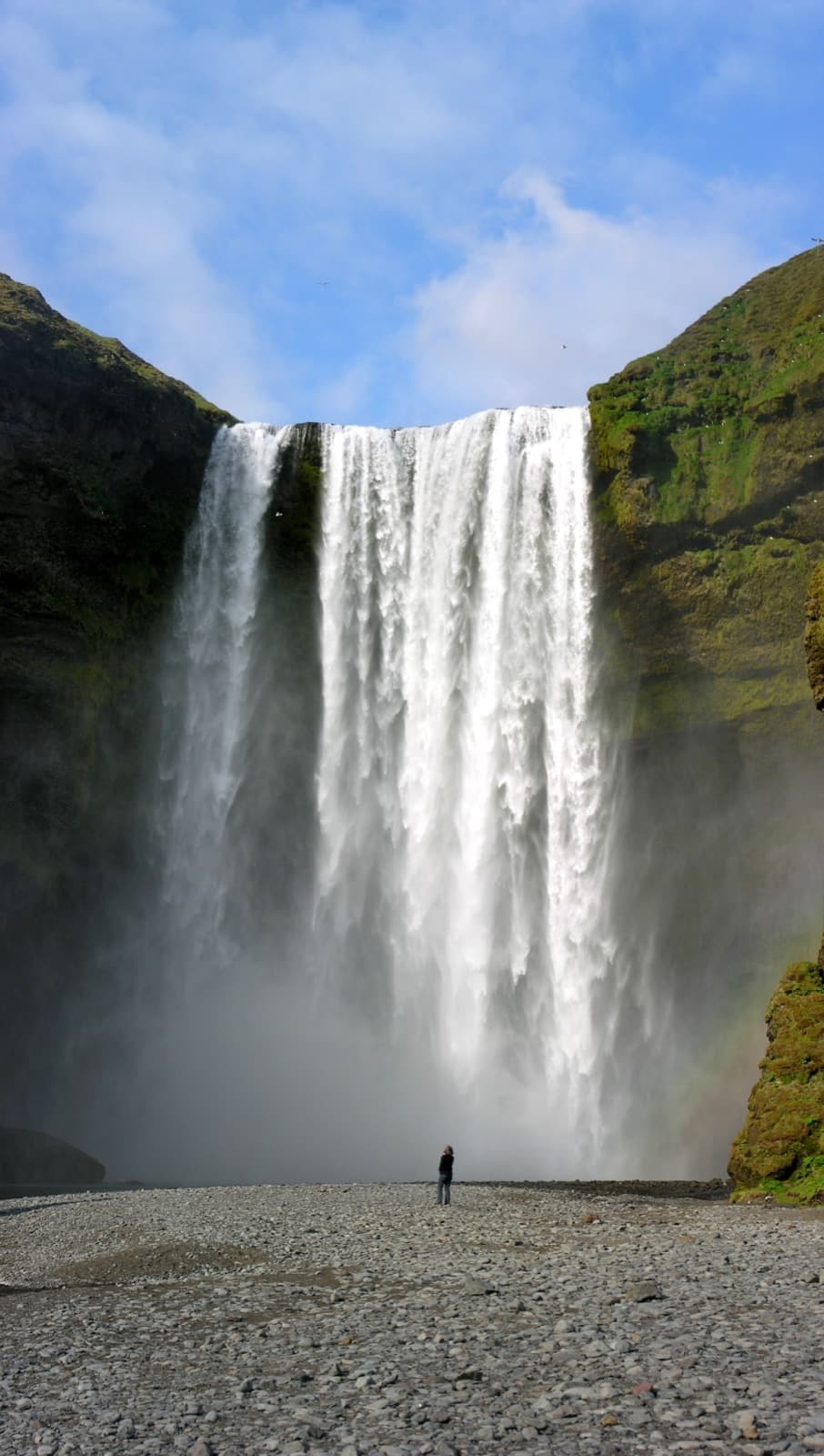
Sk贸gafoss waterfall thundering down a vertical cliff in southern Iceland

Photo 路 Wikimedia Commons

What is it?

Iceland has more waterfalls per square kilometre than almost anywhere on Earth. There are around 10,000 of them. Three are world-famous: Gullfoss ('Golden Falls'), Sk贸gafoss ('Forest Falls') and Seljalandsfoss ('the falls you can walk behind').

Tell me more

Iceland has so many waterfalls because it has so much water and so many cliffs. Glaciers high up in the mountains slowly melt, sending rivers tumbling down towards the sea. Whenever a river meets a cliff, it falls - and Iceland is full of cliffs.

Gullfoss means 'Golden Falls' because the water turns a beautiful gold colour in the sunshine. It falls in two huge steps - the second drop alone is 21 metres tall. A hundred years ago, a brave Icelandic woman named Sigr铆冒ur T贸masd贸ttir walked across the country to save Gullfoss from being turned into a power station. Today it is protected forever.

Sk贸gafoss falls in one straight line, 60 metres straight down. On a sunny day, two rainbows appear at the bottom at the same time. Legend says a Viking settler buried a treasure chest behind the falls. Children have looked for it for over a thousand years - no one has ever found it.

Seljalandsfoss is the most magical one of all. There is a path that goes right behind the waterfall, so you can stand inside a curtain of falling water and look out at the world through it. You get soaked, but the view is unforgettable.

In the classroom

Walk your class through this in 15 minutes.

Talk together

Discussion prompts

  1. 01Why might it be important to protect a waterfall, instead of using it to make electricity?
  2. 02What would it feel like to stand behind a curtain of falling water?
  3. 03What other natural wonders have you heard of? What makes them special?
Try this

Classroom activity

On A3 paper, draw your own imaginary waterfall. Decide its name, how tall it is, what colour the water turns in sunlight, and whether anything is hidden behind it. Swap with a partner and write three questions about each other's waterfalls.